BIRD NEWS BLOG
Bird Bio: Swainson's Thrush
Swainson’s Thrush
This morning while I was sitting on my back porch looking into the forest I was stressing over the many things I had to get done today professionally and personally, and already experiencing some anxiety about tonight’s Predator-Canucks game. The birds were very vocal as they are this time of year and suddenly my brain locked in on a different and beautiful song. I was hearing the Wood Thrush and its incredible vocalizations but this other one is also quite unique. I was hearing the Swainson’s Thrush, a spring migrant passing through TN heading northward to its breeding range in the upper northern region of the U.S. and into Canada.


This bird is heard way more than it’s seen because it prefers heavily wooded habitat. It has an upward spiraling flutelike song that varies in volume. They are known to move to another branch in between songs and vary their volume so one might think the bird has flown much farther away but in actuality gotten closer. It is similar to ventriloquism. When in their breeding range males will have singing duels in which volume and frequency escalates. Sometimes physical attacks and chasing may occur. I have heard Wood Thrush do the same thing and it is unforgettable.
These birds are insect and fruit eaters and stay in the trees except for the occasion to pounce on an insect on the forest floor.
The unique and memorable song of the Swainson’s Thrush immediately takes my mind to the Adirondack mountains in NY state where my family spent summer vacations. The pine forest around the little lake was loaded with them. Thanks to the Swainson’s Thrush the stress melted away and I just listened until I had to leave for the day. To hear this bird either open your Merlin app, or go to the Cornell Lab of Ornithology site allaboutbirds.org to hear the various vocalizations of this unique songster.
Bird Bio: Wood Thrush


Despite being a common sound throughout the deciduous forests of eastern North America in spring and early summer, the song of the Wood thrush is still one of our favorite bird songs. While these medium sized members of the thrush family may not be as flashy as their cousin, the Eastern bluebird, or as well-known as their cousin, the American robin, their song is what sets them apart. Thanks to a unique Y shaped voice box, these harmonious songbirds have the ability to harmonize with themselves! Learning to identify their distinctive flute-like “ee oh lay” calls will greatly help in catching a glimpse of these elusive birds.
Look for these reddish brown pot-bellied birds as they work the leaf litter of the forest floor in search of small insects. Mature deciduous forests are their preferred habitat, and they are a common spring and summer resident in the forests surrounding Radnor Lake or Warner Parks.
The female Wood thrush constructs the nest by first creating a platform of dry materials such as twigs, grass, or even paper and plastic. Next, she will begin to weave these materials together to form the body of the nest. She then will use her weight and stamp the floor down until she has created a three inch deep cup. Lastly, she will line this with mud and a final covering of small rootlets for the eggs to sit in. This entire process is completed within 3-6 days. Unfortunately, they are prone to nest parasitism by the Brown-headed cowbird to the point that in some parts of the Midwest, it is estimated that virtually every forest-edge habitat nest contains the egg of a cowbird.
Males take an active role in parenting to the extent that they do more feeding of young than the females. This frees her up to start a second brood and after they fledge, the parents will divide the young and feed both groups separately in different parts of their territory. Wood thrush will often raise two broods per season, although this sometimes requires 3-4 attempts.
Heartwood Bluebird Boxes

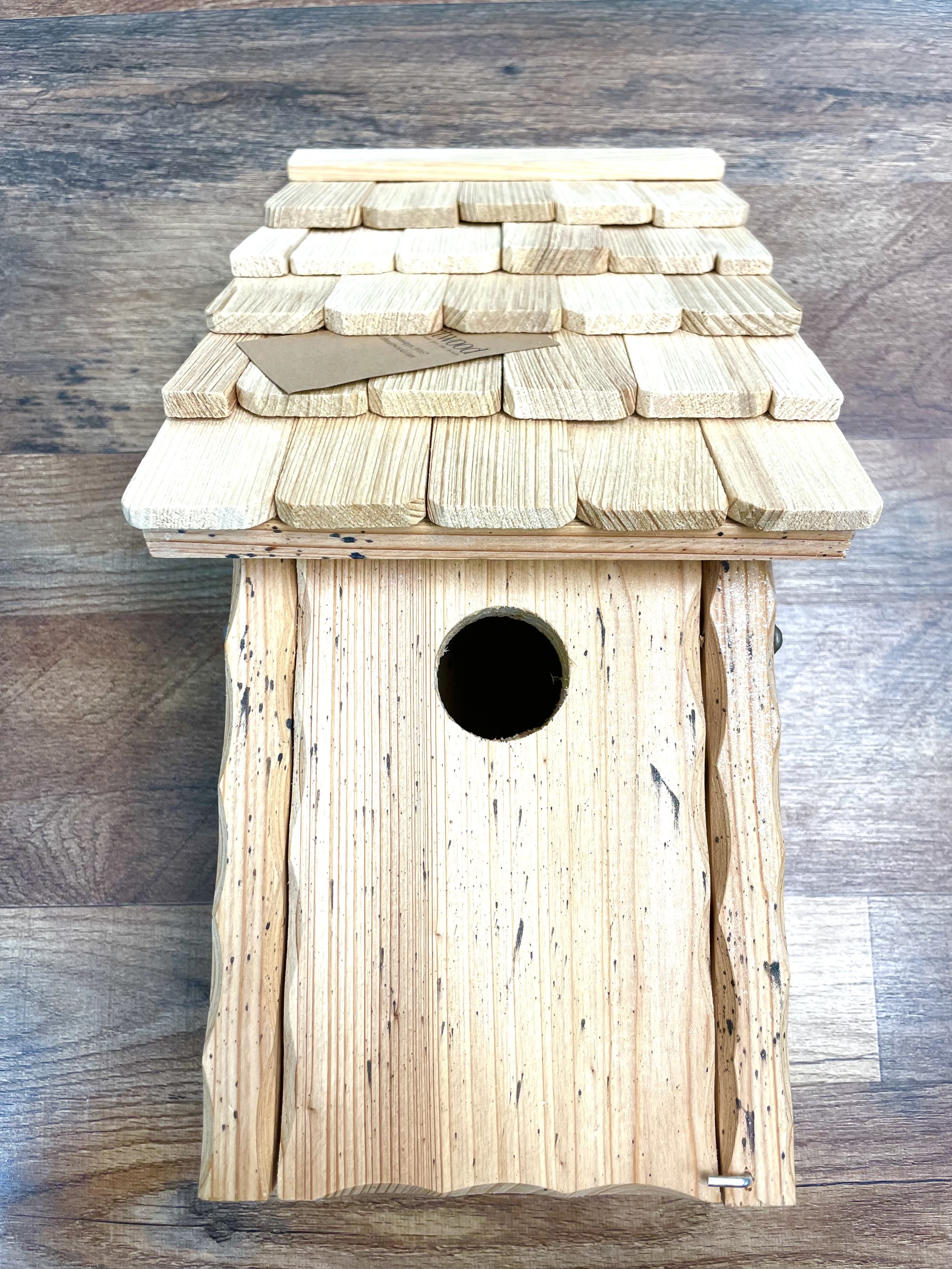
Last week, we discussed our favorite overall bluebird house, the ATZ Woodcrafters Classic Bluebird box. This week we will go over our more decorative bluebird boxes. Our preferred options are produced by Heartwood and made by hand down in Star, Mississippi. Founded 20 years ago by brothers Jerry and Larry Glass, these two brothers transitioned from building houses for people to wood creations for local craft fairs and at their mother’s suggestion, began building bird houses. Fast forward to today, and their unique but practical bluebird boxes have become a perennial favorite of ours.
We are especially fond of the models shown here for their practicality and versatility. They work well on our three piece pole setup, ($58 with tax) a 4x4 post, fence, or even tree. All open from the front, top down, for ease of monitoring and cleaning between each nesting. With Mother’s Day just a month away, they also make great gifts!
Models shown:
(White: Bluebird Manor, $85)
(Yellow: Bluebird Bright, $85)
(Natural: Bluebird Bunkhouse, $92)

Our Favorite Bluebird Box
This time of year we are often asked for advice on picking a bluebird box. With so many choices, as well as the vast wealth of misinformation online, folks can be left feeling like they will be making the wrong decision regardless of which box or setup they choose. Fortunately for us, the Eastern bluebird didn’t establish a range from Nicaragua in the south to Nova Scotia in the north because they are picky! Quite the opposite in fact, as we have seen these adaptable little birds nest successfully everywhere from a broken box in our service alley to in an unusual instance, a cinder block in a customer’s yard.
All that being said, the question remains: Which box should I get? Our favorite over the years is by far the ATZ Woodcrafts Classic Bluebird Nest Box. These boxes are handmade in Ohio out of kiln-dried cedar. This material is resistant to rot and can often give many seasons of use. They also feature a pre-installed guard to prevent animals from chewing and enlarging the opening. These boxes are also some of the best for ease of maintenance and monitoring thanks to them opening from the top down. This means that no matter how high up they fill the box with nest material, you can still peek in and get a good view. These also have two pre drilled holes in the back making them easy to attach to a fence, tree, or 4x4 post.
Return of the Grosbeak
The first sightings of Rose-breasted grosbeaks are less than a week away! Adult male RBG’s are very easily identified with their black and white plumage and big red V on the chest which really stands out against the stark white underside. The head is hooded with black and the wings are black with two white patches, one at the shoulder and one closer to the wing tip. Female RBG’s are primarily brown and white, with a pale yellowish breast and belly and a prominent white eyebrow. They have been described as looking like a House finch on steroids. The beak is large enabling this bird to crack open all kinds of seeds and capture insects which are a significant part of their diet during the breeding season.
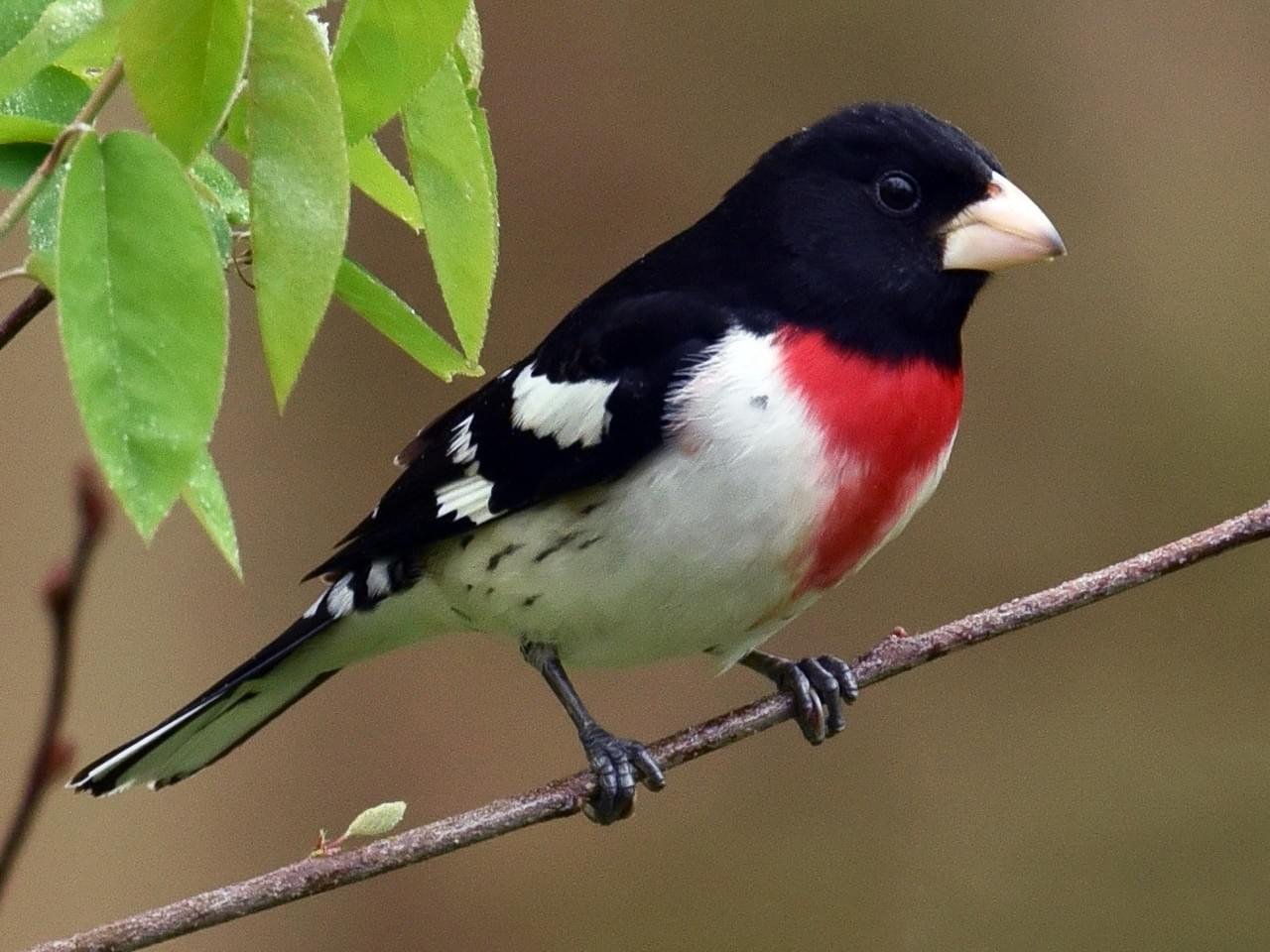

Fortunately for us, RBGs are extremely easy to attract to feeders during their migration and don’t require anything special. Offerings of sunflower, safflower, peanuts, and even suet are likely to yield good results. The song of the male Grosbeaks has been described as sounding like “a robin with operatic training.” While it is possible to hear it here, most likely it will be more common to hear further to the north, east, or west in their breeding range.
Another possible feeder visitor is the Indigo bunting. These beautiful goldfinch sized birds are a summer resident in middle Tennessee and can often be found perched in trees on the edges of meadows or fields, singing to establish their territory. Gossett Tract in Pegram and the greenway trail in Edwin Warner are good places to spot Indigo buntings in the spring and early summer. We have seen these on feeders before, however they are more likely to be spotted feeding on the ground below the feeders.

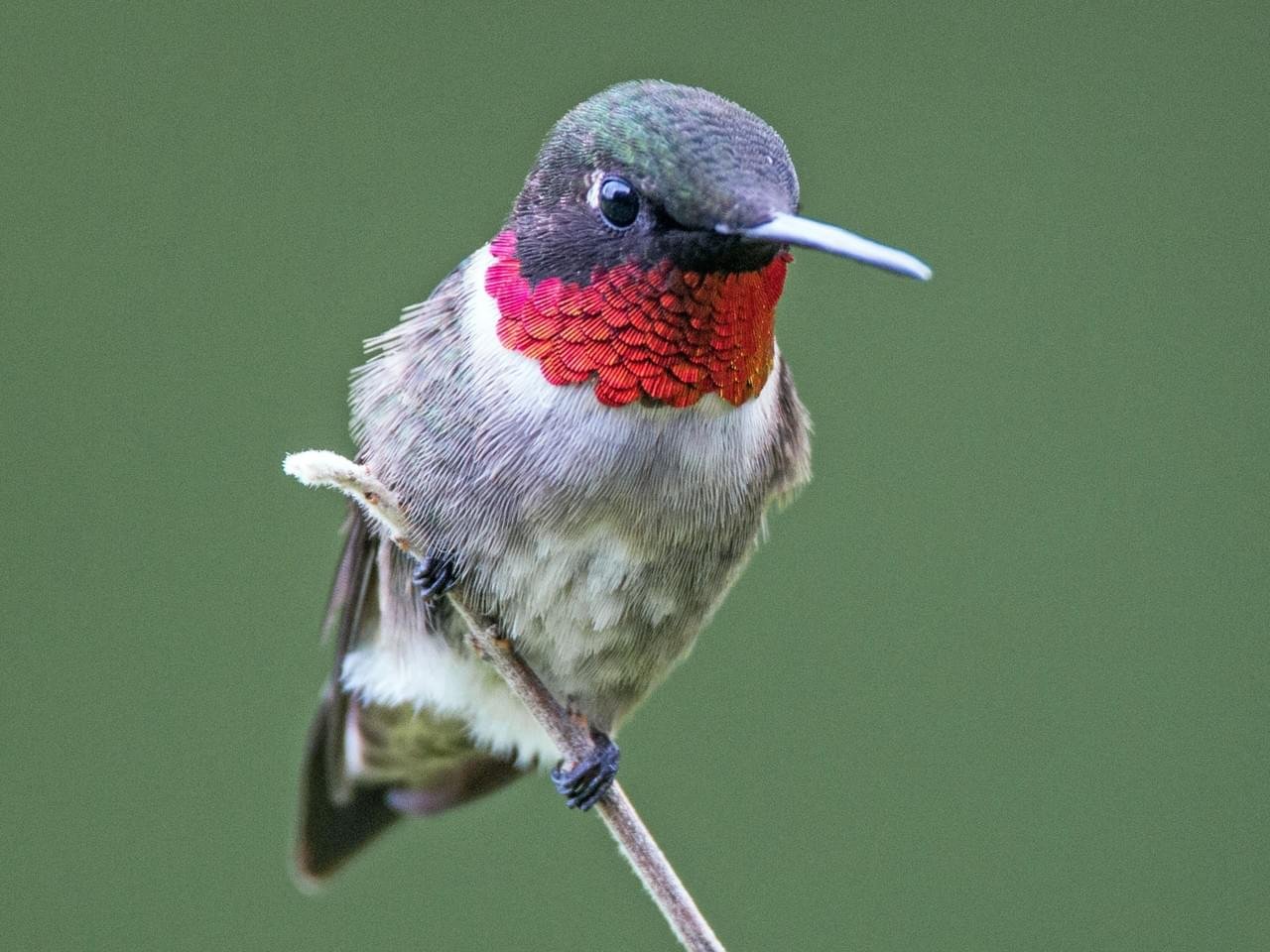
Last but certainly not least, we will begin hearing the first reported sightings of hummingbirds as they begin to pass through in early April. By mid-April, sightings of hummingbirds will be more common. Don’t be discouraged if you don’t see any hummingbirds early on, as activity at feeders doesn’t really pick up until mid-July. As we tell folks, they didn’t travel all this way for sugar water! The reason these tiny travelers leave their winter homes in Central America is to reach their breeding grounds in eastern North America. After their breeding season concludes and they begin to fatten up for their migration back south, that’s when activity at the feeders will begin to pick up. That is why we see such a sharp uptick in feeder activity in late July, August, and into September.