BIRD NEWS BLOG

Wood Thrush Notes: Bird Songs vs Bird Calls
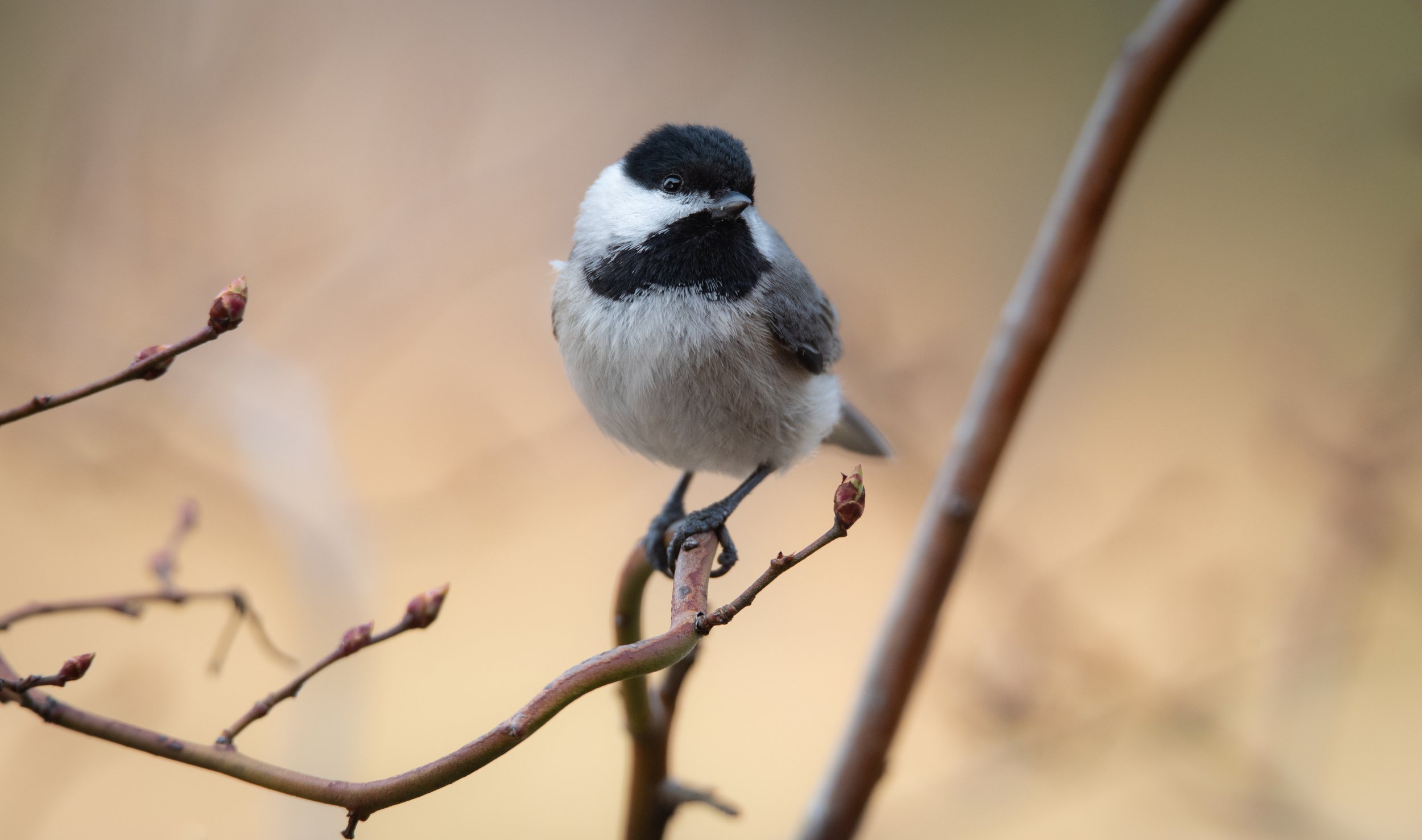
With the beginning of spring just a few weeks away, some of you may have noticed birds beginning to sing. During the warmer days of the past few weeks, I have heard Tufted Titmice and Carolina Chickadees beginning to sing. You may be thinking to yourself, I hear those bird sounds YEAR ROUND, what is he talking about? Today, that is going to be our topic of discussion.
Song vs. Call
Did you know that there is actually a difference between bird “songs” and bird “calls?” Bird songs can be quite elaborate and vary greatly between different species. Some species, such as Mockingbirds, Blue Jays, and European Starlings are able to learn and mimic the calls of other birds. For arguably one of the most impressive bird songs, let’s look to our namesake, the Wood Thrush. It may seem like an odd choice to name our shop after a bird that many people have never seen or even heard of, (and the reason that we get monthly calls from people asking if we can refinish their dining room sets) but if you ever are fortunate enough to HEAR their song, it would make a lot more sense. For those of you who have never heard one singing, I will link to it here. Thanks to its Y-shaped syrinx, or voice box, a careful internal balancing act with its airways, and millennia of evolution, it is actually capable of harmonizing with itself. That’s right; our namesake can sing a simultaneous duet, with itself!
To put it simply, birds (usually males) use song as a means of attracting a mate and establishing/defending their territory. Bird calls, while melodically more simple, can often have more meanings. They typically fall into four categories: Contact, flight, alarm, and begging.
Contact calls are made by birds as a way of keeping in communication with one another while foraging for food. Generally speaking, these are fairly short, simple, and not designed to carry far. However, if a bird gets separated, it may produce a louder, more urgent call to broadcast its position to others.
Flight calls serve a similar purpose. If you have ever seen flock of Canada Geese, Sandhill Cranes, Robins, or Common Grackles flying overheard, you have likely noticed that they can be quite noisy. This is flight calling in action. This serves to help a group maintain contact with one another whilst airborne.
Birds also have alarm calls to help alert one another to threats, such as birds of prey, snakes, or cats. Certain birds, such as Chickadees will use different calls for different threats. According to the National Audubon Society, for aerial dangers they will utter a sharp, quick seet. If the bird of prey is perched and deemed to be less of an immediate threat, they will call out chick-a-dee with added dee’s on the end to indicate greater urgency.
Lastly, we have the begging calls. These simplistic calls are a far cry from the complex songs of the adult males or even the interesting meanings of mature bird’s alarm calls. These are simply the young birds trying to attract the attention of their parents

Wood Thrush Notes: A Mystery at the Feeder
A Mystery at the Feeder
Waking to find the ground covered in snow, I was not in the least bit surprised to see that the birds had discovered my new and improved feeding station. I put my feeders out the night before, having brought them in for a number of weeks after having a raccoon destroy my suet feeder. With the amount of time that had passed (a week to ten days is generally enough when employing this method) and the chance for snow in the forecast, I decided the time was right to put my feeders back out.


That morning, I was treated to a flurry of activity. Dark-eyed juncos, Northern Cardinals, and White-throated Sparrows dotted the ground beneath the feeder while Carolina Chickadees, Tufted Titmice, White-breasted Nuthatch, and Carolina Wrens busied themselves on my suet and tube feeders. I even got a quick glimpse of an immature Yellow-rumped Warbler on my suet feeder, a diminutive winter visitor to Tennessee that weighs less than half an ounce (0.41oz, or roughly the weight of two quarters) to be specific. I made a mental note of how much seed was in my tube feeder (a Woodlink Mega Seed Tube Feeder, $95) before donning my heavy coat and snow boots and making the drive into work.


In the evening after I returned home, I was able to see that something was amiss. There was barely any seed gone from my feeder! After a full snow day, I expected far more to be gone, perhaps as much as a quarter or even half of the seed. To see the feeder practically untouched was surprising. My initial thought was that I had a mockingbird guarding the feeding station, as it is quite common this time of year, especially during snow and we have had many customers reporting this over the last month. If you have been experiencing this, we recently did a blog covering how to address this that I will link to here.
I didn’t have to wait long to find out who the culprit was the next morning. While laying in bed staring out at my feeder, I noticed a small flash of brown and yellow drive away a Tufted Titmouse that had landed for a sunflower seed. It was the Yellow-rumped Warbler! These winter residents to Middle Tennessee generally arrive in the fall, and then stay into the early spring before moving on to their breeding grounds to the north and west. While the specimen that has been guarding my feeding station is a relatively unassuming immature bird, males in their breeding plumage can be quite striking. There are actually a couple of variations; the Audubon’s and the Myrtle, which I will link to here.
While surprising (and a little amusing) to see such a small bird chasing off other birds that are larger than itself, it serves as a good reminder that our backyard birds ARE wild animals. While we might observe this behavior and think of it as being “mean” or a “bully,” for wild animals, protecting their food supply during periods of scarcity can be a matter of survival. It is why Mockingbirds do it, it is why hummingbirds do it, and it is why even tiny Yellow-rumped Warblers do it. They are not “bully birds,” they are just doing whatever it takes to survive.
Happy Valentine's Day from the Wood Thrush Shop!
Happy Valentine’s Day from your favorite birding shop! This week, let’s have some fun and learn about the different courting and pairing habits of a few of our feathered friends.
Birds that Pair for Life
Did you know that there are many examples in the bird world of species that will mate for life? For an interesting list of 8 species, as well as more information, I will link to the National Audubon Society article here. For our purposes today, however, we will just focus on a couple of the species you likely have or can encounter in Middle Tennessee. For example, did you know that the Bald Eagle, the avian symbol of our country, mates for life? Reaching sexual maturity typically between 4 and 5 years of age, and with a lifespan of 20-30 years in the wild, pairing for life is no small feat!
Bald Eagle
Photo Credit: Eli Haislip
Another species that is more likely to be seen in our area year round is the very common Black Vulture. During the breeding season, they engage in aerial courtship displays consisting of the male diving at the female and then flying close together… Not exactly our idea of romantic, but it works well enough for them that they form strong enough bonds that they will spend the entire year together, not just limiting their time with one another to the breeding season.
Lastly, the Pileated Woodpecker is also monogamous, with one pair occupying and defending a territory throughout the year. While with many species, the female does most of the nest building work, that isn’t the case with these large woodpeckers! The male does the bulk of the work, with the female beginning to contribute as the cavity nears completion. Despite their large size, Pileated Woodpeckers are fairly elusive and are generally uncommon visitors to feeders.
Pileated Woodpecker
Photo Credit: Eli Haislip
Interesting Courtship Rituals
Humans are far from the only species that will show off dance moves in the pursuit of attracting a mate! Check out this video taken in John’s backyard of a pair of Pileated Woodpeckers engaging in a courtship display.
While this pair of Pileated Woodpeckers are a long way from beating the likes of Fred Astaire or Shirley Temple, they put on quite the entertaining show for us to observe and enjoy. As we get into spring, specifically April and May, keep an eye out for this behavior if you find yourself out in the forest. You never know what you might see!

Wood Thrush Notes: Presentations, Bluebirds Exploring Boxes, Sandhill Crane Migration
Presentations by the Wood Thrush Shop
Did you know that you can book us for presentations? Over the coming months, if you are a member of a garden club, church group or any other kind of club/group that would be interested in a presentation on backyard birding, let us know! We can tailor our presentation to match your group’s interests. Are your members new to bird feeding in the area and would benefit from a crash course? We can do that. Do they have questions about attracting bluebirds, hummingbirds, or goldfinches? We can do that too! We can even come out and give a detailed presentation on one of the most frequently asked questions at the store, “How can I become squirrel-proof?”
While we do not charge for guest speaking, if you were so inclined as to offer an honorarium, the proceeds would go to West Meade’s Harmony Wildlife Rehabilitation. If this seems like something you or someone you know would be interested in, please don’t hesitate to reach out!
Beginnings of Bluebird Activity
It’s that time of year again, and we are beginning to hear the first reports of bluebirds beginning to seriously investigate boxes. While it is too soon to expect bluebirds to begin nesting, it is never too early to make sure that your boxes are prepared for the start of the breeding season. If you have not already done so, we highly recommend cleaning out any old nesting material. Old nesting material can potentially harbor insects, such as ants, that can feed on the young after they hatch. Cleaning boxes is usually a fairly straight forward procedure, and is typically as simple as emptying out the old material. As we get closer to nesting season, we will cover bluebirds and bluebird boxes in greater depth, but for now, keep an eye on your boxes and you may witness some early interest!

Bluebirds Investigating a Box
Photo Credit: Eli Haislip
Sandhill Crane Migration
Recently while working in the yard, John heard an unmistakable sound that caused him to turn his eyes to the skies. As he watched, a flock of Sandhill Cranes flew overhead. A winter visitor to parts of Tennessee, like the Hiwassee National Wildlife Refuge, Sandhill Cranes often begin their migration to their breeding grounds in Canada and Alaska as early as late January or early February. Learning to recognize their distinctive trumpeting call will make spotting them easier. Most of the time, I will hear them before they come in to view overhead, sometimes extremely high in altitude. Their unmistakable call is thanks to an exceptionally long trachea that coils into their sternum. This added length helps them achieve their unique trumpeting tone that I will link to here. As we progress through February, seeing large v-shaped formations of them flying overhead will become more and more common.


Wood Thrush Notes: Identification Through Observation, Solutions to Starlings
This past weekend, I returned to Snow Bunting Peninsula on Old Hickory Lake. This location can be mixed bag, and you never know what you will see. For me, that is what makes this spot worth the drive. On this visit, I was greeted by at least 50 Ring-billed Gulls that were meandering around the area as I was driving in. I was also keeping an eye out for the Purple Sandpiper to see if it was still there, which it was, busily probing the grasses on the bank for food. Amongst the gulls there were also several American Coots bobbing about. Almost immediately, something else caught my attention. In some dormant aquatic vegetation, amongst several American Coots, I saw a small brown duck. What really captured my attention was the fact that I didn’t have a clue what it was!


I’ll be the first to admit, my knowledge of waterfowl leaves a lot to be desired. Anything beyond a Mallard, Wood Duck or Canada Goose, and chances are I’m going to be needing to consult my field guide. (A Peterson Field Guide, for anybody curious) The only problem was, on this trip, I had forgotten it! This left me in the position of getting to practice what we frequently preach at the shop…. Identification through observation. Not only what does the bird look like; what is it doing? This is where, and we cannot stress this enough, have your binoculars with you! They truly make all the difference in the world. You likely paid for this tool, so get your moneys worth out of them and use them! Observing the birds behavior can help you to narrow the field of possible species down to a much less daunting number. As I stared at the mystery duck, it suddenly tucked itself and dove underwater, staying completely submerged for a good 15 seconds before reappearing a short distance away. This was the behavioral factor I needed to aid in narrowing the field. As I did not have my field guide, I used my phone to search for “diving ducks” of Tennessee. This helped to eliminate numerous possible duck species, as many species will not fully dive underwater. From this reduced group of ducks, I was then able to use the birds appearance, (size, coloration) the habitat I saw it in, (a large body of water, diving in aquatic plants close to shore) and the time of year (late January) to reach a positive ID. This is a much more efficient method for finding a bird than simply scanning through dozens of species looking for one that looks right. So, what was this mystery bird, then? A female, or immature male Ruddy Duck.


I will link to the Cornell Lab of Ornithology page on the Ruddy Duck here for those of you who want to take a deep dive on this species, but in short, Ruddy Ducks can be a fairly common find during the winter months on Middle Tennessee’s bodies of water. They lay the largest eggs relative to their size of any species of duck. They dive down to the bottom in search of food, typically small invertebrates, but sometimes plant material. The specimens I observed, as you can see, are fairly unassuming in terms of coloration. However, this is only because I didn’t get to observe any males in their breeding plumage! Breeding males are quite the handsome bird, with a rich glossy brown body, striking black and white head, and an almost garish light blue bill.
Ruddy Duck
Photo Credit: Eli Haislip
Switching to Safflower
This week, we’ve been hearing reports of increased Grackle and Starling activity at bird feeders. While this is not uncommon for this time of year, it can be frustrating as these larger birds will often feed in groups, crowding feeders and not allowing smaller songbirds a chance to feed. Fortunately though, there is a simple and effective solution. Switching to Safflower seed is the easiest way to deter Grackles, Starlings, and for most of the year, even squirrels! While these birds struggle to crack the hard and oddly shaped shell, all of your common feeder birds won’t. Cardinals, Chickadees, Titmice, and Nuthatch all will happily feed on safflower, so a temporary switch of a few weeks or perhaps months won’t cause you to miss out on your backyard favorites. Safflower is available in 50, 20, and 8 pound bags and before tax costs $75, $36, and $16.50 respectively.