
BIRD NEWS BLOG

On a Quest for Loons
A Thank you from the shop
We would like to start things off today by saying we hope that everybody managed to stay safe and warm during our latest winter storm. The outpouring of support and concern we received from you all was above and beyond what we could have hoped for, and we thank you for your support during this challenging time. Luckily for us, while the Westgate Shopping Center was without power, we managed to get by with the aid of a generator which enabled us to stay open, albeit for limited hours. Thankfully, all of us, our families, and our homes are all safe. We hope the same is true for you, too.
Fortunately, power is back to the plaza and we are back to business as usual here at the shop. In all the craziness, we almost forgot that with the month changing to February, it’s now National Wild Bird Feeding Month! Yes, there is actually a month dedicated to what we dedicate our careers to, so it seems like our time to shine! Next weekend, the 13th-16th, is the Great Backyard Bird Count. We will go more in depth on this worldwide bird count that you can participate in in next week’s blog, but stay tuned for possible last minute specials and deals!
White-throated Sparrow
Photo by Eli Haislip
On a Quest for Loons
When your alarm wakes you up at 5am and you find yourself picking your way through the icy patches of your parking lot in the pre-dawn gloom, all so you can drive over an hour across town for a CHANCE to see a particular bird, (not to mention in 22 degree weather) many people will think that you have gone too far. Many more though, ourselves included, will say that you are just getting started!
This is how myself and Jamie’s Thursday began. After meeting at the shop at 06:30, we settled in for the drive out to the Cook Day Use Area at J. Percy Priest Lake. Our quarry for this early mission was a recently reported Red-throated Loon that had consistently been sighted there in the previous days.
If you’re scratching your head, wondering what a loon is doing in Middle Tennessee, you’re not alone. Believe it or not though, Common Loons (the species that likely comes to mind when you think of a loon) are a winter resident to the mid state’s large bodies of water.
Common Loon Preening Itself
Photo by Eli Haislip
J. Percy Priest in particular seems to be a magnet for them during the winter months, where they congregate in loose groups. Common Loons feed by diving for small fish, crustaceans, snails, and various other aquatic invertebrates. You might not guess it by watching them in flight or on the surface, but they are powerful and graceful swimmers, able to change direction underwater on a dime in order to catch their fishy prey.
The species we went in hopes of finding was the Red-throated Loon. Whereas the Common Loon has been described as a “bruiser” by comparison, the Red-throated is slimmer and overall more elegant in appearance. They also have a slimmer, upturned bill. Red-throated Loons generally spend the winter along the coasts, and breed in the high arctic during the summer, making the appearance of one here in Davidson County worth the frosty, early morning drive.
When we arrived at the boat launch the bird had been reported around, despite our layers the cold caught us off guard. There was a biting breeze coming in off the water, and the skies were overcast and gloomy. It was so cold that there were even flurries floating around. All this to say, the conditions were making us wish we were still in bed. However, our spirits lifted when we saw the unmistakable floating silhouettes that could only be loons!
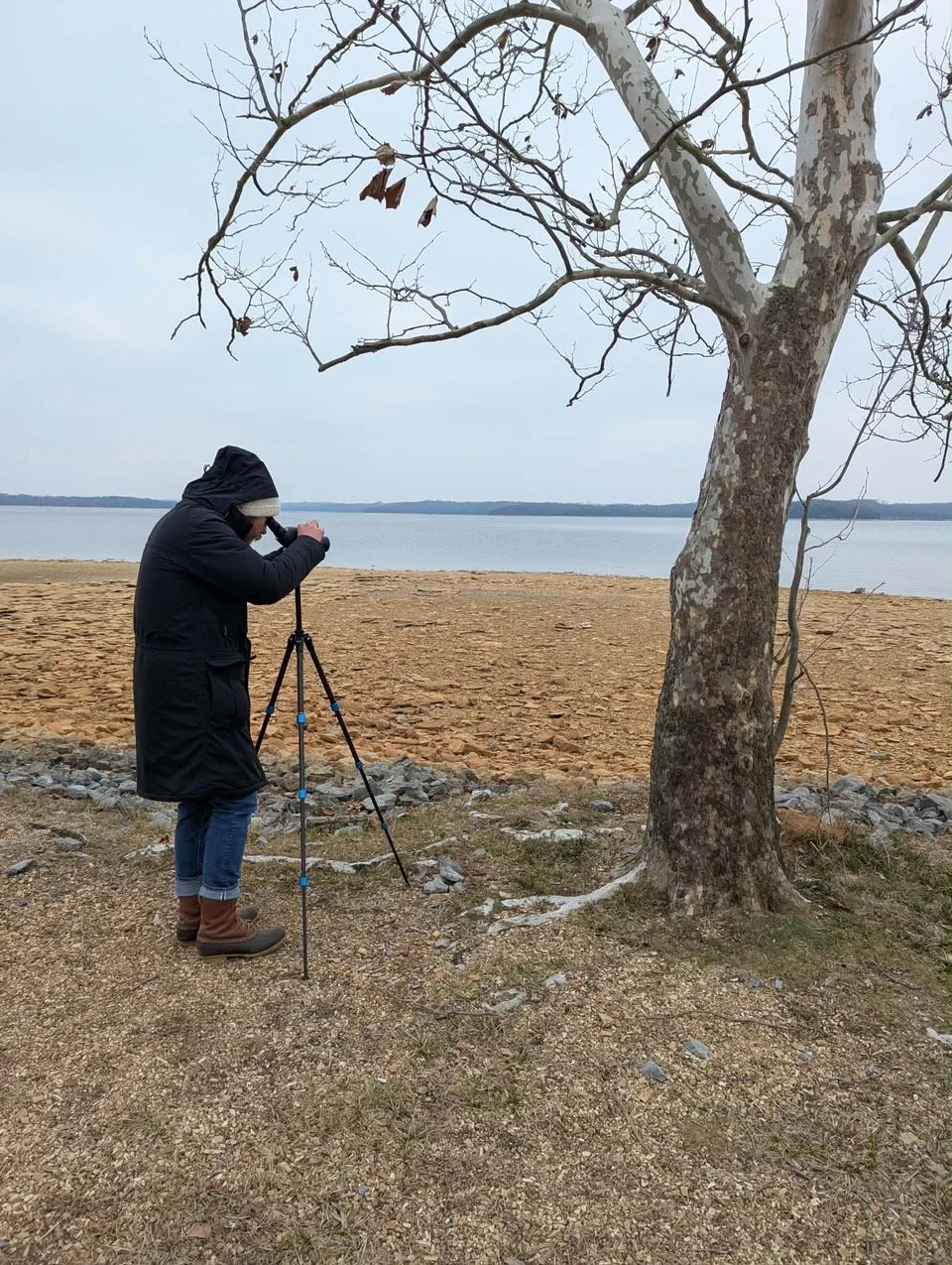
The Author Scanning for the Red-throated Loon While His Hands Go Numb
We counted 13 individual Common Loons in our particular area. We arrived at around 07:15 in the morning, and most of the birds were staying fairly still while preening themselves, which enabled us to get a good look at them. While we were watching them and discussing how little we would want to be in the cold, gray water, our hands were turning red from the cold. I thought I had forgot my gloves, which was only partially true. In reality, my gloves were nice and warm in the inside pocket of my coat that I forgot existed. It was even so cold that my camera was glitching again, and not allowing me to take more photos. Seemingly it had more sense than we did and wanted to be back inside. Unfortunately for us, the Red-throated Loon was not amongst the group that was in our part of the lake. We saw from a great distance (too far for an ID, even with my 30x magnification spotting scope) another large group of loons, in addition to gulls, further down the lake near an area known as Seven Points and while we didn’t have time to go down there that day, I plan on returning over the weekend to investigate both areas further. If I am successful, I will add a follow up to next week’s blog!
Common Loon
Photo by Eli Haislip
Winter is Coming... Are You Ready?
Be Cold Weather Prepared!
For all our birdbath and fountain users out there, we’d like to take a moment to remind you not to let your birdbaths or fountains freeze! Even the running water, like what’s in your fountain, can freeze solid and crack the concrete material it is constructed from when temperatures drop into the 20s and below. That’s why we always tell folks to be sure to drain and cover your birdbath/fountain if you don’t plan on using a de-icer.
What is a de-icer? Put simply, de-icers are a metal heating element that will keep the water hovering just above freezing. Some even feature thermostats that will come on when the water drops below 35 degrees, preventing the formation of ice. They will not make your water hot; there is no risk of the birds scalding themselves. They will only do enough to keep the water above freezing.
If you have purchased one of our thermostatically controlled models, there is a small but important piece of information tucked away in the depths of the instruction manual. When you go to put your de-icer out for the first time, don’t just put it in the water and hope for the best. You must first perform the “air test.”
“1. Set unit in freezer for one hour or outside if the temperature is below 35F for one hour out of water. Note: This is an air test– do not test the unit in water.”
“2. After an hour, plug the unit into an outlet. Hold the unit by the supply cord. Within seconds, the element should begin to heat. Listen for the thermostat to click off. Unplug and cool down the unit. The unit is working properly.”
Don’t let the instruction’s wording scare you- this is actually very simple. Basically, just take your de-icer out of its box, put it in the freezer unplugged, and leave it in there for an hour. If you forget it in there so it’s in longer, that’s fine too! After your hour is up, pull it out, and plug it in. You should feel the metal begin to warm up within a few moments. (It is NOT going to burn you) Then, you should hear an audible click as the thermostat clicks off. Your unit is working properly and is ready to protect your birdbath or fountain! This process should be done at the beginning of each season when you intend to use your de-icer to make sure the unit is still working properly.
Aside from not coming out to a broken birdbath, there are other benefits of using a de-icer. As many of our customers can attest to, having an ice free water source on frigid mornings is a great way to attract a variety of songbirds, including some species that you are unlikely to see at your feeders. Robins, Bluebirds, even Cedar Waxwings will flock to thawed water on frosty mornings giving you a good look at these beautiful birds!
Feeding Suet: The Wild Card
While we all feed suet year round here at the shop, our favorite time of year to offer it is in the depths of winter. It really is the ultimate wildcard feed. In addition to all your typical backyard birds such as woodpeckers, Chickadees, Titmice, and Nuthatch, look for Carolina Wrens, Eastern Bluebirds, Pine and Yellow-rumped Warblers, even Ruby-crowned and Golden-crowned Kinglets will visit suet feeders. From time to time, the cold will bring something very unusual to a suet feeder, such as John’s Western Tanager or a Baltimore Oriole one of our long time West Meade customers reported a couple years back.
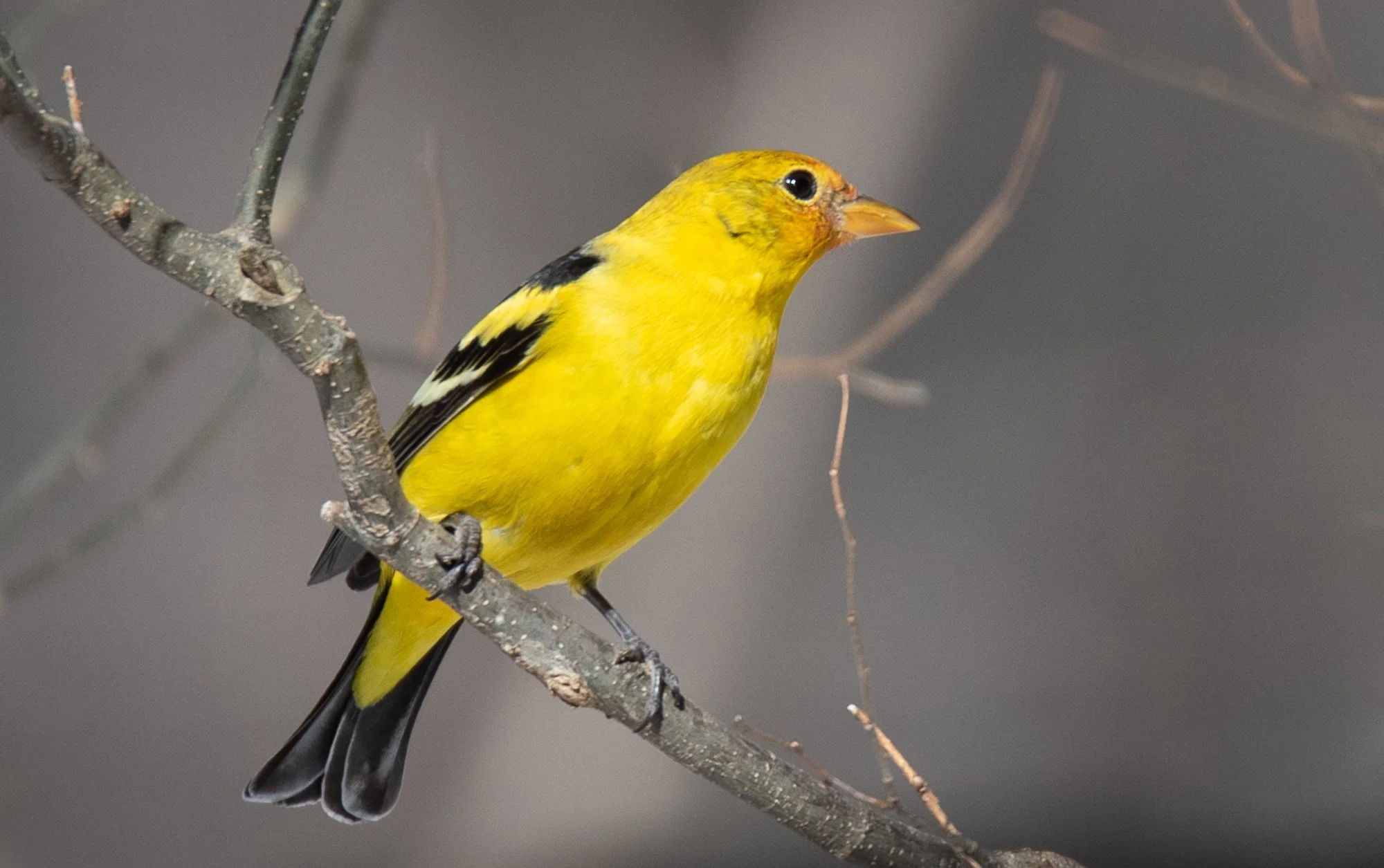
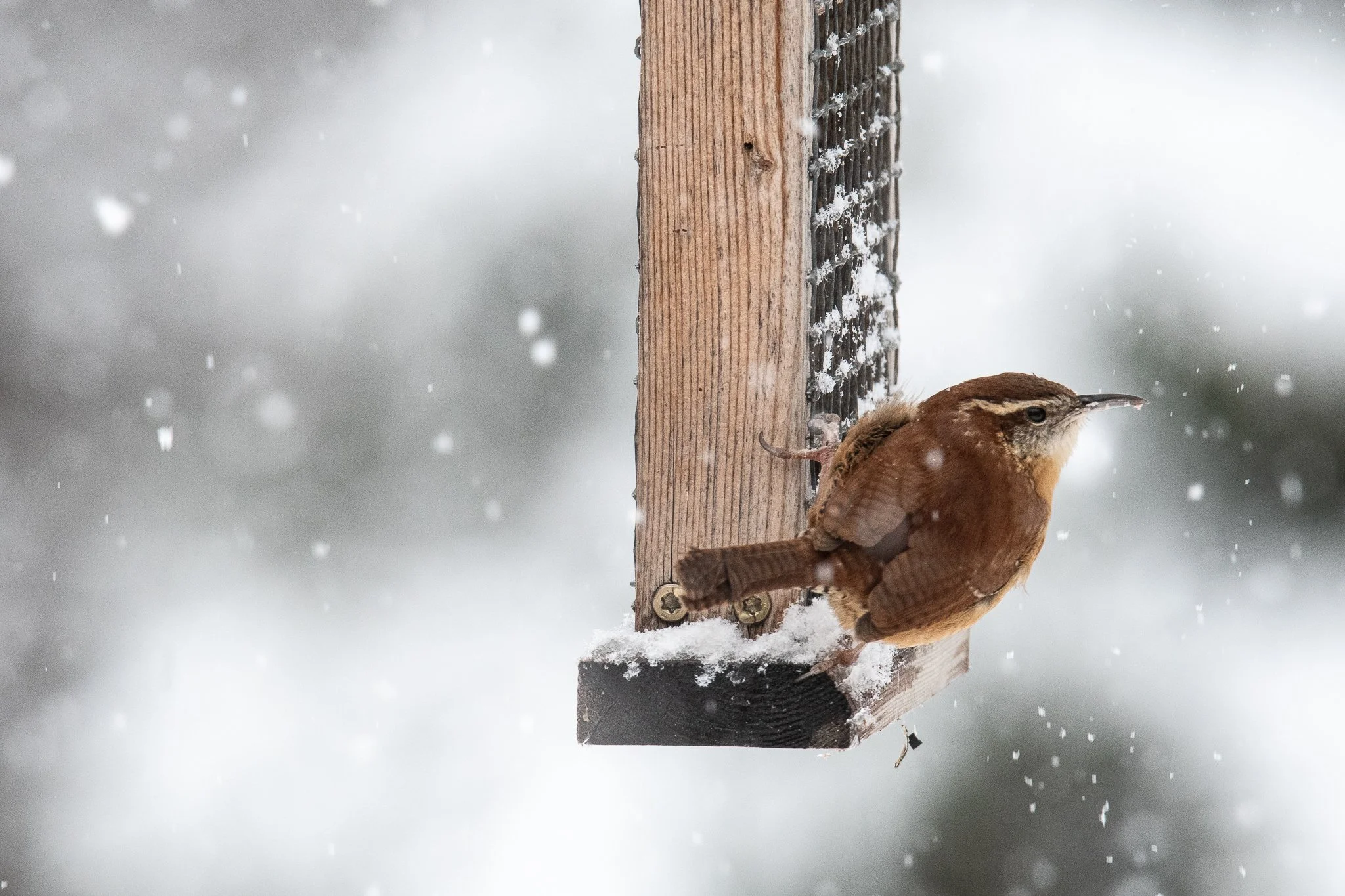
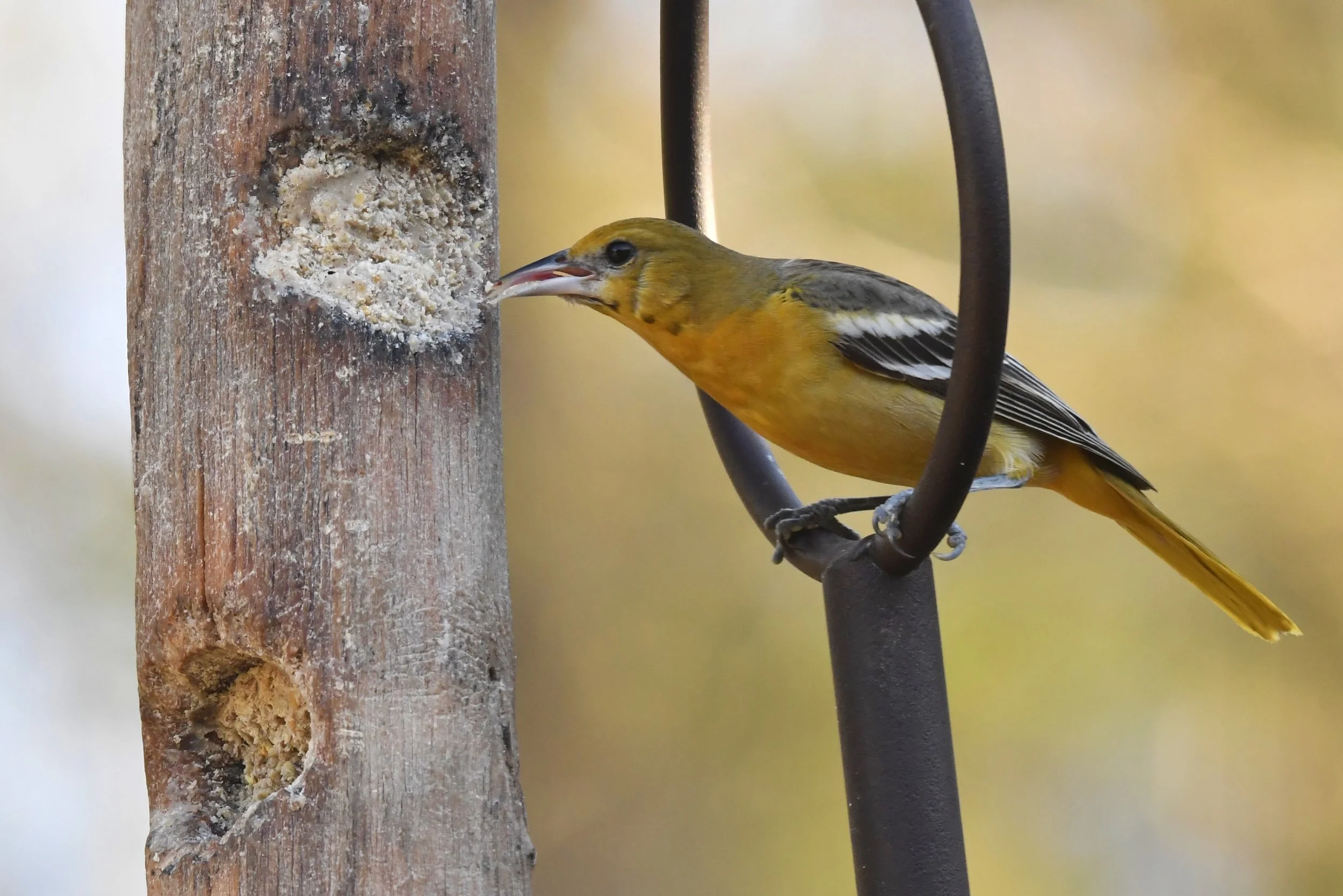
We currently are well stocked on both suet, as well as suet feeders. As always, peanut butter suet is our most popular, but if you wanted to change it up and try Fruit Berry and Nut, Insect, or Nutty Butter, the birds wouldn’t mind a bit! Also, did you know that if you buy a case, (12) there is a 10% discount? So grab 12, mix and match, and your birds will thank you for it!
Cassin's Kingbird and Store Updates!
Cassin’s Kingbird at Bell’s Bend
A bright flash of yellow this time of year often means something out of the ordinary. Whether it was the Western Tanager at John’s suet in January/February of 2021, the Western Tanager at my suet feeder in January of 2020, or the Baltimore Oriole at a customer's West Meade suet feeder in February of 2024, yellow usually means interesting in wintertime!
This proved the case again last Saturday while walking the River Loop trail at Bell’s Bend, when John and his wife encountered and were able to positively identify a Cassin’s Kingbird. The sighting occurred in the early afternoon, and lasted long enough that they were able to get a good look at it through their binoculars (this is why we always harp on carrying them with you whenever you go for a walk!) before it was chased off by one of the park’s numerous Northern Mockingbirds.
Cassin’s Kingbirds are normally found in the southwestern United States south through northern and central Mexico. These gray and yellow flycatchers can be spotted on high perches, where they will launch from to intercept insects on the wing. While this was a surprising sighting for Middle Tennessee, it’s not unheard of. On December 7th, a customer of ours spotted a Cassin’s Kingbird, also at Bell’s Bend! I went out for my own exploratory hike of the River Loop trail a couple days later but was unfortunately unable to locate the bird. However, given the park’s size, it’s possible it could still be there so keep your eyes peeled if any of you go out to hike Bell’s Bend!
Store Updates
With the holidays firmly behind us, we have a number of items on sale, with some up to 50% off! All glass enamel bird ornaments as well as our balsa wood bird ornaments are 50% off. In addition to these, large AND small solar towers, swinging pendulum owl clocks, and seed hearts. If you find yourself jealous of the very cool songbirds t-shirt I’ll be modeling tomorrow, (Saturday, Jan. 11th) it as well as all other t-shirts and hats will be 30% off.
As many of you have noticed, the parking lot can be a challenge during certain times of day. While it has calmed down from its holiday peak, it still can be busy, especially around lunch time. We are working on a solution which we will address in a blog post in the near future. In the meantime though, the parking situation has greatly improved from December. If it is still a concern to you, we can say that the busiest time of day within the plaza is between 11:30 when Sam’s opens, and 2pm when the lunch rush has concluded. As we mentioned though, things are much calmer now and you can most likely find a decent parking spot even during this time of day!
It was the Saturday Before Christmas: Locally Crafted Gifts, Holiday Hours, and Increased Feeder Activity
Gifts from Local Artists
This time of year, we frequently find ourselves being asked if we carry any gifts from local artists. The answer to that is yes, and today we are going to highlight them!
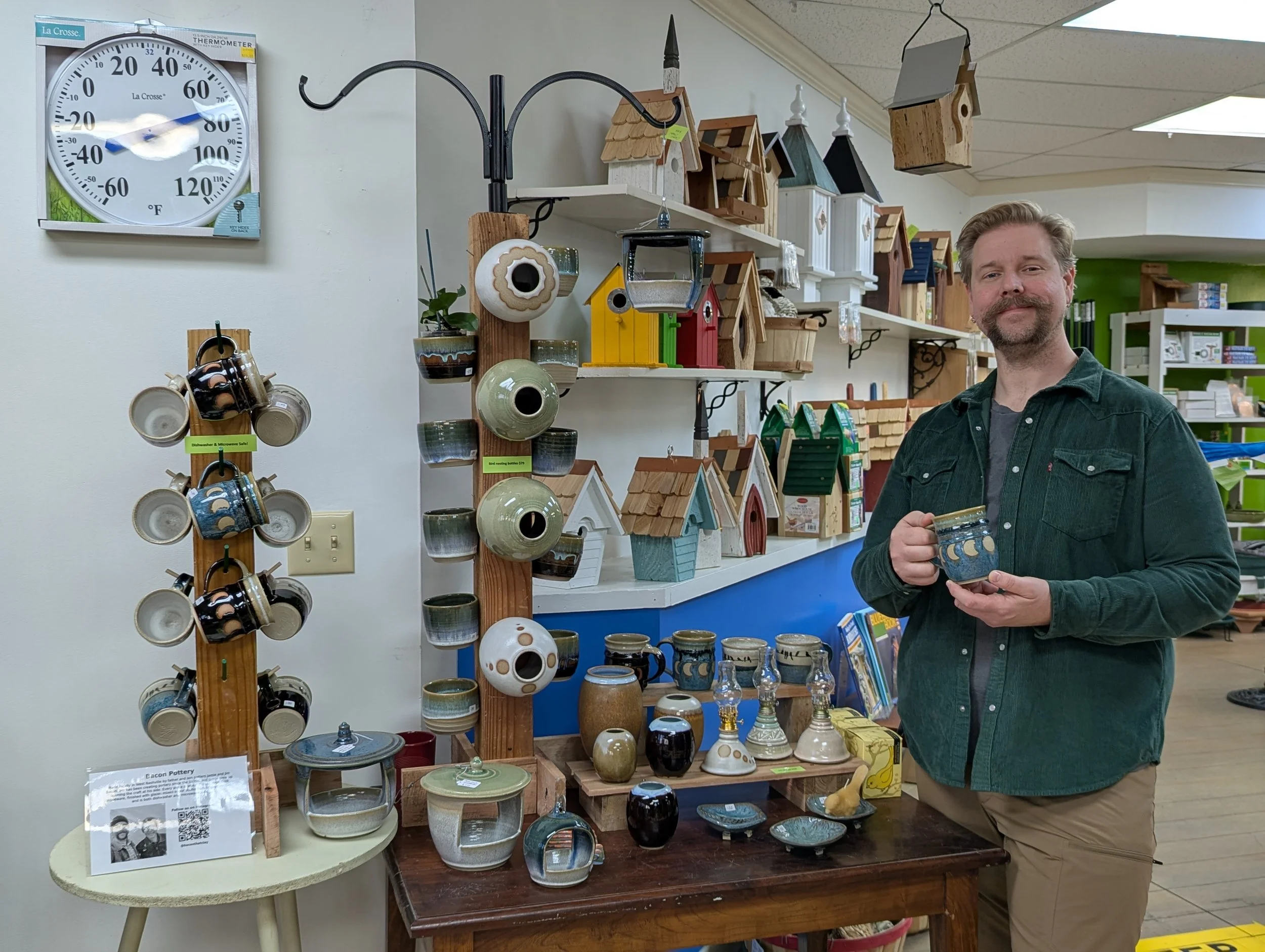
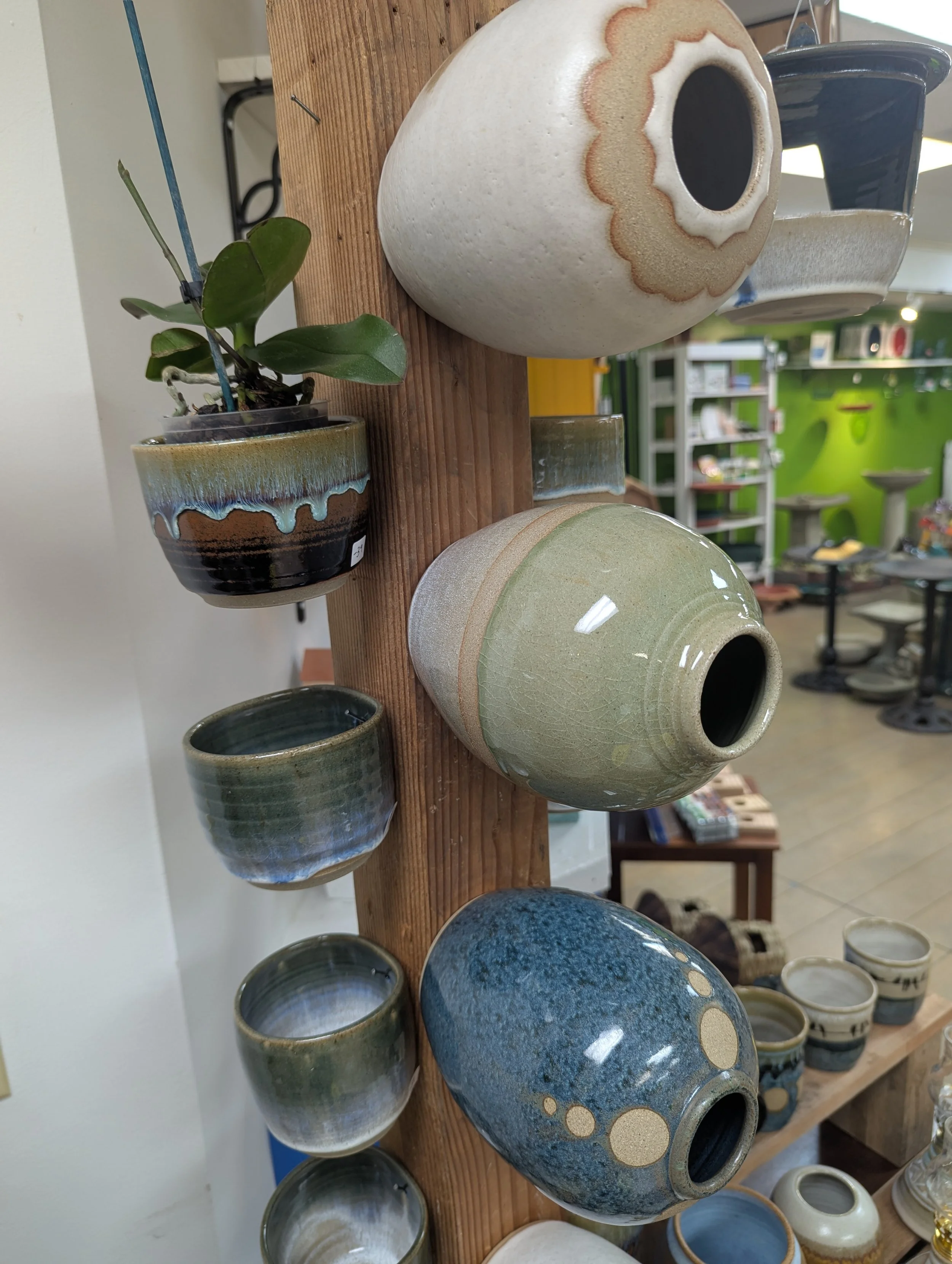
For example, did you know our very own Jamie is a very talented potter? For the last couple of years we have carried the handmade ceramic mugs, bird feeders, vases, and other accessories that Jamie and his father Jim produce in their home studio just down the road. This year, in addition to mugs, vases, oil lamps and orchid planters, they began producing their own take on the classic ceramic wren pot. Hang this in a protected area (such as under a carport or against your house) and there is a good chance that come spring, a pair of Carolina Wrens will use it to nest in!
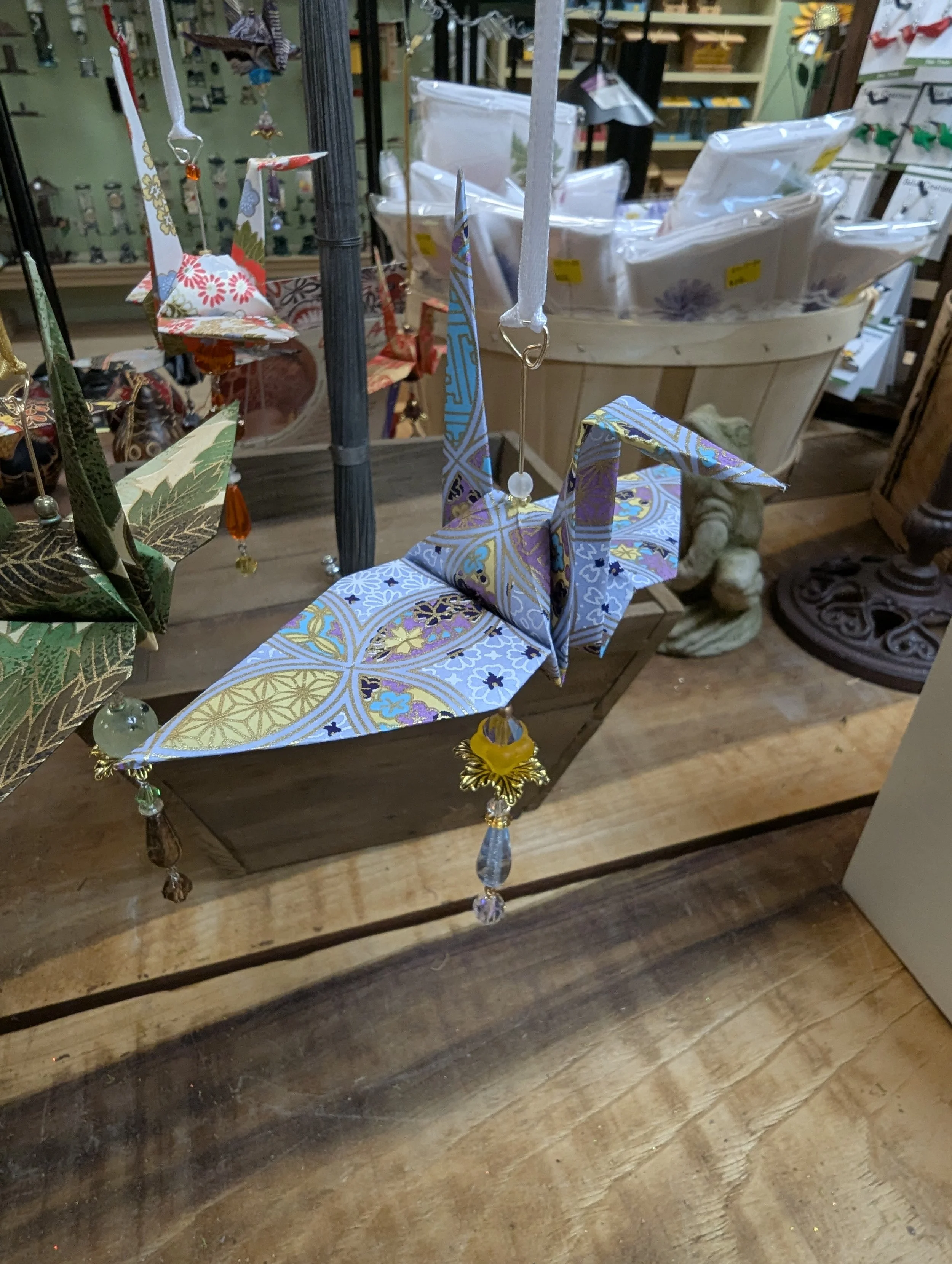
Are you looking for an ornament that is unique and produced locally by hand? Lydia Wilson, a longtime customer of ours, produces beautiful hand folded origami cranes made with unique papers as well as crystals to really catch both the light and the eye. If you are wanting a unique ornament from a local artist that is sure to be the highlight of your tree, look no further than these!
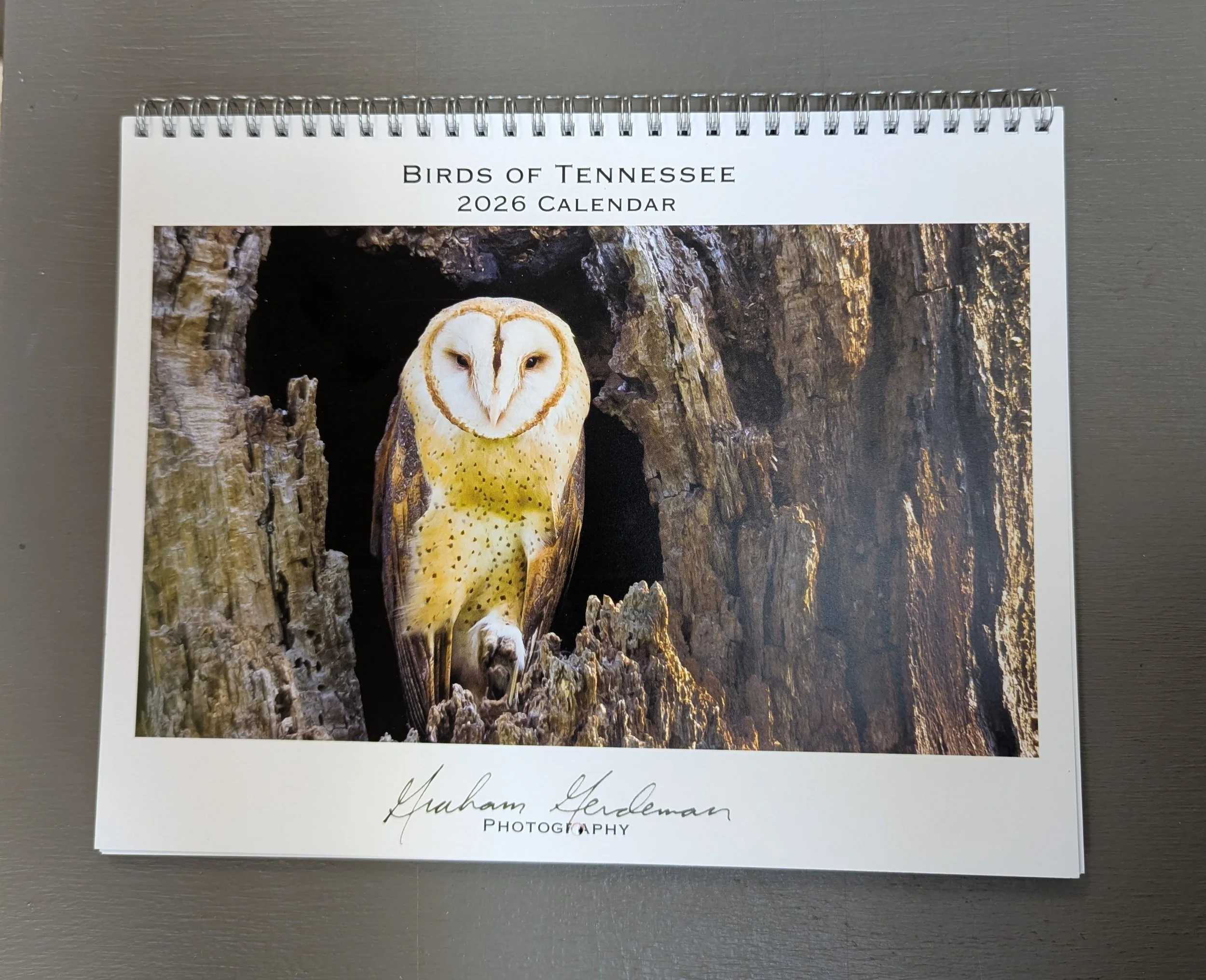
Our holiday gift lineup would not be complete without Graham Gerdeman’s Birds of Tennessee calendar. In fact, Graham’s calendar has been so popular over the years that we have phased out the other calendars we used to carry. Each year, it features stunning photographs of birds all taken within the state of Tennessee and partial proceeds benefit Warner Park’s B.I.R.D. research program.
Holiday Hours
Our holiday hours this year are as follows:
Christmas Eve: 10:00-3:00
Christmas Day: Closed
Normal hours resume Friday, December 26th
New Year’s Eve: Normal hours
New Year’s Day: Closed
Increased Feeder Activity
If the activity at your bird feeders seemed especially slow to you this fall, you are not alone. We saw the typical September-October slow down extend throughout the month of November this year. Why, you ask? Remember back to the spring and early summer when we had plenty of rainfall and relatively mild temperatures? This likely created a bumper crop of foods in the wild. (We have heard from many people of a greater than normal crop of acorns, for example) In addition to this, with warm weather sticking around through November, there was a ready supply of insects available. These factors combined to create an exceptionally slow fall at bird feeders.
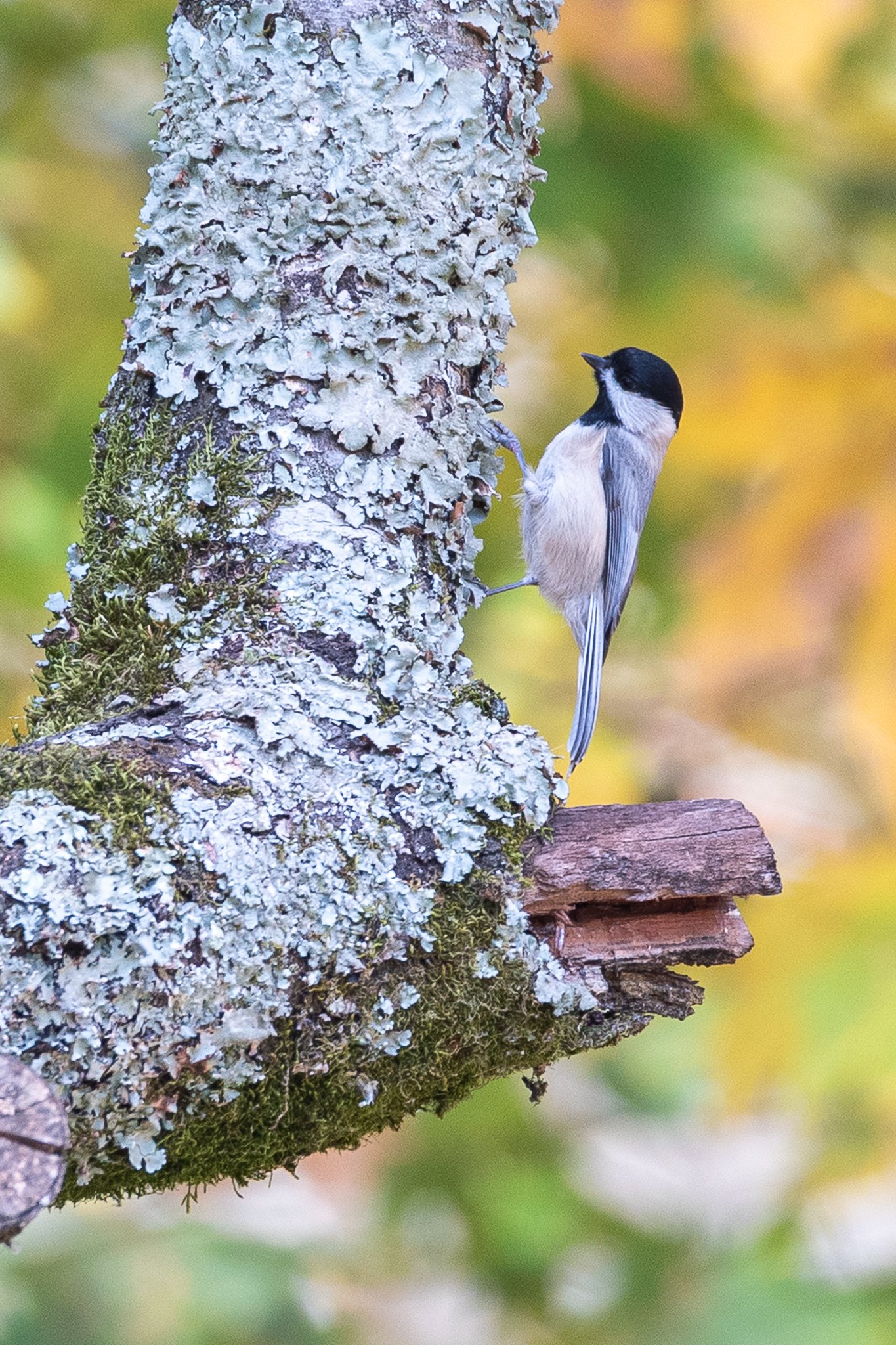
Carolina Chickadee foraging for food
Photo by Eli Haislip
We are happy to report that feeder activity is finally picking up, though, and people are seeing some interesting things. For example, Purple Finches are being reported earlier and in greater numbers than in previous years, so if you need to restock your seed supply, come on down and see us!
Mr. Bird has Landed!
Mr. Bird has Landed
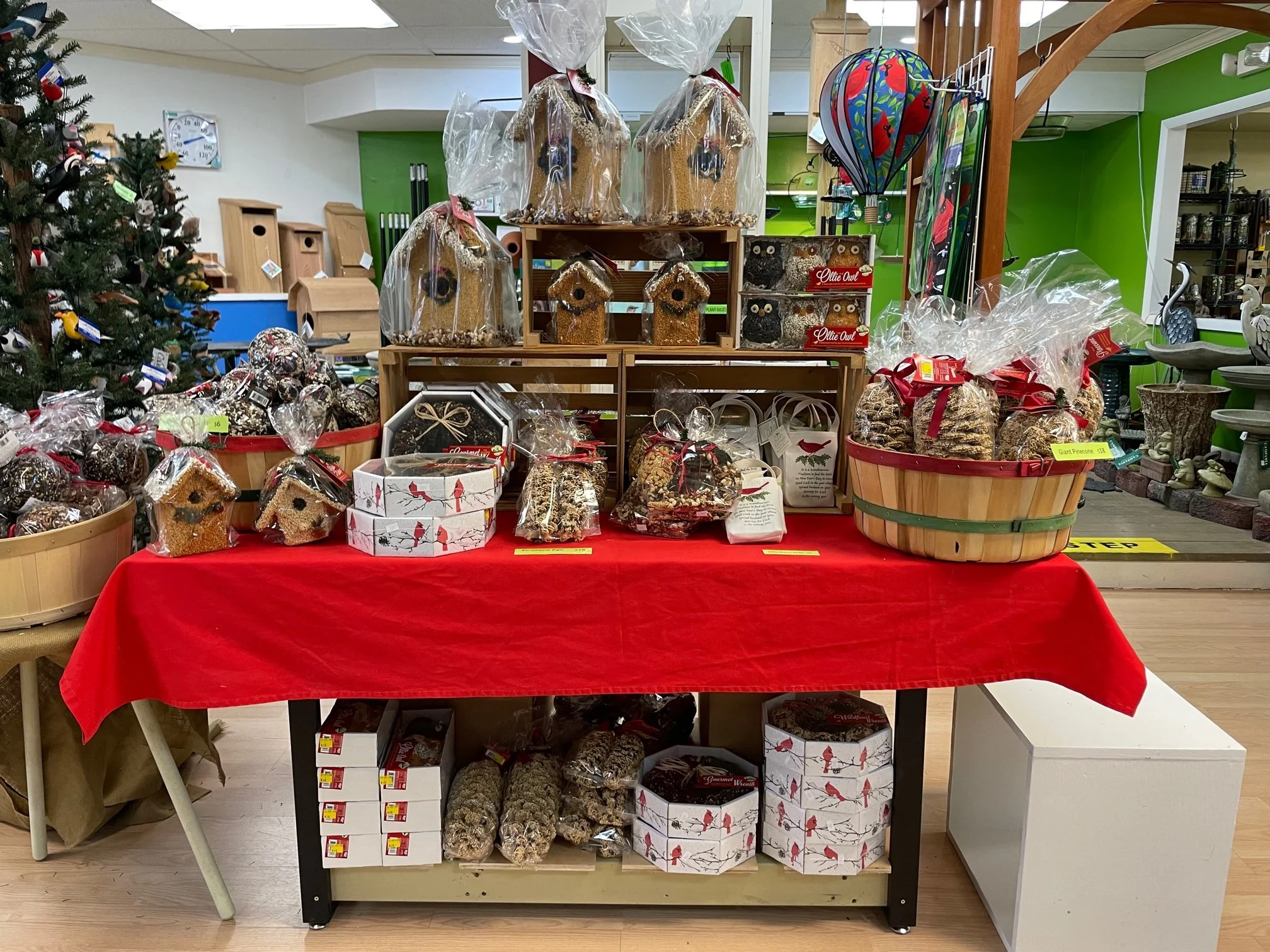
While things have been slow at feeders, we’ve been keeping busy around the shop searching for new gifts for this year’s holiday season, and we have found some new items (in addition to our staples) that we are confident you and your family and friends will love!
First, we are excited to announce the return of our Mr. Bird Holiday Collection! We are filled to bursting with bird seed ornaments, wreaths, decorative bird seed covered houses, and much more. We now have Mr. Bird gifts in all shapes and sizes, stocking stuffer sized Little Hearts and Little Stars ($5 and $6, respectively) to the Seed and Nut Balls and Ollie Owls. ($8 each) Want something a little larger? How about the largest seed covered pine cone you’ve likely ever seen? The Giant Pinecone is large enough to feed a flock of song birds and it’s only $18! If you don’t need a pine cone that is larger than a grown man’s head, we also have in the ever popular Birdseed Wreaths, which are as popular with the birds as they are with the humans.
One of the best sellers over the years has been the different bird seed covered houses! They come in two sizes, the small Birdie Cottage ($18) and the full sized Birdie B&B. ($60) The fun part of the Birdie B&B is that once the birds have consumed the seed, it can be used as a fully functional bluebird box.
All these consumable seed ornaments can make the perfect gifts for the folks on your lists who “have it all.”
Purple Finch Sightings
Male Purple Finch
Photo by Eli Haislip
So far, this season is proving to be a great one for sightings of Purple Finch! More often, it is in the depths of winter when we begin to hear the odd report of a purple finch, and even then it is rarely more than one or two. As of this week though, we have already had three reports with numbers ranging between 1 and 12 birds at feeders or water sources. Now, if you are thinking to yourself, ‘I have those year round, what’s the big deal?’, what you are seeing is actually the House Finch, a common year round feeder visitor. Purple Finches share similarities, but once you learn the differences, you’ll never mistake the two again!
For starters, we only have Purple Finches during the fall and winter months here in Middle Tennessee. Purple Finches have been described by Roger Tory Peterson (the author and illustrator of our favorite field guide; Peterson’s Field Guide to Birds of Eastern and Central North America) as “a sparrow dipped in raspberry juice.” Seen side by side, the color difference is quite pronounced. Purple Finch are much more, well, purple in comparison to the red of the House Finch. Also, the coloration of Purple Finches extends around to their back and wings. Females can be easily identified by the darker band of feathers that extends behind their eye.
Fortunately for us, these beautiful finches are not difficult to please when they do visit feeders. They will enjoy sunflower, or any sunflower heavy blends (such as our Woodland Blend or our no-mess Premium Blend) as well as safflower seed.