
BIRD NEWS BLOG
Tips for Feeding Bluebirds
Picture taken out back of the shop.
Male bluebird getting as many worms as he can.
Maybe you saw our video we posted last week of the three handsome male Bluebirds eating mealworms on our loading dock (it's also re-posted below). If you haven’t you can can see it in last weeks blog titled Get Ready For Bluebirds and for more videos visit our you tube channel. And now you are interested in getting started. Eastern Bluebirds feed primarily on insects and berries so feeding them can be a little tricky. We have a great deal of experience feeding bluebirds and would like to pass on our tips and tricks to help you have success.
We at The Wood Thrush Shop would never suggest that the way to attract Bluebirds is with mealworms. Mealworms are really the second part of the equation. We would always recommend that one attracts Bluebirds first with nesting boxes. Feeding them then becomes a lot easier. Why? Because natural food sources for Bluebirds are literally available everywhere they travel. Nest-boxes are not. Their need for nest boxes takes precedence during the breeding season and will bring them to your yard more predictably and reliably, and for several months.
When Bluebirds begin checking out a nest-box that is the best time to begin offering the kind of food they prefer, like live mealworms. The type of feeder to use is really not very important. I use a small clay dish which is placed on a large rock easily seen from the nest-box, maybe 10 feet away. Platform type feeders tend to work very well. We can show you several Bluebird feeder types we stock.
When I see the first signs of Bluebirds showing interest in the nest-box that’s when I bring home the mealworms and look for the first opportunity to walk out to the feeder and offer a small amount of worms, maybe a dozen. THIS IS IMPORTANT! The key is I make sure the Bluebirds are there to see me make the offering. Most times, over the many years I’ve done this, I have immediate success. They fly right down to the dish and gobble them up. I’ll repeat this little scene every time the opportunity arises over the course of a few days or a week. Usually 3 or 4 times is enough for the Bluebirds to catch on to what you are doing. If during that first offering they fly away do not leave the mealworms there. The longer the worms are there the greater the likelihood that a Robin, or Mockingbird sees them. If they catch on to this offering feeding the Bluebirds will then become almost impossible. So, keep the offerings minimal until the Bluebirds really catch on. Then you can increase the amounts of mealworms being offered as they raise their young. Soon they will be waiting for you, or even seeking you out in your yard as I’ve experienced in the past.
TIPS:
Ø Offering mealworms when Bluebirds are not present is a sure way to feed a lot of other birds. Wait until you see them before offering.
Ø If birds that you do not want are getting the mealworms suspend offering the mealworms for a few days or more and start over using the suggestions we’ve outlined.
Ø Bluebirds may partake of other foods like dried mealworms, suet, Bluebird nuggets (a type of suet), raisins, blueberries, chopped apple and grape. Experiment and let us know your results.
Ø Location is important. Don’t try to feed them near birdfeeders or a place that gets a lot of bird traffic.
Ø Some people employ the method of making a sound, like whistling, while they offer the worms. Like Pavlov’s dogs Bluebirds will key in on the sound and associate the treat about to be given them. I’m convinced that the Bluebirds we fed behind the store one year became familiar with the sound and sight of my truck arriving in the morning. As soon as I would get out of the truck they would be landing on perches waiting for me to enter the store and bring out worms.
Remember, Bluebirds will not become dependent on the mealworms but will simply take advantage while they are offered. You may suspend feeding them any time and not worry that they will starve.
Get Ready For Bluebirds


Have you been listening? Birds are beginning to sing. They know spring is fast approaching. It’s apparent Eastern Bluebirds have already begun searching for potential nest-sites. Several times in the past few weeks I’ve seen two and three Bluebirds land on and look in some of the nest boxes around my yard. Their biological clocks are telling them the breeding season is almost here. Although most Bluebirds won’t begin their first nesting until early to mid-April, their search for nest sites will typically intensify in the last weeks of February and into March. Some eager Bluebirds may get on nest as early as mid-March.
So, get a jump on your neighbors and offer a couple of nest boxes in good locations. If you already have nest boxes now is a good time to make sure they are cleaned out and free of old debris left over from last year’s nesting’s.
Here are a Few Tips on Choosing a Location:
Ø An open lawn area may be preferable but not absolutely necessary. Choose the most open location available in your yard even if it means there will be a little more human traffic.
Ø Bluebirds would be more sensitive to a lot of bird traffic so it’s not recommended nest boxes be placed near bird feeders. What’s a comfortable distance? It’s impossible to be exact but we would suggest 50 to 100 feet away.
Ø You may have heard that nest boxes need to face east. While this may be helpful to keep wet weather from being a detrimental factor this is not something Bluebirds require.
Ø A Bluebird box does not need to be on a pole. The advantage of a pole, however, is it allows you to position the box in the location you determine to be the best. Bluebird boxes can be mounted to trees, fences, structures like garden sheds, and utility poles. A height of 4’ or 5’ is just fine.
Ø How many boxes can be offered in a typical yard situation? So, there is no harm in offering lots of nest boxes (birdhouses) in your yard but do not expect them to all get used at the same time especially if they are close in proximity to one another. For instance, two nest boxes within 25 feet of one another are not likely to be occupied simultaneously. Birds are too territorial to accept this situation unless they are colony nesters like Purple Martins and Cliff Swallows. But feel free to decorate your yard with lots of birdhouses if that’s your thing. Offering multiple nest-boxes is great and it does lessen the competition for a single box, but do consider the nature of the species you are trying to attract and what kind of setting would be most appealing.
And PLEASE remember to not let your desire to attract Bluebirds cause you to clean out Chickadee, Wren, and Tufted Titmouse nests. In no way does cleaning out a Chickadee nest ensure you will get Bluebirds instead. Chickadees typically nest earlier than Bluebirds and only once. Bluebirds will nest up to 3 times per season and have plenty of time. Even if you do not get Bluebirds during the first nesting there is still time for two more. Besides, if a Bluebird wanted the nest-box it would easily out-compete a Chickadee.
….Next Week How to Feed Bluebirds
Bird Bio: Brown Creeper
I recently had the pleasure of spotting one of my favorite, but seldom seen, birds of winter, the Brown creeper. It is not a rare bird to be seen but elusive for sure. Every winter I get a few glimpses of a Brown creeper heading up the trunk of a tree where I have a suet feeder. This is the only species that we have that only goes up a tree and never down. It has an unusual way of foraging for food by creeping up a tree and then dropping down to the base of another tree and spiraling up. It’s very interesting to watch. It’s found as an uncommon winter resident statewide October to April. Brown creepers are very small and slim, and quite well camouflaged keeping to trunks of trees. They are brown above and whitish below, with a slender de-curved (downward curve) bill. Like a Carolina wren they have a prominent white eye stripe. Brown creepers are primarily insect eaters but suet seems to be its preferred food at feeders, probably because it is found often on trunks of trees. So, next time we have a little inclement winter weather, that’s when they seem to appear, watch your suet feeder a little more closely. Look for this interesting and elusive little bird.
AND…check out the video I recently took of a Pileated woodpecker taking advantage of a water fountain in my yard. It’s always a treat to see this bird and observe its interesting habits and behaviors, not to mention its stunning plumage, but it was especially nice to see it drinking. I had never caught one using one of my water sources before.
The Fall Slowdown
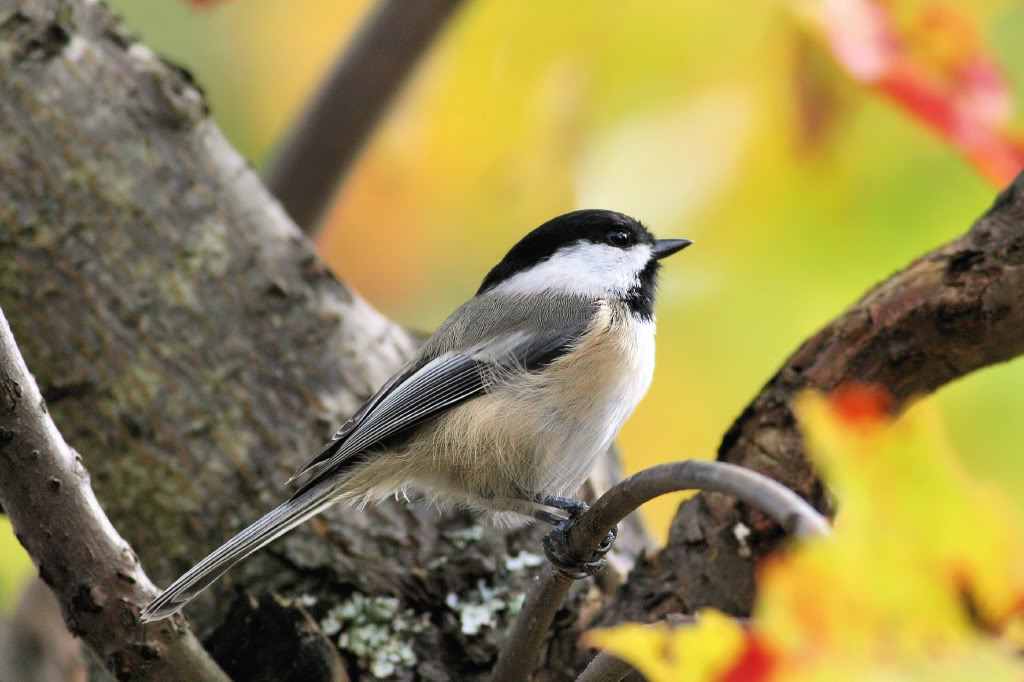
Have you noticed a lack of bird activity at your feeders in the last few weeks? It’s not anything you’ve done wrong and there is nothing wrong with the seed, it’s the seasonal transition that makes birds scarce at feeders.
This time of year many of you will notice an abrupt and sometimes dramatic slowdown at your feeders. You may even notice some species become practically non-existent. Bird feeders in September and October are typically very quiet. This is normal and understandable. With thebreeding season well behind them birds are now in less need of a quick, easy food source like your feeders. While raising their young during the months March through July birds expend great energy and will take full advantage of backyard feeders. We sell far more seed and suet during those months than we do even in winter.
Let’s not forget that the food birds get at your feeders is really only a supplement to their natural diet. They do not become dependent on feeders. Their frequency of visits to feeders is based largely on what is going on at that time in their life-cycle, seasonally and environmentally. Your feeders are slow at this time of year because the breeding season is over and adults are not raising and feeding young, and practically all plants; weeds, wildflowers, shrubs, and trees, are producing seeds, nuts, and fruit. Birds are taking advantage of the bounty nature is providing them. Nature provides all this food in the fall to help wildlife get through the winter. They are busily feeding and storing food for the months to come. Will this be a tough winter? The birds likely know.
So don’t worry that you are not seeing many birds around the feeders right now. It is totally normal. About the time we get the first frost or two you will begin to see a return of your favorite birds to feeders. And be on the lookout for our winter birds like Purple finch, Pine siskin, Red-breasted nuthatch, and White-throated sparrow.
Although there are fewer everyday hummingbirds are still being seen. Keep at least one feeder going and keep the nectar fresh.
Birding While Traveling
I always bring my binoculars on vacation and I would encourage you to do so as well. Spotting a few new birds just adds another layer of enjoyment to your time away from home and work.
While on vacation in California last week I was able to do some light birding. I usually vacation in or near beautiful natural areas where there's so much to see and do. I don't go on vacation specifically to bird watch but my binoculars are always with me. It’s a lot of fun to see different birds than what you see in your own backyard. You also gain an understanding of the diversity of bird life we have in our country.
Most of my birding opportunities last week came from the balcony of the condo overlooking the view of a natural area leading to the beach. Being the first one up in the morning I would sit on the balcony with a cup of coffee and I’d listen and watch. So, without really trying I was able to see and identify the following birds:
Pacific wren, or Winter wren (really hard to distinguish between the two)
California scrub jay (lured to the balcony with treats)
Snowy and Great Egret
And.....
While on a whale watching trip besides seeing the awesome Humpback whale, Rissos dolphins, sea lions, and sea otter, I saw Black footed albatross, Cormorants, Sooty Shearwaters, and many different gull species