
Wood Thrush Shop Notes

Spring Birdwatching Excitement

Spring migration is in full swing which means there is a lot to see if you invest a little extra time looking in any of our wonderful parks and on greenways, and even in your own backyard. The first few sightings of Ruby-throated hummingbirds came in this week and over the course of the next 6 weeks many more will follow. Get your binoculars out and your ears ready because neo-tropical migrants are passing through middle Tennessee everyday headed to their summer breeding areas, which will take some of them as far as Canada. Over 30 species of warblers, 7 species of vireos, Scarlet and Summer tanagers, several different flycatchers, Orchard and Baltimore orioles, and 6 species of swallows are there for the viewing if you try. Mornings between 6 am and 10 am are best because many of these migratory birds travel at night settling down to feed and rest before resuming their journey.

For daily sightings reports you may want to subscribe to tn-bird@freelists.org or visit Tennessee Birding on Facebook. And if you would like to become a more active birdwatcher consider joining the Nashville Chapter of Tennessee Ornithological Society. For more information visit TNBirds.org

Your feeders may have been a little slow over the last few weeks but soon activity will increase significantly. Suet consumption will also increase, especially if you live in a wooded environment. Woodland birds like woodpeckers, nuthatches, chickadees, and titmice, find suet to be a valuable commodity during their nesting phase. In my yard I find that suet consumption doubles from mid-April through the end of June.

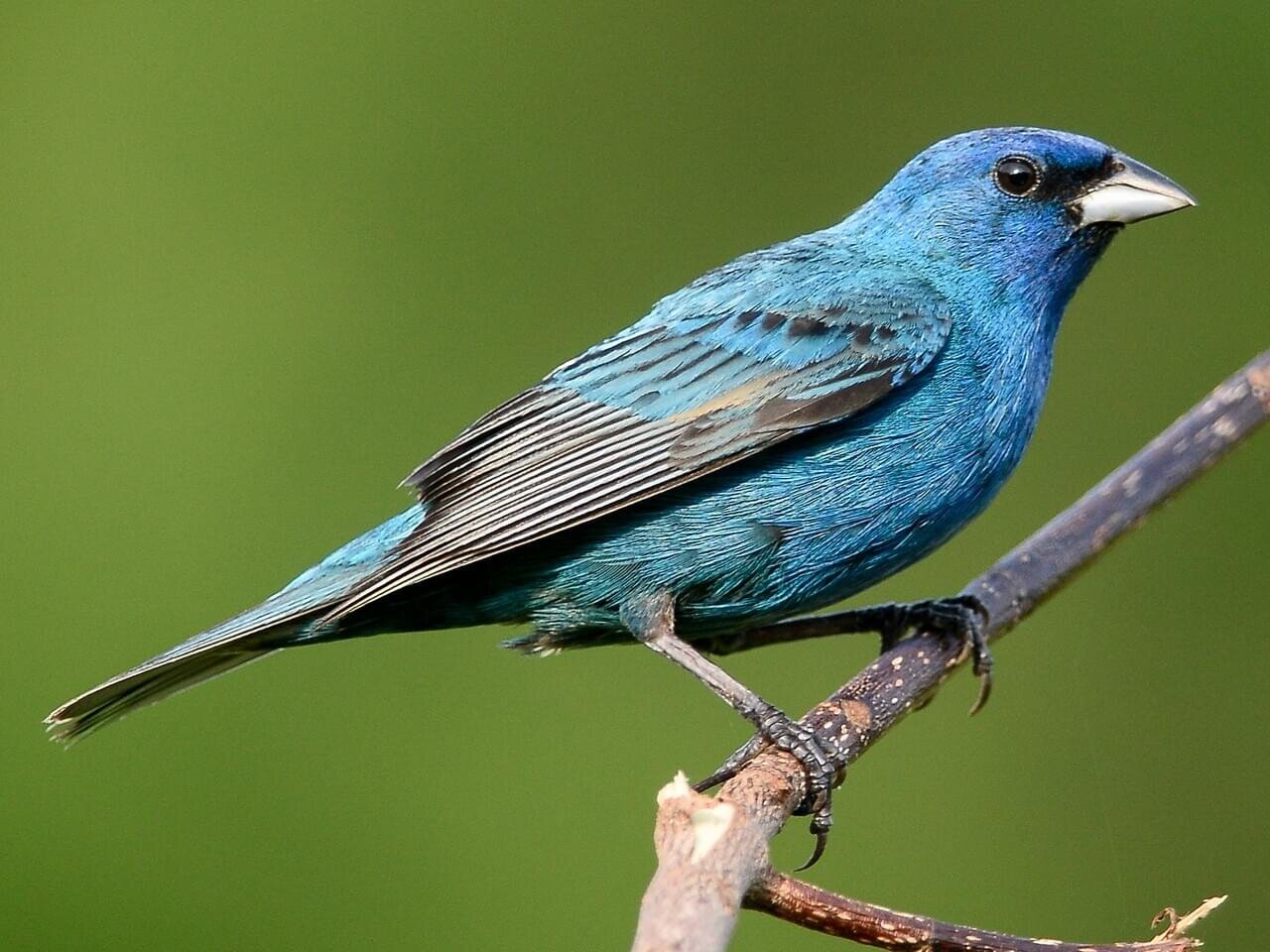
At your feeders expect to see the always popular Rose-breasted grosbeaks and Indigo buntings. RB Grosbeaks are very fond of most seeds with sunflower, safflower, and peanuts being favorites. Platform feeders will accommodate several at once. Indigo Buntings may visit finch feeders as well as platform and tube feeders with sunflower and millet. Pics of RBG and Indigo bunting

Of course, American goldfinches are here in abundance year-round and are now putting on their bright yellow spring plumage. Goldfinch numbers can vary daily as they, too, are on the move.

Very few Bluebird nests have been reported so far which is quite normal. It's still on the early side of the nesting phase. There is still plenty of time to offer a Bluebird box and successfully attract them.

Happy Easter to all!

Early Spring Hummingbirds

Every year at this time we regularly answer the question “when will the hummingbirds arrive”?

Ruby-throated hummingbirds do begin migrating into and through TN as early as the latter part of March, with the bulk of them arriving or passing through between mid-April and mid-May. We expect any day now to see on TNbird, or hear from a customer, the first reported sighting of a Ruby-throated hummingbird. Male hummingbirds tend to be the first to arrive.

Some of these early arrivals may feed for a few days before continuing on their journey to their final destination, which may be as far as Canada. Those that stay in mid-TN will then begin the task of establishing territory, courting and nesting. Their interest in feeders is minimal at this time. Why? Unless a hard freeze kills blooms and no flowers are available nature provides hummingbirds with everything they could possibly need, which is nectar from plants, and insects for protein. In fact, the first arrival at my home in Cheatam County usually spends more time at the Columbine blooms than at the feeder. Early blooming perennials and native plants are a very important nectar source for hummingbirds.

Remember, Ruby-throated hummingbirds have been making the journey to North America from central and South America to breed for roughly ten thousand years. They would come here whether we had feeders full of sugar water or not. They will come to feeders when they are ready and that typically occurs near the end of their breeding season, usually starting around late June to mid-July. People living in rural areas tend to see hummingbirds earlier and more often than people in more urban areas. Why? The simple answer is rural areas provide better and more nesting habitat for hummingbirds.

So, if you are wondering when to put up a hummingbird feeder you may do so now. However, you should temper your expectations. Do not expect to see a lot of activity. It is certainly possible you may see a bird or two take advantage of the feeder before moving on to its final destination. And it is not true that if you don’t put out a feeder now you will miss them later in the summer.

The Best Solution for Hummingbird Nectar

The best nectar you can offer hummingbirds is a simple 1 part sugar to 4 parts water solution. It is not necessary for the water to be brought to a boil before adding sugar unless you are making larger quantities for storage in the fridge. The nectar is ready after the sugar has been stirred in and fully dissolved. Do not add color in the form of food dye. Color is absolutely unnecessary and potentially harmful. Also, it is not good to use natural raw sugar, the kind that is slightly brown in color. Regular white table sugar is recommended.

Are birds flying up to and against your windows?

It’s called image fighting.

Every spring we frequently address the question “why is this cardinal (or some other bird) trying to get in my house?” Cardinals are the most common bird to image fight, but it can be any number of species including Eastern bluebird, American robin, Eastern towhee, and even Pileated woodpecker. Cardinals are the most common, likely because they often nest in shrubs around the foundation of a house putting windows and glass doors very close to their comings and goings.

Image fighting refers to the sometimes constant presence of a bird fluttering at and making contact with a window, or many different windows of a home. Sometimes it will be the side view mirror of a vehicle. During the breeding season a bird’s sense of territoriality is heightened. A bird will pass a window and detect the movement of a bird, that appears to be the same species, and it will fly up to the window seeing what appears to it to be a competitor. It’s the result of a very strong instinct that hasn’t been able to adapt to a man-made object. This activity can go on for months, and well beyond the breeding season if unaddressed. The bird rarely injures itself seriously but it becomes an incredible annoyance to you and keeps the bird extremely occupied with a futile activity when it could be doing something much more important.

For your sake as well as the birds we recommend stopping this behavior as soon as possible so the bird can resume normal activities and keep you from getting very frustrated and contemplating doing harm to the bird. The best way to stop this activity is to block the source of the reflection for a period of no less than a week. This can be achieved by putting up a piece of cloth or cardboard cut to the size of the pane and affixing to the glass, thus removing any possibility of the birds seeing its reflection. It MUST be applied to the exterior. Putting it on the interior can actually make the reflection more pronounced. Other things like a couple of inflated balloons tied to a piece of string taped to the glass works very well, again, on the exterior. The balloon moves around with the slightest breeze keeping the bird from wanting to approach. Again, try this for no less than a week. Repeated applications may be necessary. Usually the behavior lessens or stops after the breeding season concludes.

If you are having an issue with birds image fighting on the side view mirror of your vehicle try putting a bag or an old pillowcase over the mirrors while you’re not using your car. Try one of these methods to help your birds get back to the business of raising young.

Early Nesting Activity

Carolina Wrens Quirky Nest Locations

It is hard to believe given the recent winter weather but presently you may see evidence of certain birds beginning the nesting process. For weeks now I have been hearing Cardinals singing, as well as Chickadees, Titmice, Bluebirds, and Carolina Wrens.

The Carolina Wren is one of the earliest nesting birds you should be aware of and be prepared for its quirky choices of nesting locations around the house. Carolina Wrens are notorious for choosing to nest in what seems to us to be terrible and dangerous locations. But their beautifully crafted nest can be so well concealed that you only accidentally discover it while doing a little spring cleaning. Their nest is an expertly engineered “cave” made from long thin pieces of root, a little moss, and lots of lacey skeletonized leaves intertwined where the eggs will be laid deep within.

Hopefully, by pointing this out now you may be able to discourage one from nesting in a location that will be quite the inconvenience for you later.

Here is a list of actual nesting locations we have either experienced or encountered with customers: A wreath on the front door, open mailbox, on a shelf in the garage or garden shed, under the hood of an old vehicle that’s been sitting for a while, upside down canoe, bicycle helmet hanging on a wall, in a hanging plastic shopping bag, behind pillows on an outdoor couch, in a potted plant on the porch, on a hanging ladder, in a covered boat, in a gas or charcoal grill, and in the folds of a hammock to name a few.

If you have experienced something like this in the past get ahead of it now to avoid the unpleasantness of having to relocate a nest, which rarely works. Avoid leaving a window or door open on your garage or shed because these inquisitive little birds will and do quite expertly find their way in and out of small places and openings. At the store during the spring months, we sometimes leave the backdoor open to let in the fresh air. We have seen in just a few hours a Carolina Wren discover an empty box on a shelf and promptly begin nest building. It can happen that fast. You may think to put up a birdhouse for them out in the yard somewhere but that usually does not work. Carolina Wrens want to be close to the cover and protection of your house, or some large object. I have had success with Carolina Wrens in a birdhouse, but it was placed on the wall of my covered porch just a few feet from my backdoor.

If you discover a Carolina Wren nest with eggs or babies in an unwanted place, please consider letting them finish and allow the babies to fledge. Wren babies leave the nest quickly, sometimes less than two weeks after hatching.

Bluebirds Searching for Nest Sites

Bluebirds are now singing and exhibiting courtship behaviors. Listen for the sweet call and the male wing waving as he sits on a nest box or near-by perch to court a female. Although bluebirds are going through the motions of courtship relatively few will get on nest in the month of March. Sure, there are always a few eager pairs, but the majority seem to wait until early to mid-April. There is plenty of time to still offer a nest box in your yard and attract Bluebirds this spring and summer. Bluebird numbers are great and its easier than ever to attract them with a nest box. Rather than duplicate our “Bluebird Handout” in the store with all the nest box placement tips and suggestions I would prefer to dispel a few myths instead. We frequently encounter customers who are under the impression one must have the perfect situation to attract Bluebirds. Bluebirds are quite good at adapting and the very fact they use nest boxes made by man illustrates this.

· Nest-boxes must face east. Not true. Facing it east is suggested only because the entrance hole would be away from prevailing weather patterns. Good idea but not necessary. My most successful box over the years has faced northwest.

· The nest box must be in a big clearing. Bluebirds are at times of the year a “field and meadow” type of bird which may be what led to this myth. The fact is fields and meadows never provided Bluebirds with nest sites so they would leave those areas in the spring to look for them in more wooded areas where secondary cavities (abandoned woodpecker holes) were available. Simply choose the most open space you have even if there are trees around. My yard is surrounded by forest, yet Bluebirds use one or two of the boxes I provide every year.

· You have to offer mealworms to attract Bluebirds. Absolutely not the case. The nest box is the most important part of the process in attracting Bluebirds. Feeding them is enjoyable and in periods of several days in a row of spring rains and very cool temperatures feeding them live mealworms can help them significantly, especially as the young grow and demand more food.

Announcement about Curbside Service

Curbside service is available Monday Through Friday ONLY. Saturday is our busiest day of the week with in-store customers requiring more help and consultation. Please understand we cannot efficiently attend to our in-store customers and fulfill orders being called in from the curb. You may still place an order by Friday for Saturday pick-up but we cannot process orders called in on Saturday. Thank you, we appreciate your cooperation.

Wood Thrush Notes

Who’s Knocking?

It started recently and maybe you’ve noticed, maybe not. There’s a very audible “knocking” sound that seems to go on and on sometimes for several minutes at a time. The sound may be very close by, it may be deep in the woods, sometimes from multiple locations. It sounds like two pieces of wood rhythmically making contact. I’m embarrassed to say it took me awhile to figure this little mystery out. My initial thought was it’s a bird. The Yellow-billed Cuckoo, a bird that I hear regularly throughout the summer, makes a clucking sound yet it is distinctly different than the knocking I was hearing. And as I was hearing this knocking well into October and November it did not make sense that it would be a Yellow-billed Cuckoo as they migrate back to S. America in the fall. One day as I was working in the yard the knocking began right in my backyard. I grabbed my binoculars that I keep close and stalked into position to catch the culprit making the sound. It was a chipmunk.

Most information I could find on this behavior referred to the sound as a warning to other chipmunks that danger is present, like a hawk for example. It may very well be the sound is also being used to stake claims on certain areas. In the fall as chipmunks begin to gather food for the long winter they become highly territorial. The work of gathering and storing food can mean life or death for them. Turf wars begin and it’s every chipmunk for him or herself. Chipmunks do not hibernate but may stay in their dens for long periods of time only coming out briefly when temperatures are conducive to gathering extra supplies. They may even go into torpor, a slowed-down state, to conserve energy.

So if you have heard and wondered about the knocking sound you hear this time of year it’s the eastern chipmunk.

Many of us still have hummingbirds although their numbers are dwindling. Remember, there is not a time that you should take your feeders down. Hummingbirds will continue to move through middle-Tn during the month of October. Keeping at least one feeder available can be of great help to these tiny travelers.

Keep your eyes on your birdbaths as weary warblers look for water sources during migration. You just may be treated to one of the many beautiful species of warblers bathing and drinking in your yard.