Wood Thrush Notes

It’s mid-April, and you are outside soaking in one of the nicest days of the young year. You bend over to pick up a stick that was blown down in the previous night's thunderstorm, and as you stand back up there it is. The whirring buzz, the flash of iridescence, and the unmistakable chattering call that signifies the first hummingbird of the year. You race inside, mix up a gallon or two of nectar, put out all your feeders, and sit back and watch. And wait. And wait…

During May, June, and the first half of July the only thing we hear as often as “they are eating me out of house and home!” is “where are the hummingbirds?”. They are already here, however, they did not travel thousands of miles just to sip sugar water. The hummingbirds come all this way to breed and raise their young. While you may see a few birds hitting your feeder early on, these birds do not rely on our feeders, and may continue on as far north as Canada!

However, now is the time to start getting your feeders ready as we enter the middle of July. Make sure your nectar is fresh and your feeders are clean, and remember, in this heat the nectar will spoil in as few as two to three days. Aside from being unsanitary, the hummingbirds will not stop at a feeder if the nectar has gone rancid. August and September are invariably the busiest months of the year for hummingbird feeding due to northern birds migrating south, and the birds that nested here fattening up for their long migration back to Central America. So, if you have been wondering where your hummingbirds are, you aren’t alone, but fear not. You haven’t missed out. The best feeder activity is yet to come!


If you have driven down Belle Meade Blvd. this year, you may have noticed a number of bluebird boxes in the median area. The city of Belle Meade approached us about the possibility of installing the boxes to help bluebirds nest, and they have been a resounding success. To date, close to 40 juvenile bluebirds have left our boxes. This is an excellent case in point that the eastern bluebird is very adaptive and not necessarily up to date with the current literature about what they “require”. In addition to the Blvd. Boxes, we set up a box in the service alley behind the store and within a couple weeks, a nest with three eggs was inside. So far, in spite of the heat and the lackluster location, the juvenile birds are healthy and just a few days away from fledging. Though it is getting late in the season, there is still time to attract bluebirds as they will nest up to three times in a season, so make sure that your boxes are clean and ready to become a home!

While many of our most familiar backyard birds are near the end, or have already concluded, their breeding season, the American Goldfinch is just beginning. Many of you have already seen a reduction in goldfinch numbers at your feeders as they begin to move away from feeders toward nesting areas. Goldfinches typically nest in June and July when certain nest materials, and more of their food sources, become available.

The goldfinch’s main natural habitats are weedy fields and floodplains, where plants such as thistles and asters are common. So, if you live close to one of these types of areas you may continue to see good numbers of goldfinches at your feeders. If you live in a more forested area you will likely see far less goldfinches until they finish nesting. So, don’t be concerned that something has happened to “your” goldfinches or you’ve done something wrong. They are simply transitioning into their nesting phase and will return to feeders in due time.

Female Goldfinch gathering nest material

The male and female locate a suitable nest site together. Nests are often near water. At Hidden Lakes Park on McCrory Ln, which borders the Harpeth River, goldfinch nests are common to see.

The male may bring nest materials but the female builds the nest, usually in a shrub or sapling in a fairly open setting rather than in forest interior. The nest is often built high in a shrub, where two or three vertical branches join; usually shaded by clusters of leaves from above, but often open and visible from below.

The nest is an open cup of rootlets and plant fibers lined with plant down, woven so tightly that it can hold water. The female bonds the foundation to supporting branches using spider silk, and makes a downy lining often using the fluffy “pappus” material taken from the same types of seedheads that goldfinches feed on. It takes the female about 6 days to build the nest. The finished nest is about 3 inches across on the outside and 2-4.5 inches high.

The female incubates about 95% of the time and takes 10-12 days. The male brings food to the female while she incubates. The young leave the nest after 11-17 days. Both sexes tend to the young and are fed a regurgitated milky seed pulp. Insects are rarely part of their diet.

Goldfinches are monogamous per year but commonly change mates between years.
Wood Thrush Notes

By all accounts, the Rose-breasted Grosbeaks have been plentiful and hungry this year.  As of this morning, I was still seeing over a dozen at a time at my feeders.  We will only see them for another week or so as the majority of them will move northward by mid-May. 

If you’ve been having difficulty seeing a bird but hear it singing you should try using the Merlin app by The Cornell Lab of Ornithology. It’s a very useful and easy to use app for bird identification including the songs and calls ID feature. I really put it to the test at Montgomery Bell State Park recently and it was fast and accurate. Just hit the “sound ID” button then touch the microphone icon. Your device will listen and, if it is hearing the bird song, will identify it in seconds. What a nice use for technology.

Nashville-Tennessee Warblers

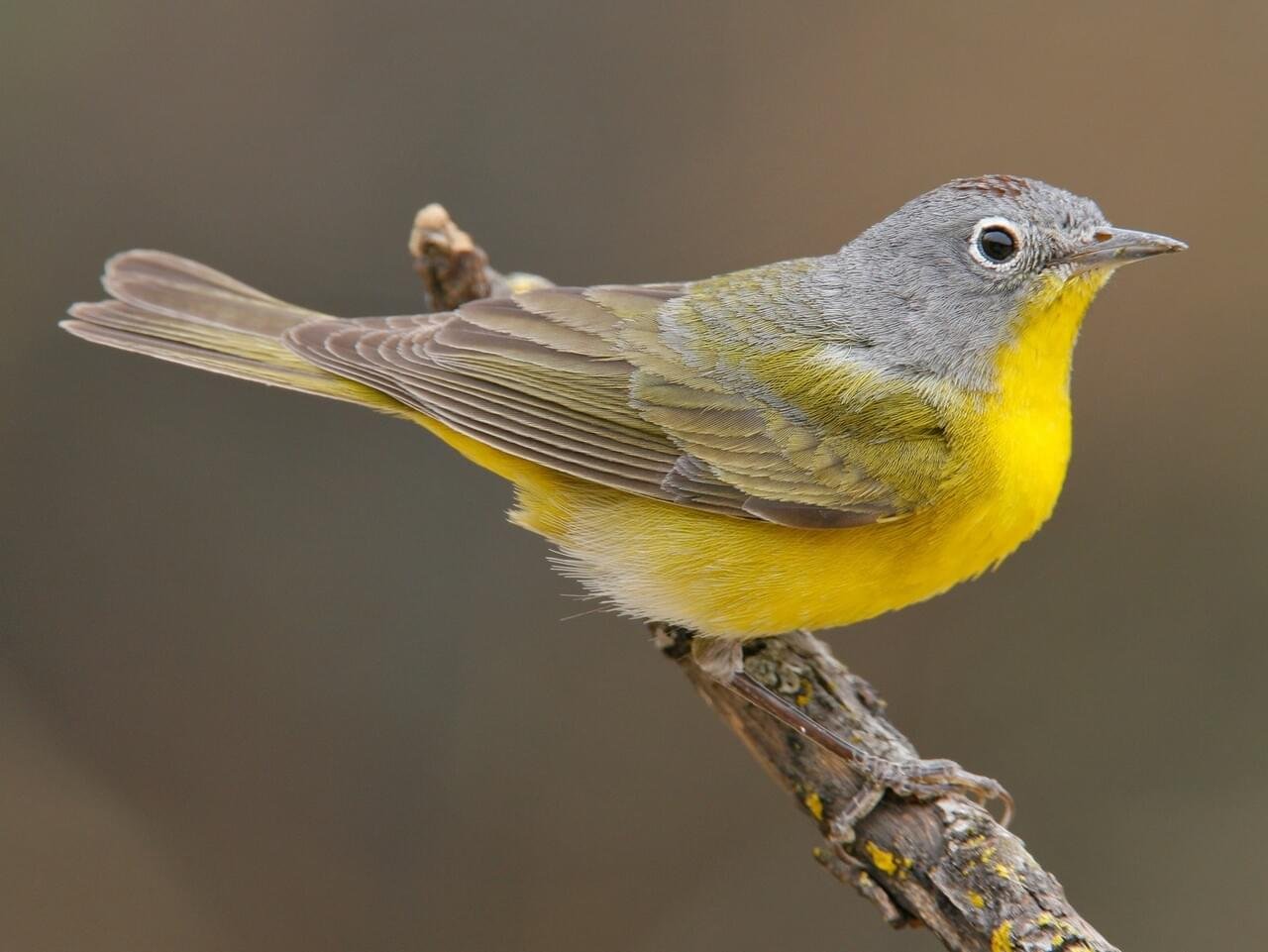
It seems appropriate to share information with you about two warblers that I’ve seen recently and are seen regularly in TN during spring migration, the Nashville Warbler, and the Tennessee Warbler

The Nashville Warbler is described as a “boisterous yellow songster”.  Smaller than a Goldfinch, males have mostly yellow underparts including the throat, with an olive green back, and a gray hood.  The white eye rings are prominent. If it stops moving long enough you may detect the chestnut patch on the crown of the head.  The bird got its name from Alexander Wilson in 1811 as he saw this bird while in Nashville and promptly named it after the city.  This bird only passes through Nashville, however, and will end up in its breeding grounds well north of us and into Canada. 

The Tennessee Warbler can be described as plain. They are still quite handsome but lacking the flash of other warblers. In the males look for the white eyebrow stripe against the grayish head which contrasts with the green back. Male underparts are a dull white. Females are similar but the head is less gray and its underparts are more yellow. This warbler will also just pass through Nashville on its way to the uppermost parts of the U.S. and into primarily Canada to its breeding grounds. The TN warbler is also known to appreciate nectar in its wintering grounds in tropical forests. Rather than get nectar from flowers from the front, like hummingbirds, they will pierce the flower at the base and lap up the nectar as it comes out. This bird was also named by Mr. Wilson.

Wood Thrush Notes

Rose-breasted Grosbeaks and Indigo Buntings Visiting Feeders

April and May are two of the most enjoyable months at feeding stations. Part of it is that trees are putting on their new leaves and the burst of green is beautiful. But these two months bring to our feeders Rose-breasted Grosbeaks and Indigo Buntings. Just this morning I had my first RB Grosbeak visit a feeder, an adult male in his black and white plumage and brilliant v-shaped blaze of red on its chest. Like most springs I will see upwards of a dozen at a time. The females are brown with a white wing bar and a prominent white stripe above the eye. They have a large heavy beak that aids them in cracking open all kinds of seeds. It doesn’t seem to matter whether you offer sunflower or safflower. They like both.

Indigo Buntings are drawn to feeders, too, but may be a little more discriminating.  Although I see them at feeders they often show a preference for ground feeding.  I use white millet on the ground to appeal to these brilliant blue birds, similar in size to a Goldfinch. They will also feed on sunflower, especially out of the shell, and even nyjer and a finch blend.  Indigo Buntings usually visit feeders now but not so much as they settle in to breeding areas which are grown fields adjacent to forest and very much around river bottom areas.  The Harpeth River Greenway and Hidden Lakes Park are always well populated with them. 

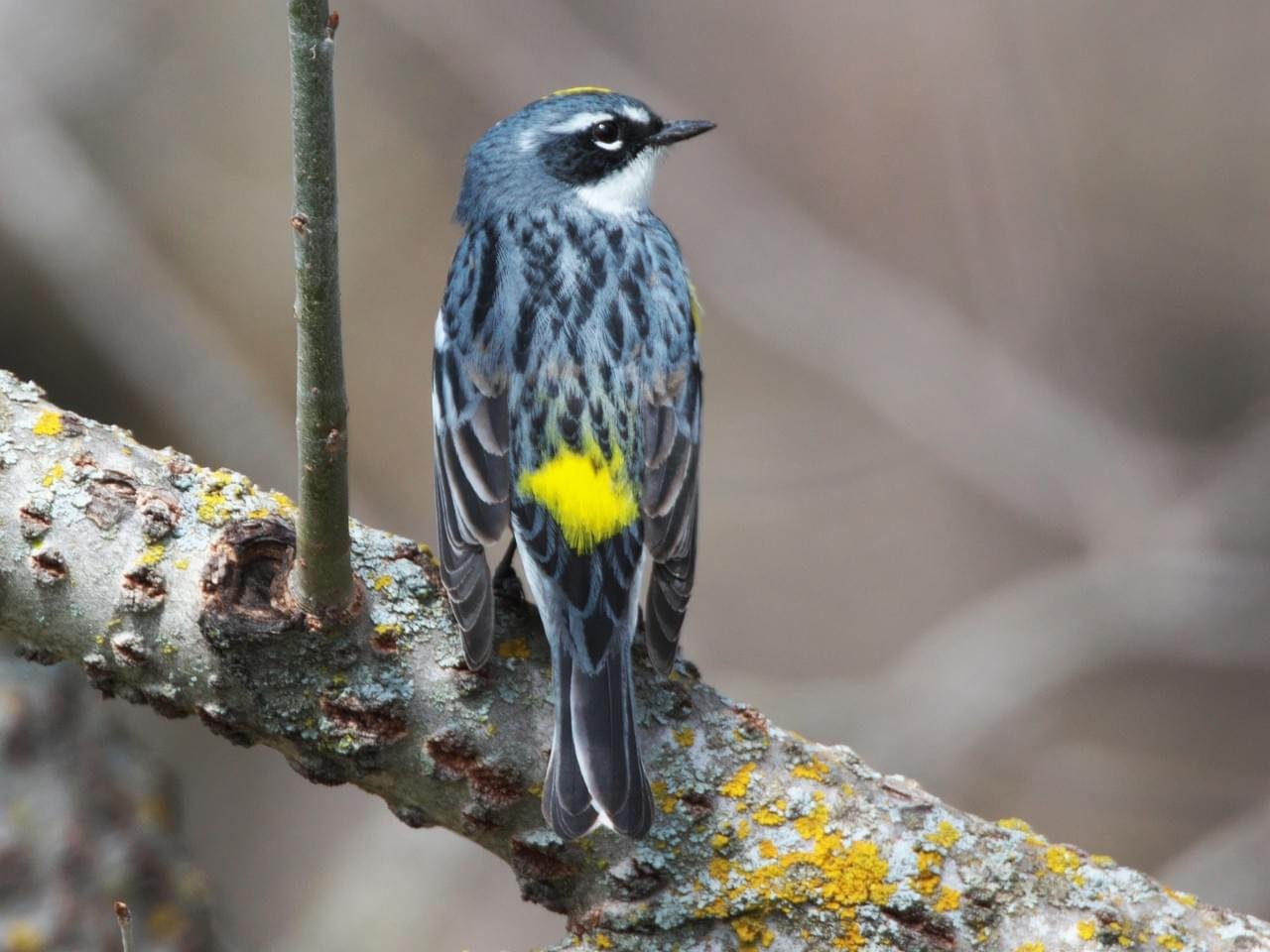
Suet is still one of the best foods to continue presenting during the spring months.In fact, suet consumption will be at its greatest between now thru July. Adult birds raising young find it particularly beneficial. Suet will also attract some of the more unusual feeder birds. For example, the past week I have had a male and female Summer Tanager and a Yellow-rumped Warbler visiting my suet feeders.


Mr. Bird Woodpecker Feast 20% off.

Mr.Bird Bugs, Nuts, and Fruit 20% off.

Mr. Bird Safflower Feast 20% 0ff

Many of you that use Mr. Bird products know we were experiencing delays and shortages. I’m happy to say we are well stocked again.

So to jump start sales again all Mr. Bird products will be 20% off through next Friday May 6th.

And we’ve introduced a line of wildflower seed packets from Roundstone Seed Co.  We have three different packets to choose from: Pollinator Conservation Mix, Butterfly and Hummingbird Mix, and Monarch Milkweed.  10% off through Friday, May 6th!

Don’t forget we are having our Campania birdbath, fountain, and planter pre-order sale! For more information read our last blog post!

Have a great weekend! Remember to look for spring migrants!

Breaking News…Hummingbirds Are Not Coming This Year

Due to recent changes in immigration laws, and because of their aggressive nature and known drug trafficking activities Ruby-throated hummingbirds will not be allowed to cross the border into the U.S. this year. Many hummingbirds have been used as “mules” transporting small packages of drugs attached to their little bodies.  Put away your hummingbird feeders because they won’t be needed.  April Fools! 

Migratory Birds Being Seen this Week

This is the most exciting time of year for birdwatchers as migration brings neo-tropical songbirds into and through TN from Central and South America.  As of this morning here is a summary of what has been seen in our area this week:

Black and white warbler, Yellow-breasted chat, Black-throated green warbler, Chimney swift, Northern Parula, Blue-gray gnatcatcher, White-eyed vireo, Yellow-throated, Palm, and Yellow-rumped warblers, as well as Pine and Hooded warbler. The best time to look for these birds is in the first 4 hrs. of daylight because they migrate at night and settle down to rest and feed in the mornings. Without leaves on the trees yet there are far less obstacles for viewing.

For detailed up to date sightings and the locations to find and see birds download the E-bird app, or visit ebird.org

Swallows: The Early Spring Migrants

The earliest of the spring migrants, birds returning from Central and South America, include a few birds of the swallow family. Purple Martins, Tree, Barn, Cliff, and Rough-winged swallows are some of the earliest to return to middle TN. A recent outing on the Harpeth River revealed several Cliff swallows feeding over the water and flying up and straight into the amazing gourd-like mud nest they build on bridges.

Cliff Swallows have broad, pointed wings, a metallic dark blue back, pale cinnamon colored rumps, and rusty brown faces with a white patch on the forehead. 

Like Barn swallows and Purple Martins these birds are colony nesters and it is normal to see hundreds of these structures clustered together.  Over 3,000 nests have been seen in one place.  When young Cliff Swallows leave their nests they congregate in large groups called creches.  A pair of swallows can find its own young in the creche primarily by voice. 

Obviously, they are very social, not only in their nesting habits but feeding as well.  You may see hundreds of these birds feeding together when a particularly good swarm of insects presents itself.  In fact, if a Cliff swallow finds a good source of flying insects it has a specific call to alert the others. 

To find this bird look at any bridges crossing the Harpeth River. There’s a good chance you will see these busy little birds feeding and coming and going from their amazing nest structures.