BIRD NEWS BLOG
Wood Thrush Notes
Reminder: Important Store Hours Update
We are closing for a couple of days. On Saturday, October 15 we will close at 2 pm and re-open Wednesday, October 19.
Hummingbirds and other Migrant
A few weeks ago we mentioned BirdCast, a project by Cornell Lab of Ornithology, Colorado State University, and UMass Amherst, to track bird migration using radar. Click here to visit birdcast.info
Mid-October is peak time for songbird migration through middle TN as neo-tropical migrants’ are going back to Central and South America. BirdCast estimates that while you were sleeping 3,675,600 birds crossed Davidson County last night. Yes, that’s 3 million from just after sunset until Friday morning just before 7 am. The high traffic count of birds in flight was 570,000. Across the country billions of birds migrate at night in spring and fall. City lights are a very real threat to bird migration as they are attracted to the lights and collide with windows. Bird Safe Nashville has begun a campaign to raise awareness of the dangers of city lights and to encourage businesses and homeowners to turn off exterior lighting during peak times of migration. For more information visit www.birdsafenashville.org
Ruby-throated hummingbirds are still being seen in small numbers. Even though you may not have seen any for a few weeks we suggest keeping a feeder up with small amounts of fresh nectar. My late date to observe a Ruby-throated hummingbird in my yard in Cheatham Co. is October 25. There is also a chance you may see a different species of hummer appear at your feeder. Practically every year we have a customer or two that gets a western U.S. hummer, like a Rufous or Anna’s at a feeder they have left out into the months of November and December. Maybe this year it will be you.


Have a great weekend and wherever you go bring your binoculars.
Wood Thrush Notes
Rose-breasted Grosbeaks Visiting Feeders
What a pleasant surprise to see 6 to 8 Rose-breasted Grosbeaks on my feeders this morning. They were really getting after the Woodland Blend in my platform feeder. And we have heard from a number of you that have Grosbeaks, too. Not one of them was an adult, however, but juveniles just born this past spring-summer. How do you tell? The adult male, of course, is very distinctive with black and white wings and back, a black hood, and white underneath with a blazing red v on the chest. The adult female plumage is less distinctive being primarily brown and white giving the appearance of a large female Purple finch. The most recognizable feature of the adult female is the prominent white eye brow. The juveniles are a mix of these plumages, especially the males. Juvenile males can look quite different from one another even as they may possess more or less of various adult male and female field marks.
Adult Male RBG
Adult Female RBG
Juvenile RBG
It’s not every fall that Rose-breasted Grosbeaks take advantage of bird feeders. We know that they converge on feeders for roughly a month from mid-April to mid-May as they migrate to their breeding grounds from Central and South America, but in the fall they seem to be satisfied with seeds that have been produced by nature. It’s been a few years since I have seen them at my feeders in the fall. I can only surmise that the dry conditions this year did not produce an abundance of what they typically forage on, making the feeders more appealing. It’s nice to see them but I think I would rather have the rain.
Don’t forget we have begun distributing Rewards Cards in store. There’s no signing up or providing personal information. Just bring your card to be stamped with purchase and save. Easy.
Wood Thrush Notes
Radnor Birding Walks
The Nashville Chapter of the Tennessee Ornithological Society is once again leading birdwatching walks at Radnor Lake on Wednesdays through October 12th. Join experienced and knowledgeable members of TOS to look for migrants as they pass through the 1368 acre state park. Meet in the parking lot near the kiosks outside the Visitor’s Center, located off Otter Creek Rd, by 7:30 am. The route is always the same…up the road, across the spillway and up the trail to Long Bridge, where the walk officially ends. If you’re running late or get stuck in traffic you can catch up to the group quite easily. Bring your binoculars and be prepared to learn and see a few birds you may not have seen before. Click here to view the NTOS event calendar.

REWARDS CARD now available at The Wood Thrush Shop
The last few years have been unpredictable and tumultuous in many ways including the birdseed market. We avoided our popular seed storage sales because of the volatility of the birdseed market. It is a commodity and subject to fluctuations in price based on growing and harvest conditions, fuel and labor costs, demand for supply, farmers choosing other crops to grow if profits are projected to be better, and of course freight cost.
We are excited to introduce a “rewards program” in which you are given a card that will receive a stamp after each purchase over 1 of 2 different dollar amounts, $30 or $75. Complete your card with 5 purchases and get a discount on your next visit. The discount for the $30 level is $10 and for the $75 level, the discount is $25. Next time you’re in to pick up some seed we will give you a card and apply the first stamp to get you started. We ask that you please keep up with your card and present it at the time of each purchase to get stamped.
Corn Special
I goofed and ordered way too much corn on the cob. For those of you feeding deer, squirrels, and other corn consumers we have a deal on Corn on the Cob.
Buy 1 8# or 35# bag and get 1 FREE. The offer is good until our supply is reduced.
Store Closure dates in September and October
The Wood Thrush Shop will be taking some time off in September and October to recharge and take advantage of this wonderful weather.
Closed September 27.
Closing 2 pm on October 15th, and closed on October 17 thru 18.
Fall Migration and Birdcast
Fall Migration is underway and while your seed and suet feeders will typically slow down now through October birdwatching in the area will be significantly more interesting because migration is in full swing. Keep those hummingbird feeders fresh and filled because we still have several weeks of busy hummingbird feeding remaining.
When spending time outdoors have your binoculars with you and ready because Warblers, Tanagers, Orioles, Rose-breasted Grosbeaks, and Flycatchers are pouring through middle Tennessee stopping to feed in the mornings on insects and berries. Pay special attention to birdbaths and fountains as many of these birds seek out good water sources to take advantage of.


Mornings are the best time to see lots of different species because most of the mentioned migrants are traveling at night. They settle down to rest and feed in the morning.
Look for large if not massive flocks of Chimney Swifts and Common Nighthawk in the evenings commonly seen in areas near downtown or where there is ample night lighting like high school football games.


Did you know that radar used to track weather systems is also used to track bird movements? I suggest you check out BirdCast. BirdCast is a project of the Cornell Lab of Ornithology, Colorado State University, and the University of Massachusetts Amherst. BirdCast applies weather surveillance radar to gather information on the numbers, flight directions, speeds and altitudes of birds aloft in order to expand the understanding of migratory bird movement. Just last night, Sept. 8, an estimated 995,300 birds flew over Davidson Co. And that number will increase as we approach the usual strongest time of migration in the month of October. BirdCast has live migration alerts in real time. Their findings have been eye-opening and very interesting to say the least. To summarize all the interesting information provided by BirdCast would be impossible. I urge you to check out this site. Wonderful! Visit Birdcast at www.birdcast.info
Make time to visit one of the many great local birdwatching areas this fall to see some birds you may not have seen before. The usual local hot spots include:
Radnor Lake Warner Parks Bells Bend Harpeth River Greenway Shelby Bottoms
Hidden Lakes State Park Gossett Tract State Park
Bowie Nature Park and Montgomery Bell State Park
Hummingbird Activity is Peaking
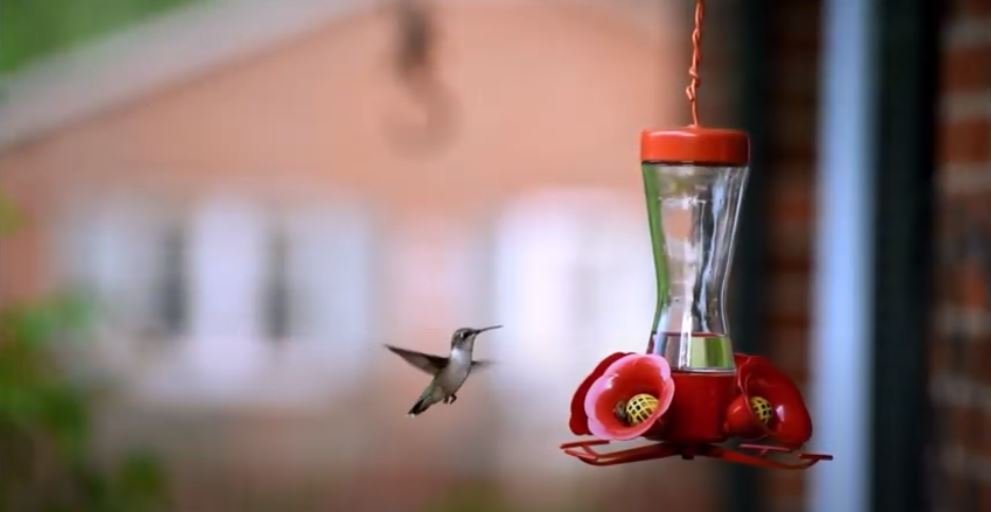
For the next 4 weeks we will be experiencing peak hummingbird activity at our feeders. Now it is crucial that your nectar is fresh and your feeders are clean for best results and for the safety of the hummingbirds. Our summer resident hummers are likely done nesting and youngsters are now coming to and beginning to understand feeders.
Already we are probably seeing some hummingbirds that have been north of us this summer beginning to move through TN visiting feeders as well.
If you have given up on hummingbirds because you did not see any activity earlier in the summer it’s time to give your feeder a good cleaning and make some fresh nectar. Please remember the nectar formula is one part sugar to 4 parts water and is only good in the feeder for up to 3 days. This is the time that hummingbirds are most interested in your feeders and are packing on as much weight as possible before making their long journey back to Central and South America.
Obviously, we hear lots of customer feedback about hummingbirds. It’s interesting to note that every year many of you will report either more or less hummingbirds. Why the discrepancy from year to year? It could be for several reasons. More hummingbirds could be the result of a few successful breeding years in a row in your area. Less could be from a few down years of nesting, or birds that would have been around your yard did not successfully make the long migration. A lot can happen to birds, especially tiny hummers, in a journey that long which punctuates the miracle of migration and the fact that so many are successful.
I am seeing fewer hummingbirds than usual for August and have recently realized why. Where I have traditionally offered most of my feeders there are as many as four adult males guarding and fighting. Typically, I would be seeing lots of juveniles and females feeding together but the males won’t allow. Just this morning I witnessed one of these males relentlessly chasing a Titmouse that had landed to close to its favorite lookout spot. Adult males usually migrate earlier than the others so I’m hoping a few of these feisty, selfish guys will depart allowing for more hummers to visit.
To learn more about Ruby-throated Hummingbirds visit the Warner Park Nature Center next Saturday the 27th for their annual Hummingbird Celebration. There will be activities for kids with opportunities to learn more about these fascinating diminutive dynamos. Warner Park staff will also be trapping and banding hummingbirds while explaining the valuable data they are collecting for research. See hummingbirds up close. Click here for more info on the event!
American Goldfinches in August and September
If you saw a sudden departure of Goldfinches last month it was probably because July is when they go to nest. It’s normal for some of you to experience this while some of you will see an influx of Goldfinches, perhaps because you are near prime nesting habitat that attracts many nesting pairs. That habitat tends to be more open and adjacent to weedy fields and meadows where there is a lot of nesting material and ample food. Goldfinches will build their nest high in shrubs or small tress overlooking open space as opposed to forest interior. It is a nest comprised of plant fiber and down, lashed together with spider silk, sometimes woven so tight the nest will hold water. It will measure about 3” across. This tight little nest can sometimes backfire should a heavy rain fall on newly hatched chicks.

Goldfinches will have 1-2 broods with 2-7 eggs per. The number of eggs is likely determined by the availability of food sources present. Because Goldfinches are exclusively seed eaters explains why they nest much later than other birds. Plants are going to seed when they begin nesting.

Juvenile American Goldfinch
Recently, I have been seeing young Goldfinches around my yard but not so much at my feeders. Pulling in my driveway at the end of the day where there is a big patch of Black-eyed Susan 10 to 20 Goldfinches will take flight. When plants like Black-eyed Susan, Coneflower, sunflower, and zinnias are available Goldfinches will show a preference for these more natural food sources. It is just in their DNA to gravitate to the “natural”.