BIRD NEWS BLOG
Wood Thrush Notes
Recent Bird News
The recent nearly 8” of snow we had certainly increased bird feeding activity to levels we are more familiar with. Many of you saw Purple Finch and Pine siskin, Red-winged Blackbirds, and lots of Juncos. Thanks to all of you who were patient with our freight difficulties and low level of seed inventory. It may interest you to know we sell in the neighborhood of 6,000 lbs of seed per week. So, when winter weather disrupts freight and the need for seed increases we can get into a bind. I’m happy to report we are well stocked and back to normal.
We have a customer in West Meade who has a “special visitor” coming to a suet feeder. This bird is not considered rare but more along the lines of uncommon. The bird is a female Baltimore Oriole and it is coming to suet. We always point out to people that suet is a great food source for wild birds and is the most likely food to appeal to a more unusual species, like this Oriole. It’s been visiting semi-regularly even before the winter storm. The Baltimore Oriole primarily passes through TN during its migration in the spring to areas more north of TN where they breed. March and April are the best months to see Orioles, the male with its bright orange plumage and black and white wings.
Every book I’ve picked up over the years about bird feeding strongly recommends putting out orange halves to attract Orioles but upon further research Orioles prefer ripe dark colored fruit. The darkest Mulberries, the reddest cherries, and the deepest purple grapes are on their preferred fruits list, and will ignore green grapes and yellow cherries. So, this spring I will be presenting some cherries and grapes rather than the oranges that have not worked for me. Orioles will visit hummingbird feeders, too, as they have a similar specialized tongue for extracting nectar and juices from fruit.
Another very interesting visitor to a feeding station in the Brentwood area, and more unusual than the Oriole, is a Black headed Grosbeak.

The BHG resides primarily west of the Mississippi River from Central America to as far north as southern Alberta and British Columbia during the breeding season. The lone bird was coming to a platform feeder for seed, sunflower and millet, I believe. Reported sightings of this species are few making it a rare bird.
The most unusual news to share, though, is a confirmed active House Finch nest with babies. The customer reported a nest and eggs in early January in a typical House Finch nest location, their front door on a wreath. I reached out to them to find out if the babies had developed and grown enough to fledge but have not heard yet. I will share that news in the coming weeks. I cannot remember ever hearing of an active songbird nest in January.
Wood Thrush Shop Notes
Recent Feeder Activity
With the recent wintery weather a lot more birds have decided to visit feeding stations. This week my feeders were frequented by over 50 Goldfinch at a time, a dozen or so Pine Siskin, over 20 Juncos (overwhelmingly males), and lots of White-throated sparrow. A few Red-winged Blackbirds appeared as did a few Grackles, birds I rarely see in my yard.
In weather like this I always anticipate something more unusual to appear, like Orange-crowned warbler, Ruby or Golden-crowned Kinglets, and Brown creeper to name a few, typically at the suet feeders. One customer reported a lone Indigo Bunting which is very unusual to be seen in January.

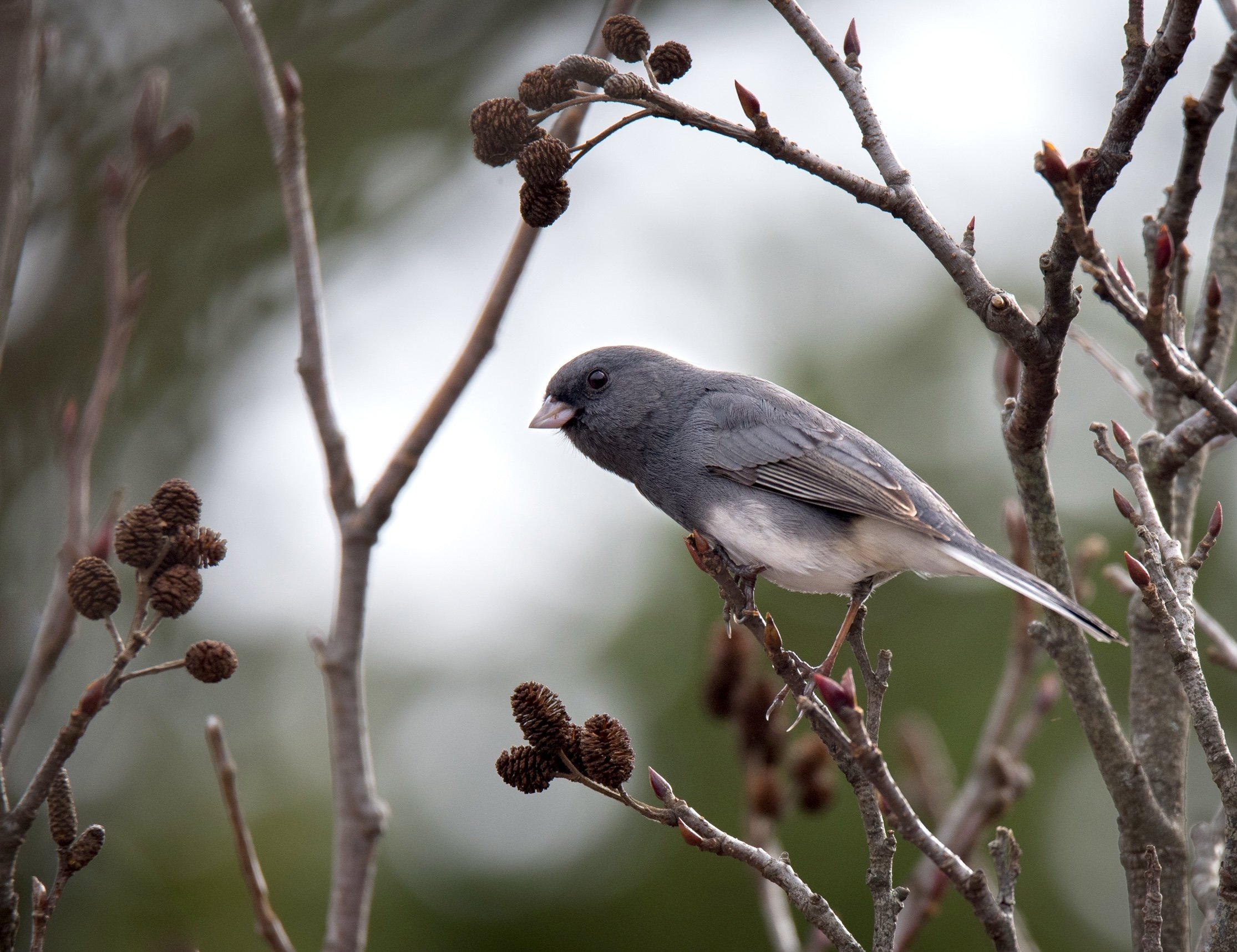

And with the freezing rain being forecast, which will likely have already occurred by the time you read this, birds that don’t normally visit feeding stations may recognize the bird activity at feeders and come in for a look. My birdbaths, which have de-icer units in them, were extremely busy during the frigid temps. Birds, of course need water sources even when it’s below freezing and will bathe to keep feathers clean and at their best insulating quality for survival.
Many of you are surprised to see multiple Bluebirds visiting feeding stations and water sources. Bluebirds are, of course, here year round and will travel about in small flocks in search of food and water.
Seed Stock is Low for this Saturday
Because our seed supplier is located in Des Moines, IA sometimes weather will hold up our seed shipments as is the case this week. Freight is backed up all across the U.S. You may want to call first before you visit The Wood Thrush Shop on Saturday and Monday as we are low, or out of some choices of seed. We are very well stocked with suet and live mealworms. We anticipate receiving our load of seed early next week as temps rise to the 40’s.
Wood Thrush Notes.
Open House Specials
Come on out to Westgate Center tomorrow and do a little Christmas shopping. The small businesses of Westgate are having an open house with some deals and special offers, and a visit from Mr. and Mrs. Clause at G&G Interiors starting at 12:30.
We are featuring deals on our favorite A-T-Z Bluebird box, Squirrel Buster Classic feeder, Bird’s Choice hummingbird feeders, and the always popular JJ Potts handcrafted ceramic mushrooms.
And speaking of deals and discounts, follow us on Facebook and Instagram for flash offers on select items, like Wind River wind chimes, birdbaths, and Heartwood birdhouses. These will be sales that only last a day or two so stay tuned.
Sparrows
Sparrows? Who cares!? All too often the average backyard birder dismisses sparrows as just some generic little uninteresting bird and doesn’t take the time to properly identify. This is likely a result of the much maligned House Sparrow that tends to be a major problem for Bluebirds in nesting season. Sparrows are, in fact, a very interesting family of birds, and here in TN you may, according to The Annotated Checklist of Birds of Tennessee, see up to 22 species of sparrows, 10 of which breed here. Many are considered rare, to uncommon, to seasonal, with a few as year round residents. This time of year we see Field Sparrow, Song Sparrow, Swamp Sparrow, White-throated Sparrow, White-crowned Sparrow, Chipping and Vesper Sparrow, and Juncos are included in the family, too. I must admit my skills at identifying some of these birds require a tune-up. I often birdwatch at Gossett Tract in Cheatam Co. where the open field dense growth habitat is excellent for sparrows but makes for very challenging birding. They don’t stay in one place very long and will dive down into heavy cover in a flash. Pics of Chipping and Field sparrow

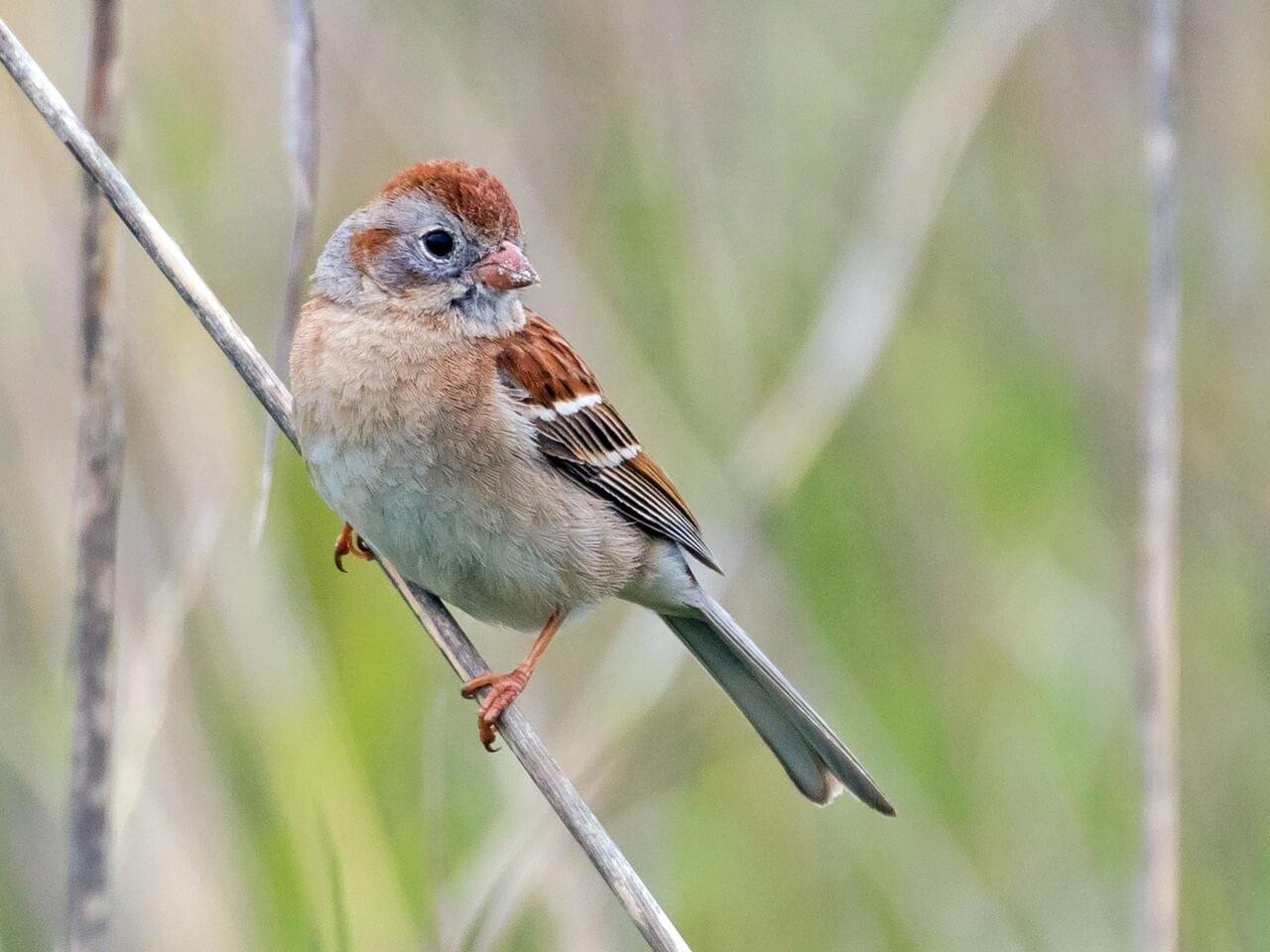
At our feeders in the fall and winter months we see White-throated and White-crowned sparrows, and of course Juncos, with the Fox sparrow usually appearing only when snow falls. All three of these lovely little birds feed on the ground almost exclusively so don’t forget to train your eyes for ground movements. Look at these birds through binoculars and note the beautiful subtle markings. They often move about near feeders flipping leaves in search of bugs and seeds.


Wood Thrush Notes
The Bufflehead
On a recent outing to Centerhill Lake we were treated to sightings of small flocks of Bufflehead. The Bufflehead is a small duck measuring about 15 inches in length. Males are mostly white with a black back. Males possess a purple-green iridescence that can be hard to see. Females are dark with a white cheek spot and a white wing patch. If you’re able to catch a glimpse of these birds descending onto a lake you will see that males have strikingly red feet. Buffleheads are common winter residents seen on area ponds and lakes November through April and will go as far as Mexico. In spring they migrate north to eventually reach their breeding grounds in mid to western Canada. Locally, Radnor lake is a potential place to see Bufflehead


Buffleheads are mostly monogamous and are cavity nesters and will actually use nestboxes.
Fossils of these ducks from the late Pleistocene (about 500,000 years ago) have been found in Alaska, California, Florida, Illinois, Kansas, Texas, and Washington.
If you’re going for walks near water this winter look for these busy diving ducks as they forage for their primary food source aquatic invertebrates, crustaceans, and mollusks.
Rare Visitor and State Record in Chattanooga
Birders have been rushing to Chattanooga to see the first state record of an Ancient Murrelet, which has been found at Chickamauga Dam. This is a very small Pacific seabird that is really far out of its range which is typically the California coast north to the Alaskan coastline, and breeds in colonies along the shorelines of the North Pacific islands. Ancient Murrelet’s are divers as well and flaps its wings underwater for propulsion where they forage for a variety of fish. This bird is a burrow nester but will adapt to nest boxes, too. The lone bird was still there as of yesterday.

Holiday Shopping at The Wood Thrush!
The Wood Thrush Shop is stocked and ready for your holiday shopping needs. There are lots of gifts under $20, and of course, Squirrel Buster bird feeders, birdbaths, bluebird boxes, and hummingbird feeders. Get the bird lover in your life a new feeder so they can retire that old pitiful looking one.
Wood Thrush Notes
Bird feeding Slowly Picking Up
A couple of weeks ago I incorrectly proclaimed the end of summer with the impending cold front predicted and its arrival. Then temperatures returned to the 80’s this week. The warm temperatures are doing very little to inspire birds to return to our feeding stations. We continue to get phone calls from concerned people wondering why their feeders are so inactive. Again, the abundance of natural food sources available is too good to pass up at this time.
At my home this past weekend I did see some encouraging signs such as a small group of American Goldfinches consistently at the finch feeder. Remember, Goldfinches have now lost their bright yellow breeding plumage and have reverted to their dull winter appearance. Chickadees and White-breasted Nuthatches were quite busy making repeated trips from feeders to hiding places they have chosen to stash food. A few Red-bellied and Downy woodpeckers decided to partake of suet, and I saw a first of this fall Yellow-bellied sapsucker.


Cold Front Brings Some Interesting Visitors
The cold front did bring some interesting visitors to TN. Birdwatchers know to look at bodies of water more carefully after a cold front has passed as this often pushes shorebirds, wading birds, ducks and geese, and cranes into the area. Recently seen birds of interest include Limpkin, Red-necked Grebe, Common Loon, White-winged Scoter, and Surf Scoter. Straddling the border between Tennessee and Kentucky is Land Between the Lakes National Recreation Area. This 6-8 mile wide strip of land separates Kentucky Lake to the west and Lake Barkley to the east and forms the largest inland peninsula in the United States. From October through May, the entire area is an excellent hotspot for birdwatching. A noteworthy visitor to look for during this time is the American White Pelican. These birds are hard to miss, as they stand up to four feet tall and have wingspans up to nine feet. They are a communal bird and during the spring can be seen flying in flocks of several hundred individuals. According to L.B.L.’s lead naturalist, John Pollpeter, in recent years satellite images have shown upwards of 5,000 individuals. Bald eagles, Osprey, Double-crested cormorants, and Common loons are also common.