Birds Seen Recently, Caching of Seeds, and a Blend for Ground-feeders

Birds Being Seen Recently

One part of the job that we always enjoy is hearing from folks about what they are seeing at their feeding stations. With the chill of autumn finally in the air, let’s take a moment to discuss some fall/winter residents being seen in the area!

Over the last few weeks, reports have been coming in of White-throated Sparrows, Dark-eyed Juncos, Purple Finch, and even several sightings of the Hermit Thrush. Unlike our namesake, who fills the forests with their haunting calls in the spring and summer, the Hermit Thrush is actually a winter resident in Tennessee. As it is unlikely to see them visiting your feeder, instead, look for these unassuming members of the Thrush family patrolling the undergrowth in forests or brushy fence lines. Last weekend, I spotted one in an over grown fence row making its distinctive “tchup” call as it worked the undergrowth in search of food.

Hermit Thrush

Photo credit: Eli Haislip

Purple Finches are another wintertime visitor that have recently been spotted in Pegram and Bellevue. Famously described by Roger Tory Peterson as “a sparrow dipped in raspberry juice,” these beautiful finches are only seen in Tennessee during the fall and winter months. There are several key differences that separate them from the House Finch, and once you learn to spot these, identification is a breeze. First and foremost, the coloration is different. Where House Finches are much redder in hue, Purple Finches are a distinctive raspberry color with coloration further down their belly than their relatives. Last, but certainly not least, look for a darker band of coloration behind the eye of the Purple Finch. Like their introduced cousins, female Purple Finches lack the coloration of males and are instead a streaky brown. However, female Purple finches have a darker brown band from behind the eye that female House Finches lack entirely.

Due to the aggressive actions of the invasive House Sparrow, the thought of sparrows visiting a feeding station can elicit a groan. However, we have a number of native winter resident sparrows that we always look forward to seeing! The mnemonic of “Old Sam Peabody, Peabody, Peabody” ringing out on a frosty morning is one of our favorite calls to hear in late fall and winter, because it signals the arrival of the White-throated Sparrow. Ground feeders by nature, look for these birds underneath feeders scratching around in the grass for fallen seeds. There is a good chance that you have seen them at some point, as they are quite the common visitor. There are actually two color forms to look for, white-crowned and tan-crowned! This is where having a good pair of binoculars handy can be helpful.

Perhaps one of our most widely recognized winter visitors is the Dark-eyed Junco. Long known as “Snowbirds” due to their appearance in late fall, if you have feeders up in the winter than you have likely seen these slate gray members of the sparrow family. These striking birds have slate colored backs and wings with white undersides, and pinkish bills adapted for cracking seeds. Along with the aforementioned White-throated Sparrows, look for Dark-eyed Juncos hopping around underneath feeders eating fallen seeds. A fun fact; according to Cornell University’s All About Birds, Dark-eyed Juncos will sometimes breed with White-throated Sparrows despite looking very different and not being especially closely related resulting in an odd hybrid of the two that is described as a “dully marked grayish White-throated Sparrow.”

Dark-eyed Junco

Photo credit: Eli Haislip

Continued Caching of Seeds

In the woods of Cheatham County, John has been putting his binoculars to good use and observing an interesting phenomenon in action. The Red-bellied Woodpecker is one of several species of woodpeckers known to store, or cache their food for later and it is this species that is responsible for the peanut placement in the photo. Certain other backyard feeder birds are known to exhibit this behavior too, such as Red-headed and Downey Woodpeckers, as well as White-breasted Nuthatch, Carolina Chickadees, and Tufted Titmice.

A Blend for Winter Ground Feeders

Did you know we have a blend specifically for the ground feeding species that call our backyards home in the fall and winter? Our Wood Thrush blend is made up of 50/50 black oil sunflower seed and white and red millet, and while we never recommend this blend for use in feeders, (feeder birds will kick the millet out in favor of the sunflower seeds) as a ground feeding blend in the winter it works great. Dark-eyed Juncos, White-throated Sparrows, Fox Sparrows, Eastern Towhees and Cardinals will all happily search through the grass (or snow) for this blend. Available in 40 Lbs. ($36) 20 Lbs. ($24) and 8 Lbs. ($13)


Midweek Product Profile: PopClox Wall Clocks

Today through Saturday, November 23rd, our Popclox Bird Clocks will be $15 off! These fun clocks are made in Massachusetts and make excellent gifts. They even have swinging pendulums, great for entertaining cats and children alike! We are well stocked with both owl (available in brown and gray) and house (available in gray, red, and green) designs and either one would make the perfect addition to the living room, home office, kids room, or even nursery!

Price before sale: $55

        Sale price: $40


Continued Brisk Feeder Activity, Seed Special, and Bird Bio: Red-headed Woodpecker

Brisk Feeder Activity Continues

Many more of you have noticed and commented on the very busy feeding activity this week. At my feeders, Goldfinch numbers have steadily increased from a few to enough to warrant presenting another finch feeder. If you haven’t had success in a while attracting Goldfinches with Nyjer seed, we would suggest trying the Fine Sunflower Chips or the Finch Blend. Both have out performed Nyjer the past few years. I am thoroughly convinced Goldfinches prefer sunflower seed. Remember, Goldfinches lose their bright yellow plumage this time of year. They are definitely around and may actually be more plentiful in winter as northern birds eventually settle in to this area for the winter.

To celebrate the increase in Goldfinch activity, today through Friday the 22nd save 10% on 20 lbs. and 10 lbs Finch Blend and 20 lbs. and 8 lbs. Fine Sunflower Chips

Bird Bio: Red-headed Woodpecker

Of all the woodpeckers that visit our feeders, this is perhaps the least common. Even the Pileated woodpecker seems to appear at feeders more. The Red-headed definitely relates to habitat that is a little different than the others, which is to say more open habitat relative to wooded areas with pine and cedar trees mixed with hardwood.

At the start of the breeding season, Red-headed Woodpeckers will move out of the forest interior and begin frequenting forest edges and areas of disturbed habitat. They will have up to two broods with a clutch size ranging from 2-10 eggs. Unfortunately, like the Red-bellied Woodpecker, they are prone to being out competed for their nest sites by the invasive European Starling.

Unfortunately, these striking members of the woodpecker family became scarce during the latter half of the twentieth century, with a population decline estimated at 54%. However, as we touched on recently, Red-headed Woodpeckers have been sited in numbers at locations where they would not have been previously expected such as the Natchez Trace Parkway and Radnor Lake. Montgomery Bell State Park, Bowie Nature Park in Fairview, TN and the campgrounds of Land Between the Lakes National Recreation Area have all been hotspots where one can typically see these gorgeous woodpeckers in numbers.


Midweek Product Profile: Songbird Essentials Feeder Brushes

As we progress into late fall and begin to see rainy days with greater frequency, feeders can quickly become funky. Fortunately, we have what you need to get your feeder good and clean again!

What we most commonly recommend for deep cleaning feeders is Dawn and warm soapy water. As long as you rinse everything well, it is completely safe for the birds and very effective at breaking through the grime. Our favorite tool for cleaning feeders is the Songbird Essentials Best Long Brush. Measuring in at 24 inches in length, this brush is the perfect tool for almost all tube feeders that we have in stock. Its flexible but strong nylon bristles are enough to tackle most any mess, especially with the aid of a little soap and hot water.

$12

Songbird Essentials Best Long Brush

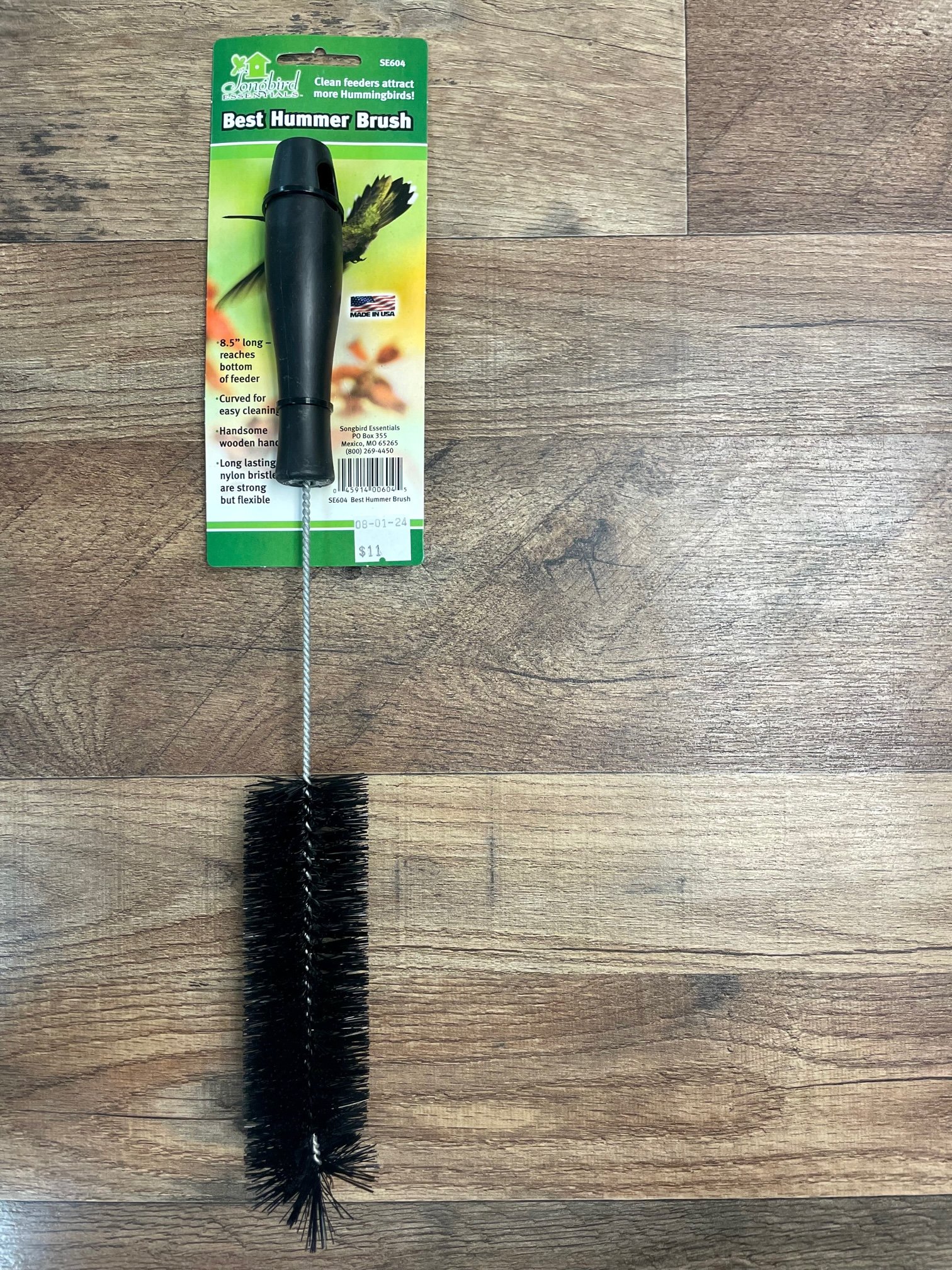
If you don’t need a brush quite that large, we also have the Songbird Essentials Best Hummer Brush in stock. Don’t let the name fool you though; this 8.5 inch brush is great for a wide variety of applications from bird feeders to bird baths.

$11

Songbird Essentials Best Hummer Brush

Once you’ve got your feeder looking clean again, it’s important to make sure it is thoroughly dry throughout before you put seed into it. Putting seed into a wet feeder can lead to the potential for mold, and then you will be right back where you started. While repetition is great for learning to take apart and put feeders back together quickly, we can agree that there are more fun ways to spend your afternoon, so that is why it is important to make sure all parts are good and dry before getting your feeder reassembled and full of seed.

A final note… If you are struggling with getting your feeder put back together, or, have the dreaded left over pieces, we are more than happy to help walk you through the reassembly of your feeder. For you Squirrel Buster owners out there, Brome Bird Care (the company that makes Squirrel Buster) has a series of videos on Youtube detailing how to disassemble and reassemble your feeder.


Bird Bio: Brown Creeper and Other Observations

Erva Twist-On Pole Arms

As we progress through fall and activity at feeders continues to increase, you may find yourself in the position of wanting to break that old feeder out of storage, or maybe even buy something new, although you don’t want to invest in a new pole just for one feeder. Fortunately, we have a cost effective solution already in stock! Enter the twist on pole arms from Erva. These simple and effective additions to your bird feeding station come in five sizes, with the largest being able to hold up to 10 pounds and accommodate weight activated squirrel proof feeders, such as a Squirrel Buster. Regardless of your type of pole, be it shepherds hook, square pole with removable top, or modular one inch pole system, we have a twist on arm that will work for you! Prices range from $8 to $19.

Bird Bio: Brown Creeper

Have you ever heard of a bird called the Brown Creeper? If not, one could easily be forgiven if you have never seen (or heard of) these tiny, unassuming songbirds, but you are missing out on a fascinating bird! One of our favorite winter residents, these miniscule members of the Treecreeper family (the only member of this family found in North America) usually begin to be spotted in the area in September or October and hang around until spring migration. In size, they are slightly smaller than a White-breasted Nuthatch, but larger than a Ruby-crowned Kinglet. Their streaked brown upper coloration provides excellent camouflage against both natural predators and backyard birders alike. Look for these birds spiraling their way up along the trunks of mature trees. An interesting characteristic of the Brown Creepers is that they will never climb down a tree, the way a nuthatch will. Rather, they will fly down, often back to the base of the tree to begin their upward spiral in search of food again. According the Cornell Lab of Ornithology, during the course of the day the Creeper will burn 4-10 calories. This means that by consuming one spider, these efficient birds will gain enough food energy for a vertical climb of 200 feet.

Brown Creeper

Bluebirds Flocking Together

It is that time of year again! With breeding season long gone, Eastern Bluebirds become far more tolerant of each other and can be observed flocking together throughout the winter months. We have already received several reports of this behavior from customers, as well as in our own yards. It is not uncommon to see groups of three or more together at birdbaths on frosty mornings during the late fall and winter months. This week by one of my boxes, I observed three males sitting on the limbs of a nearby bush together. This is another reason we often tell folks that it is never truly too soon to put up a bluebird box!

In addition, we are still observing at our homes and hearing reports from customers of bluebirds exploring bluebird boxes. In cold winter weather, small flocks of bluebirds will pack into houses together, using their body heat to keep each other alive on frigid nights.

Bluebirds Investigating a Nest Box

An abundance of Cedar Waxwings

This morning getting into my car, I heard the unmistakable high pitched whistle that signals the presence of Cedar Waxwings. A cursory glance around the trees soon revealed their location: A large hackberry. Any tree or bush that produces berries is a great place to look. Privet, Hackberry, and Honeysuckle are all excellent places to spot waxwings throughout the fall and winter months. Once you learn to identify their call, you will likely be surprised at just how common these beautiful birds are.

MatMates Sale and the Arrival of Mr. Bird Seed Houses

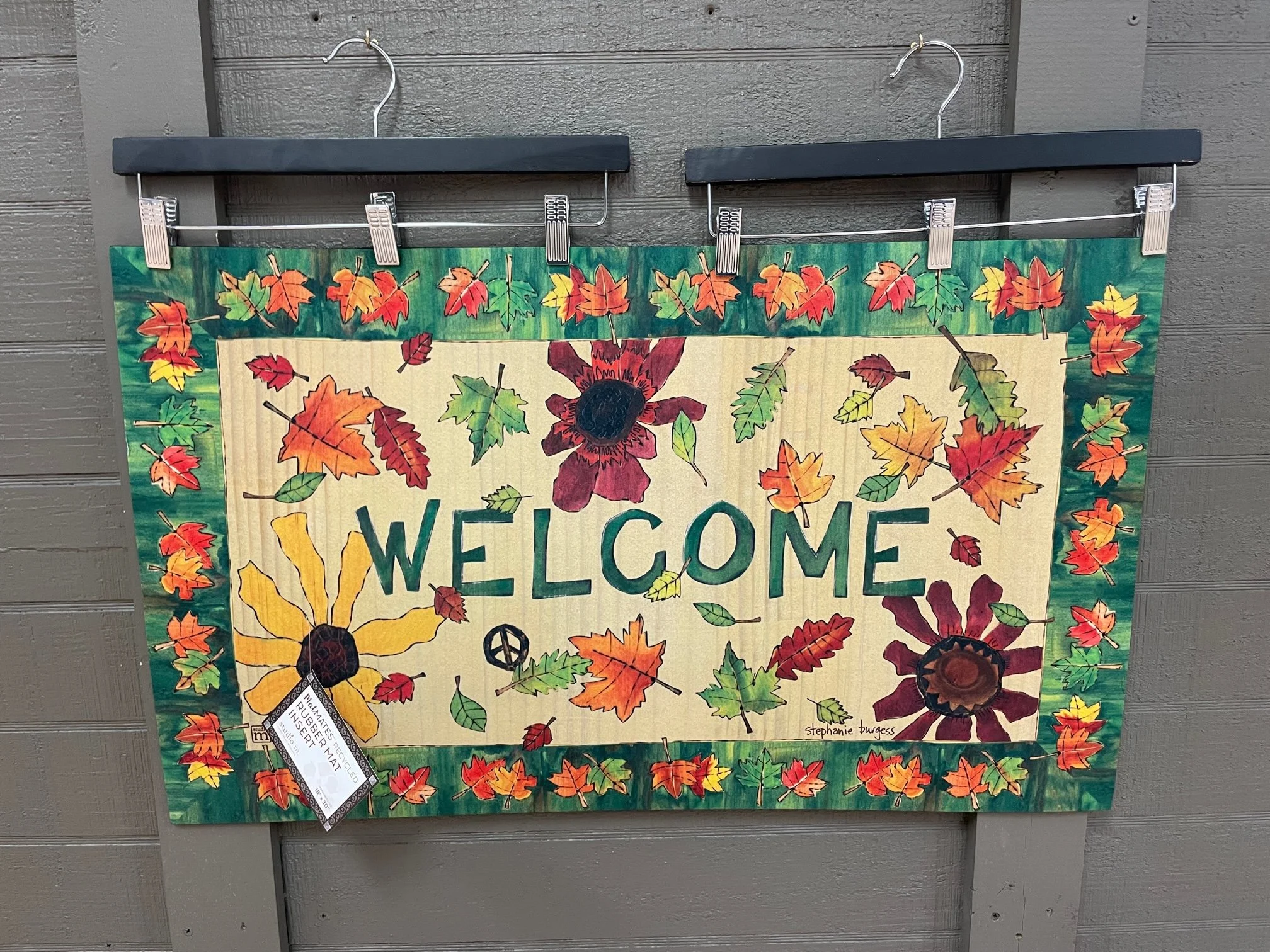
For those of you who may not have been aware, to celebrate the restocking of our seasonal MatMates, all floor mats will be 20% off through Saturday, November 9th! These aren’t the only products that we are excited to have back in stock though, as this week our decorative seed bird houses finally arrived!