It was the Saturday Before Christmas: Locally Crafted Gifts, Holiday Hours, and Increased Feeder Activity

Gifts from Local Artists

This time of year, we frequently find ourselves being asked if we carry any gifts from local artists. The answer to that is yes, and today we are going to highlight them!

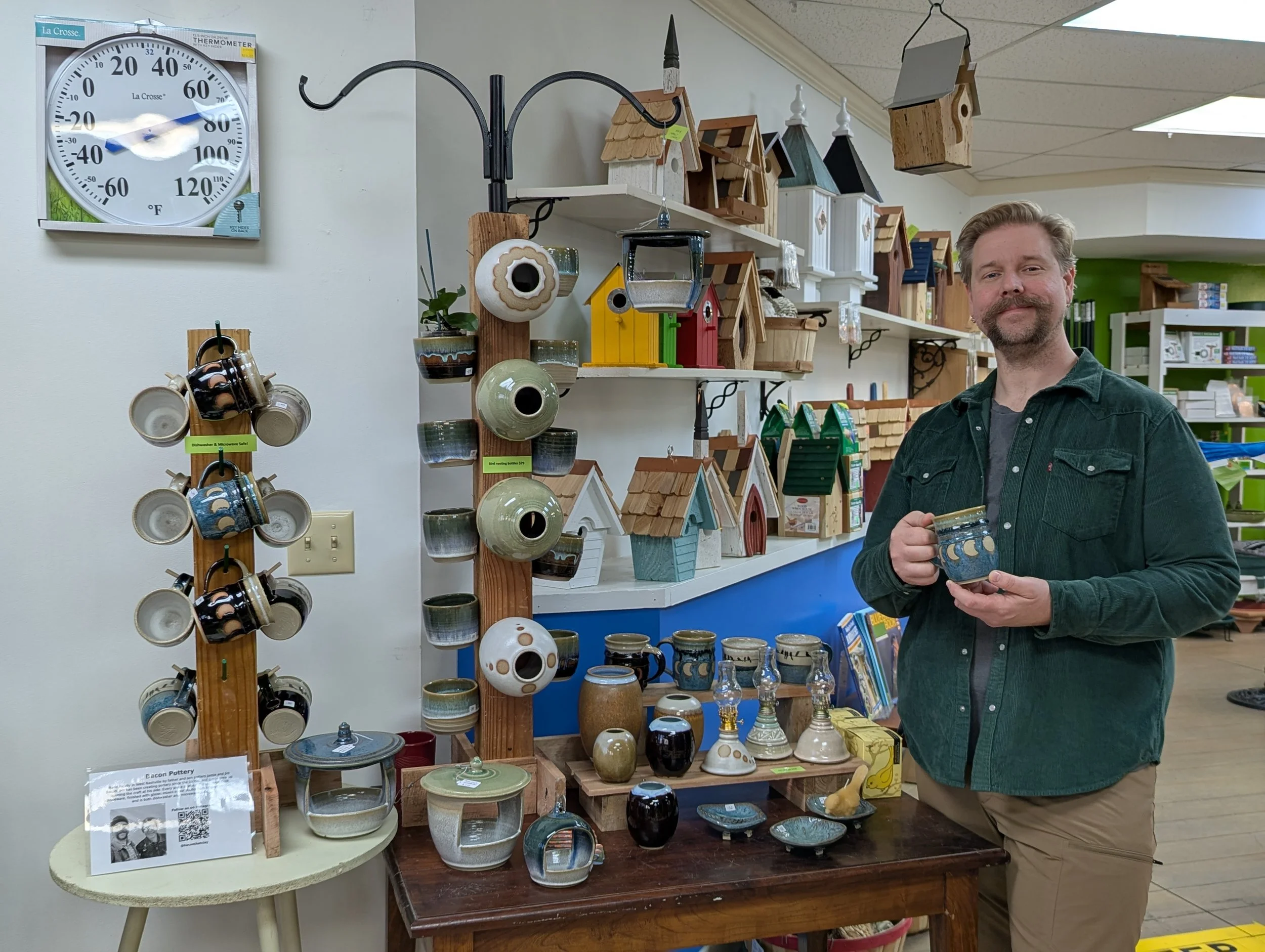
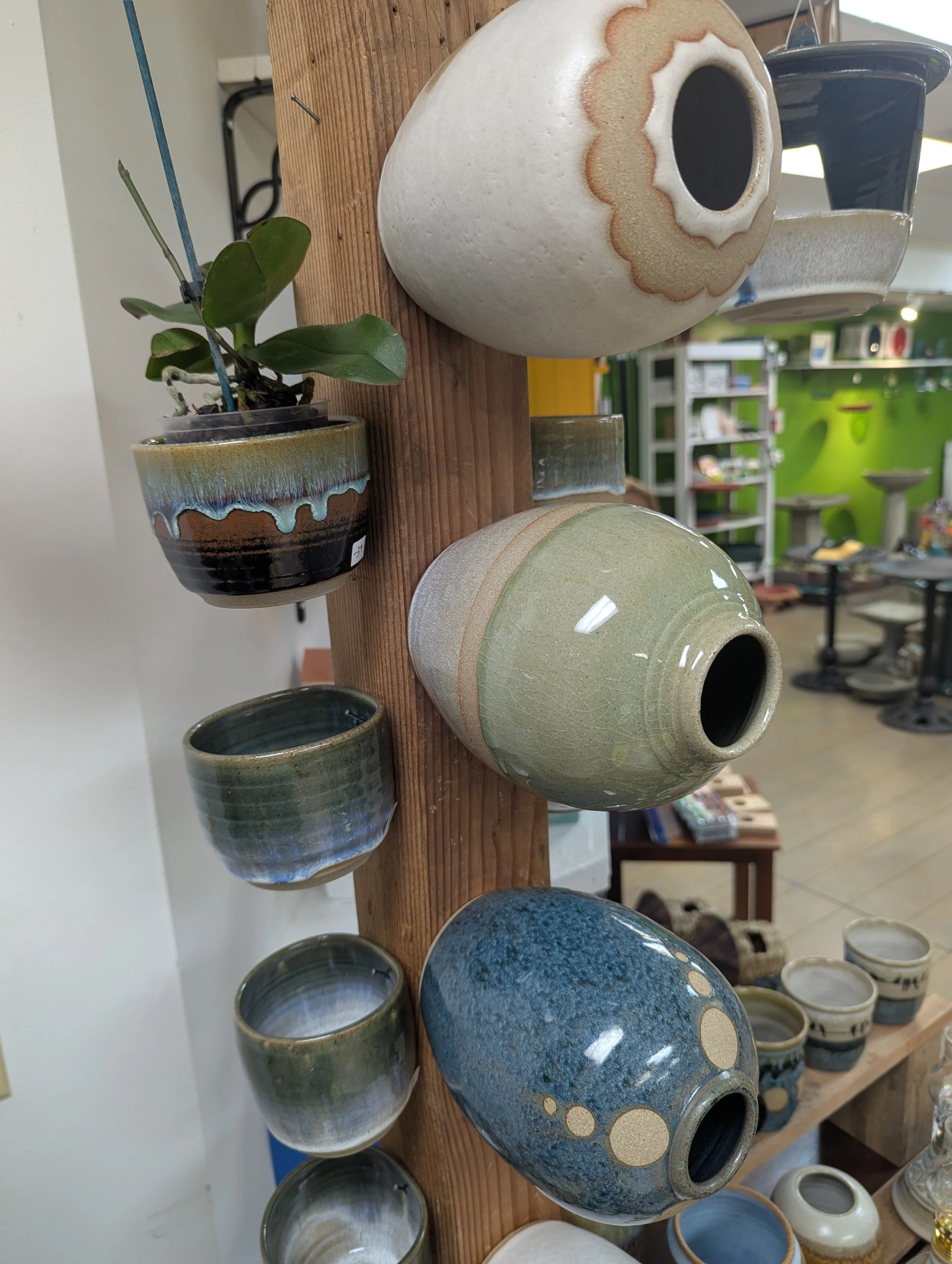
For example, did you know our very own Jamie is a very talented potter? For the last couple of years we have carried the handmade ceramic mugs, bird feeders, vases, and other accessories that Jamie and his father Jim produce in their home studio just down the road. This year, in addition to mugs, vases, oil lamps and orchid planters, they began producing their own take on the classic ceramic wren pot. Hang this in a protected area (such as under a carport or against your house) and there is a good chance that come spring, a pair of Carolina Wrens will use it to nest in!
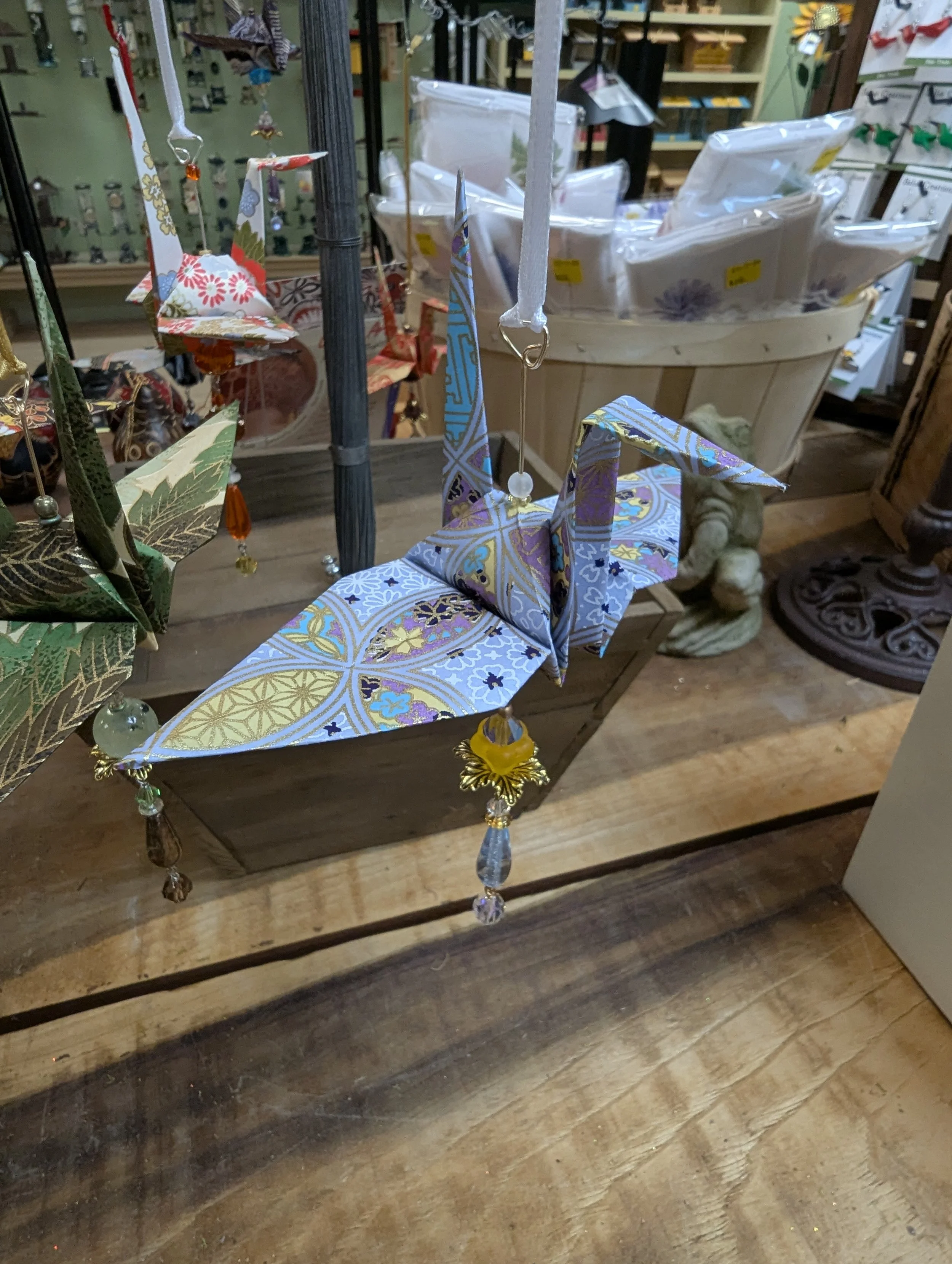
Are you looking for an ornament that is unique and produced locally by hand? Lydia Wilson, a longtime customer of ours, produces beautiful hand folded origami cranes made with unique papers as well as crystals to really catch both the light and the eye. If you are wanting a unique ornament from a local artist that is sure to be the highlight of your tree, look no further than these!
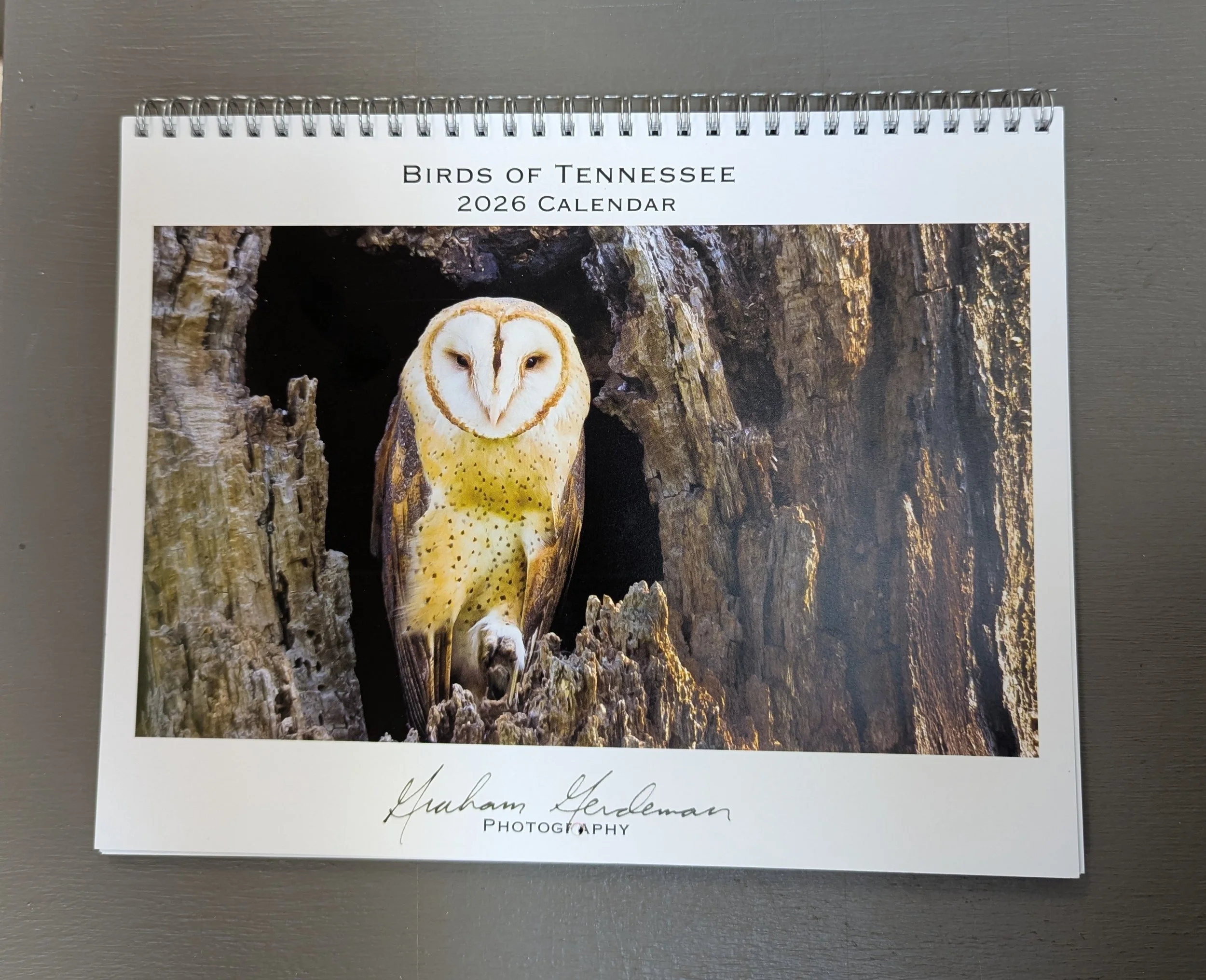
Our holiday gift lineup would not be complete without Graham Gerdeman’s Birds of Tennessee calendar. In fact, Graham’s calendar has been so popular over the years that we have phased out the other calendars we used to carry. Each year, it features stunning photographs of birds all taken within the state of Tennessee and partial proceeds benefit Warner Park’s B.I.R.D. research program.

Holiday Hours

Our holiday hours this year are as follows:

Christmas Eve: 10:00-3:00

Christmas Day: Closed

Normal hours resume Friday, December 26th

New Year’s Eve: Normal hours

New Year’s Day: Closed

Increased Feeder Activity

If the activity at your bird feeders seemed especially slow to you this fall, you are not alone. We saw the typical September-October slow down extend throughout the month of November this year. Why, you ask? Remember back to the spring and early summer when we had plenty of rainfall and relatively mild temperatures? This likely created a bumper crop of foods in the wild. (We have heard from many people of a greater than normal crop of acorns, for example) In addition to this, with warm weather sticking around through November, there was a ready supply of insects available. These factors combined to create an exceptionally slow fall at bird feeders.
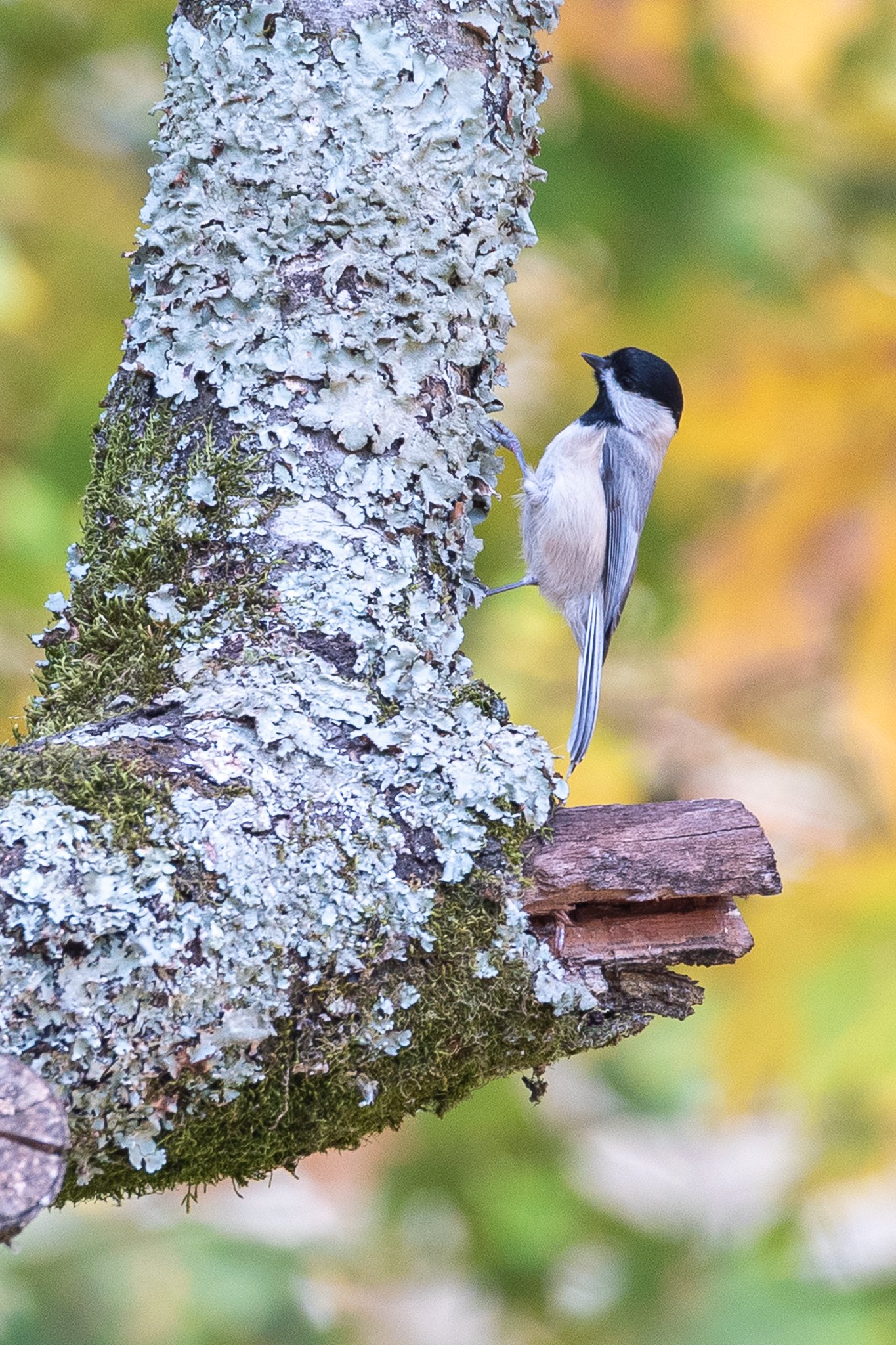
Carolina Chickadee foraging for food

Photo by Eli Haislip

We are happy to report that feeder activity is finally picking up, though, and people are seeing some interesting things. For example, Purple Finches are being reported earlier and in greater numbers than in previous years, so if you need to restock your seed supply, come on down and see us!
Mr. Bird has Landed!

Mr. Bird has Landed

While things have been slow at feeders, we’ve been keeping busy around the shop searching for new gifts for this year’s holiday season, and we have found some new items (in addition to our staples) that we are confident you and your family and friends will love!

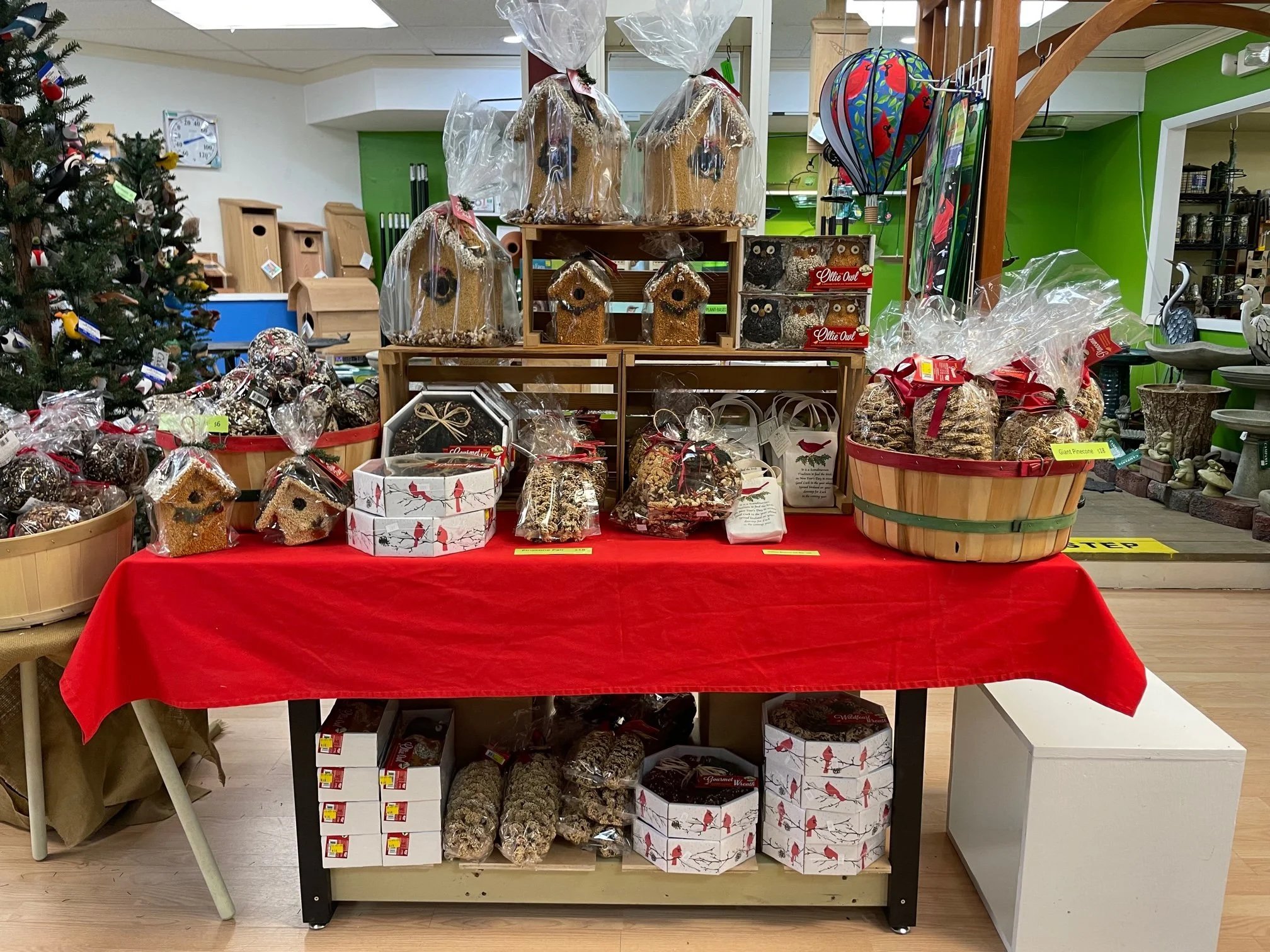
First, we are excited to announce the return of our Mr. Bird Holiday Collection! We are filled to bursting with bird seed ornaments, wreaths, decorative bird seed covered houses, and much more. We now have Mr. Bird gifts in all shapes and sizes, stocking stuffer sized Little Hearts and Little Stars ($5 and $6, respectively) to the Seed and Nut Balls and Ollie Owls. ($8 each) Want something a little larger? How about the largest seed covered pine cone you’ve likely ever seen? The Giant Pinecone is large enough to feed a flock of song birds and it’s only $18! If you don’t need a pine cone that is larger than a grown man’s head, we also have in the ever popular Birdseed Wreaths, which are as popular with the birds as they are with the humans.

One of the best sellers over the years has been the different bird seed covered houses! They come in two sizes, the small Birdie Cottage ($18) and the full sized Birdie B&B. ($60) The fun part of the Birdie B&B is that once the birds have consumed the seed, it can be used as a fully functional bluebird box.

All these consumable seed ornaments can make the perfect gifts for the folks on your lists who “have it all.”

Purple Finch Sightings

Male Purple Finch

Photo by Eli Haislip

So far, this season is proving to be a great one for sightings of Purple Finch! More often, it is in the depths of winter when we begin to hear the odd report of a purple finch, and even then it is rarely more than one or two. As of this week though, we have already had three reports with numbers ranging between 1 and 12 birds at feeders or water sources. Now, if you are thinking to yourself, ‘I have those year round, what’s the big deal?’, what you are seeing is actually the House Finch, a common year round feeder visitor. Purple Finches share similarities, but once you learn the differences, you’ll never mistake the two again!

For starters, we only have Purple Finches during the fall and winter months here in Middle Tennessee. Purple Finches have been described by Roger Tory Peterson (the author and illustrator of our favorite field guide; Peterson’s Field Guide to Birds of Eastern and Central North America) as “a sparrow dipped in raspberry juice.” Seen side by side, the color difference is quite pronounced. Purple Finch are much more, well, purple in comparison to the red of the House Finch. Also, the coloration of Purple Finches extends around to their back and wings. Females can be easily identified by the darker band of feathers that extends behind their eye.

Fortunately for us, these beautiful finches are not difficult to please when they do visit feeders. They will enjoy sunflower, or any sunflower heavy blends (such as our Woodland Blend or our no-mess Premium Blend) as well as safflower seed.


How to Avoid a Broken Birdbath or Fountain; Other Fall Happenings

An Increase in Activity

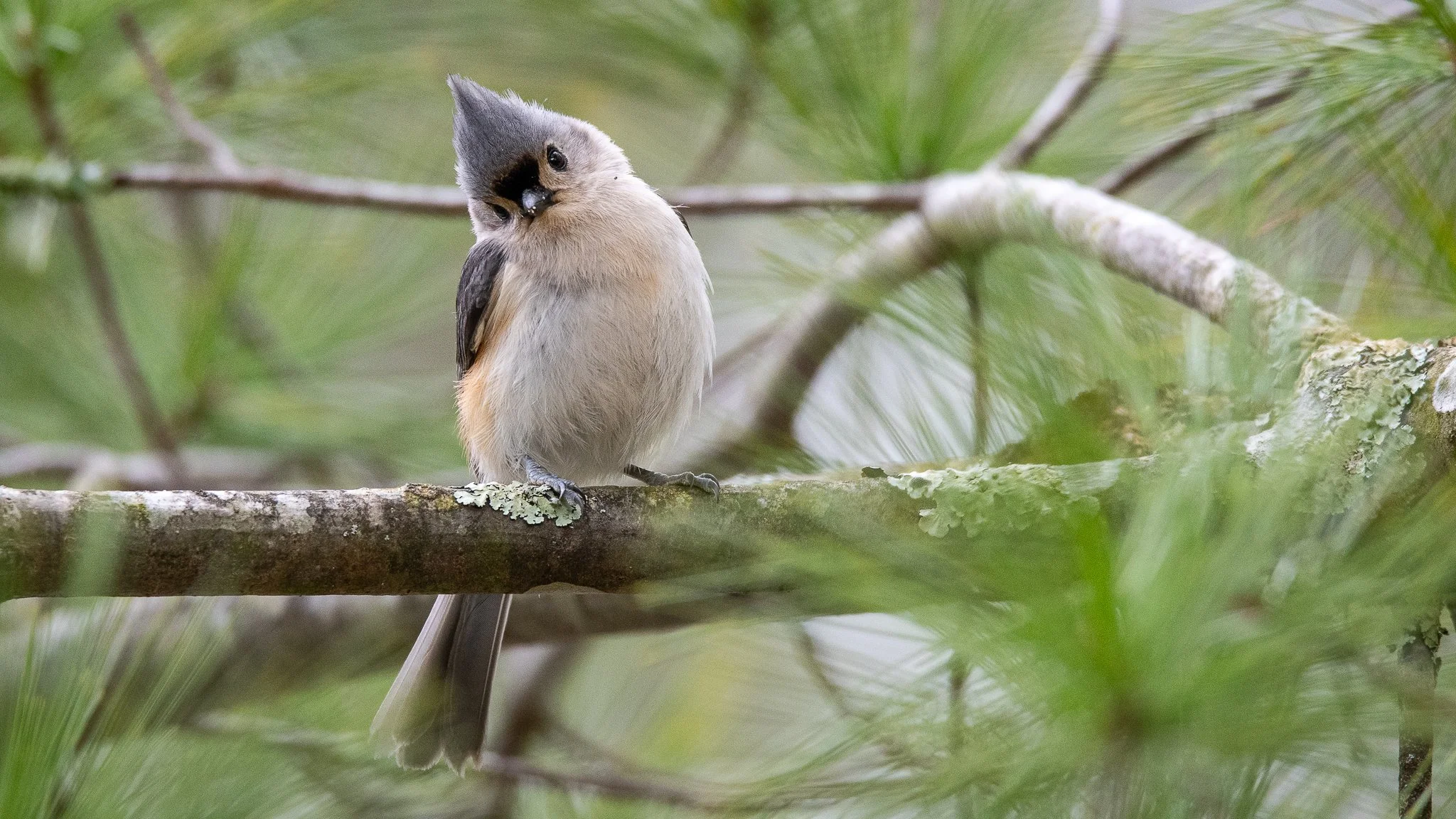
Tufted Titmouse

Photo by Eli Haislip

Since last week’s cold snap and snow flurries, reports have finally begun to trickle in from customers of increased activity at their bird feeders!

For those of you who have thought things seem slow at your feeders, you’re not alone. We always expect a significant slowdown at feeders during September, October, and the first half of November. Don’t worry, it’s nothing you’ve done wrong! With the breeding season long concluded, birds are no longer having to care (and eat!) for as many as six young at a time; now they only have themselves to provide for. Take this, and couple it with the fact that this time of year, everything in the wild that will produce food is doing just that. Seeds, berries, acorns and nuts can all be found in abundance. As if this wasn’t enough food for your average songbird, the warm afternoons mean that insects can still be readily found. All these factors combined mean that fall is a slow time of year for bird feeding.

So, how much longer will this continue? Generally, when we see temperatures begin to drop in November marks the end of the slow season. Begin to look for increased activity on these frosty mornings of late. Once we get into consistently cooler temperatures in the latter half of the month, expect to see a noticeable increase in activity at your feeding station.

We are also beginning to receive reports of our winter residents turning up in the parks and backyards of the midstate. Just this week, I have begun seeing Dark-eyed Juncos and White-throated Sparrows with regularity.

Attention ALL Birdbath and Fountain Users!

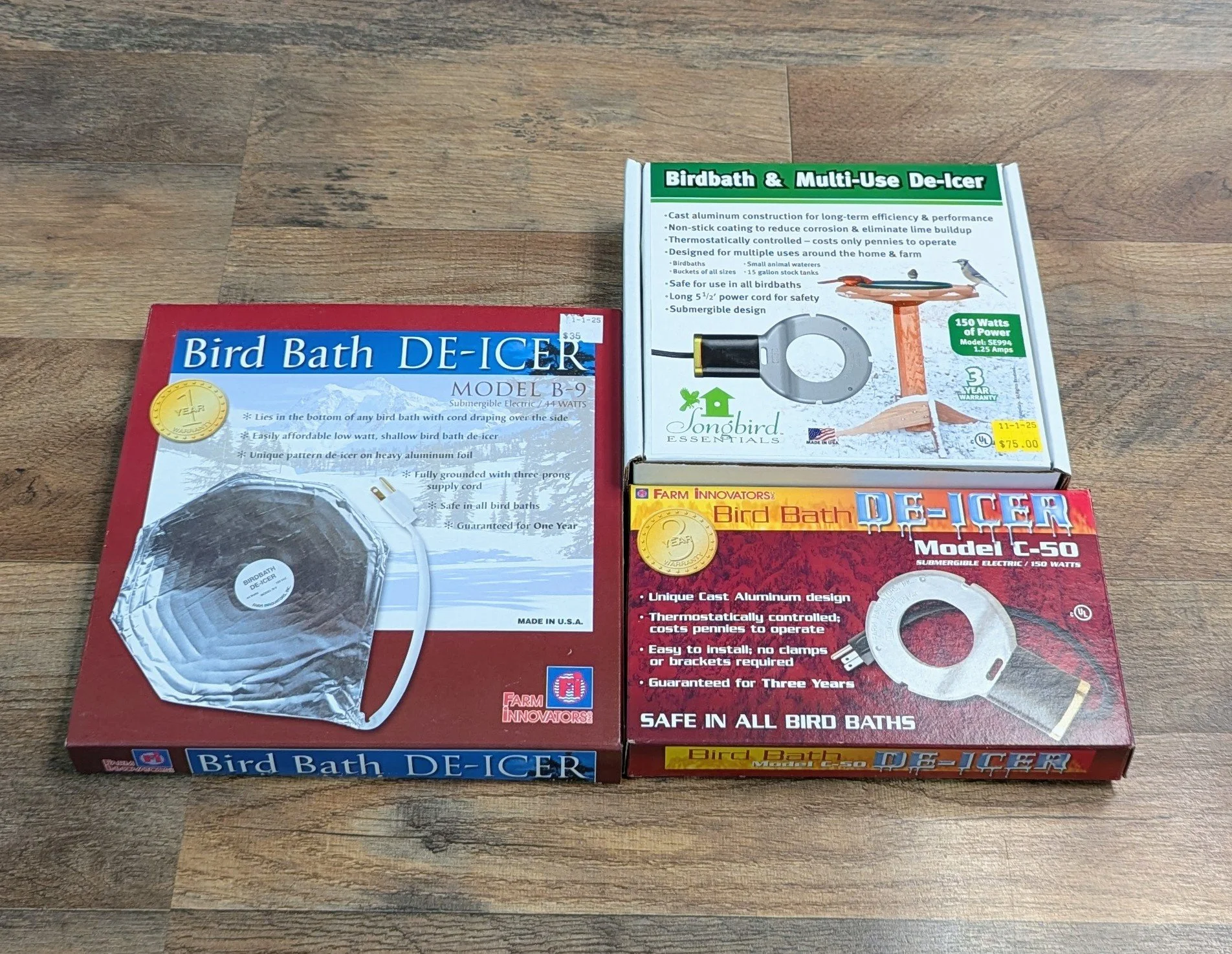
We would like to give all of you a reminder that with the freezing temperatures of late fall and winter, if you are not using a birdbath de-icer, your birdbath or fountain is at risk of cracking. Yes, even a fountain with its running water is not immune to freezing and cracking when the temperatures drop below freezing. It is also worth mentioning that the same applies to glass rain gauges; be sure to empty out those tubes before they can freeze and break! If you have a de-icer, now is the time to get it out and put it into use. For those of you who don’t already have one, a bird bath de-icer is a metal ring, with or without a thermostat, that when plugged into an electrical outlet and submerged in your bird bath or fountain will keep the water from freezing allowing you to provide water year round.

We currently have three models in stock. Two models, the Songbird Essential’s Multi-Use De-Icer and the Farm Innovators Model C-50 feature thermostats and are essentially the same products, with the only difference being the Songbird Essential’s model having a 5.5 cord while the Farm Innovators model only sporting a footlong cord. Both of these also come with a 3 year warranty. These models retail for $75 and $70, respectively. If you don’t want to spend that much, we also have the Farm Innovators Model B-9. This is the most budget friendly de-icer, retailing at only $35. However, the trade off is there is no thermostat (so it is always on when it’s plugged in) and it only has a one year warranty. Still though, it is effective and ideal for birdbaths that are more shallow.

What are My Bluebirds Doing?

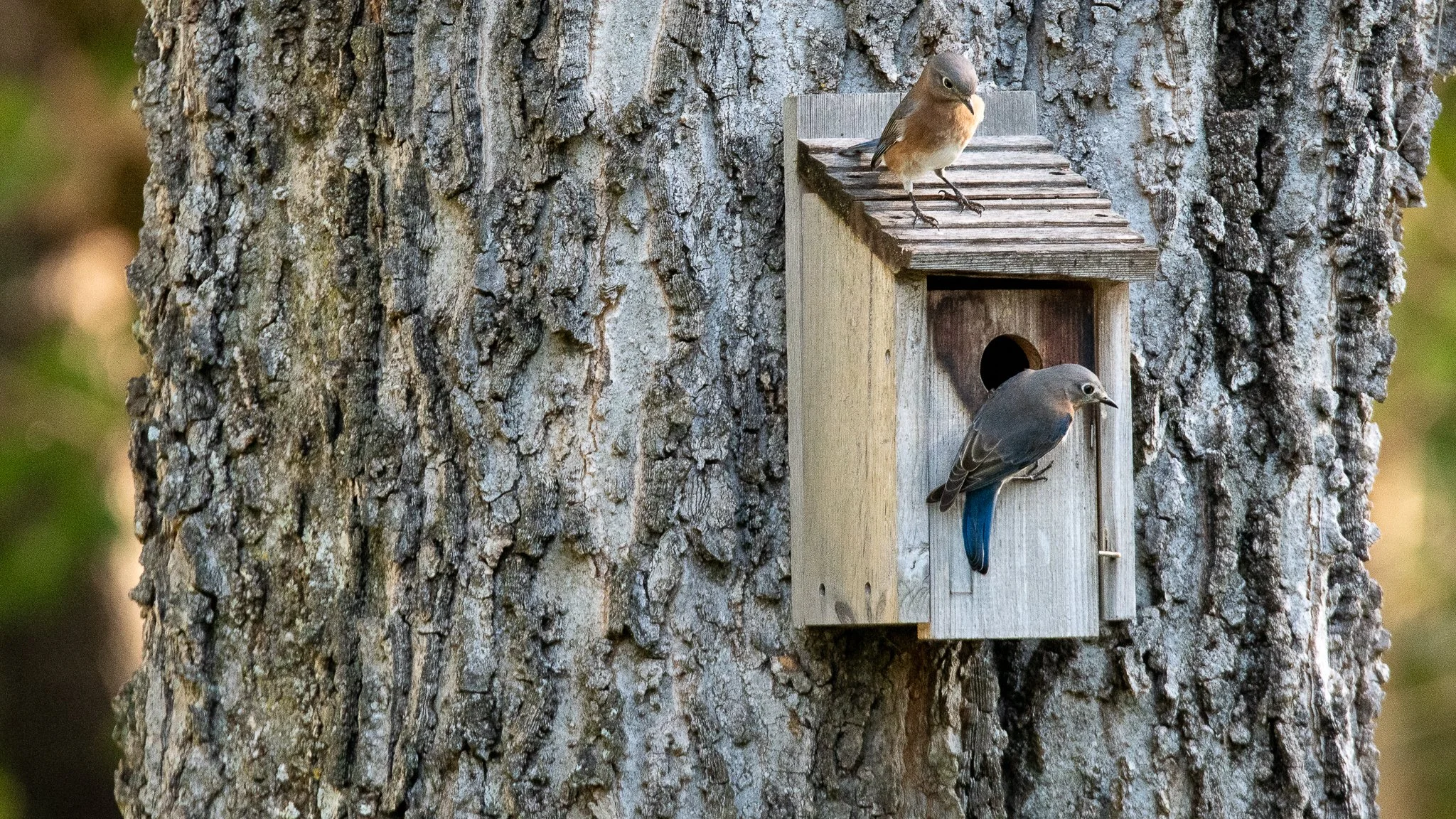
If you have noticed your bluebirds perching on your nesting box, and maybe even going in and out, you’re not alone! We encounter this phenomenon each year around this time with Eastern Bluebirds investigating nesting boxes. Don’t worry, they know better than to try and begin nesting this late in the season. Most likely, they are scouting potential nest sites for next spring in addition to shelter locations for the coming cold nights of winter.

Eastern Bluebirds Investigating a Nesting Box in Fall

Photo by Eli Haislip

This is why whenever people ask us when they should put up a bluebird box, we usually tell them “yesterday.” The sooner you put a box up, the sooner the birds will find it and know it is there for future use.

In addition to this, birds will also utilize nest boxes during the winter to get out of the elements on cold nights. Multiple bluebirds will all pile into a box and use their combined body heat to survive the coldest nights of the year. Other cavity nesting birds will also utilize boxes on cold nights, such as Carolina Chickadees, Tufted Titmice, Carolina Wrens, White-breasted Nuthatch, and Downy Woodpeckers. Despite the breeding season being long since concluded, it is never really too early to put up a box!


Bird Feeder Camera

You’ve been asking us about them for most of the decade, and after careful research, we’ve listened. We are now finally able to carry a bird feeder with a camera in it!

The Beakview Bird Feeder Camera retails at $205 and for this, you get the bird feeder itself which is constructed of a durable plastic material (we tested the impact durability using our foreheads when we had it set up on our loading dock; we can assure you they hold up well) that will hold 1.8 pounds of birdseed.

Beakview Bird Feeder Camera

Also included is of course the camera. We have all been quite impressed with the image and video quality. The simple, wide-angle 2.0 megapixel camera might not sound impressive, but it is more than adequate to get you a crisp, detailed look at the bird while it feeds. The camera also has night vision, so if you have any nighttime visitors such as raccoons or the less common flying squirrel, you will get a good look at them. Video is recorded in full color and high definition and is smooth without noticeable lagging or buffering. In case you are wondering, the camera is waterproof so it will be just fine staying out in the rain. As for the battery, Beakview claims that it will last “30-90 days depending on activity,” although with the number of House Finches I had constantly triggering the camera, I was getting more like ten days to two weeks in between charges. Still, not too bad!

We’ve carried these feeders now for a few months, and I have been testing mine off and on during that stretch with no real issues to report. Once I learned how to disable notifications in the app, I found having the whole package to be enjoyable. I’ve even seen a few oddities that I would have missed while being away at work, such as an unusual looking White-breasted Nuthatch. These cameras also offer a subscription based AI powered identification software, but I would not recommend paying for that as there is no real point. In this area, you are going to be getting the same species of birds to your feeder for the majority of the year, and since you now have high definition video of the bird up close, a field guide should be more than enough to figure out what you’re looking at. I should mention that this software is NOT required to use the feeder or its camera.

Tufted Titmouse

Enough clarity for feather detail, even with only 2 megapixels!

So, who is this a gift for? Younger birders who are old enough to have a smartphone would likely enjoy the close up look at their favorite feeder birds. These would also make a great gift for somebody who likes watching their feeder, but perhaps work keeps them away from the windows for long periods. These cameras are also easy enough to use that all three of us were able to figure them out, which means anybody can use them! That being said, if you have any questions about using the app, or setting up the bird feeder itself, we are here to help and will do our best to walk you through it!


What's Up with My Feeders?

While things have been slow overall at my feeder of late, I have had plenty of visits from one bird in particular… A White-breasted Nuthatch! What if I told you that despite being one of my most active visitors, the bird isn’t actually eating the seeds? If you’re wondering what’s going on, or perhaps you’ve experienced something similar, the bird is neither crazy, nor is it wasteful… It’s actually a fairly common phenomenon this time of year known as caching!

White-breasted Nuthatch

Put simply, caching seeds is a way for birds to store seeds during times of plenty (right now, when there is abundance of food available in the wild) 

Through my binoculars, I was able to observe that the Nuthatch was wedging a safflower seed into the nooks and crannies of the bark of a large maple outside my window. Just while I was watching the bird made more than ten trips back and forth from the tree to the feeder. Nuthatches aren’t the only backyard birds that will store seeds for later. Carolina Chickadees, Tufted Titmice, White-breasted Nuthatch, and certain woodpeckers all will engage in seed caching. For more information, I’ll link to a good article on Cornell’s All About Birds page here.

Have your feeders seemed slower than normal to you? We assure you, everything is just fine. Each year, we experience this typically from September through the first part of November, or at least until when it starts to get cold out. The reason? This time of year is a time of plenty for birds. Every wild plant that produces seeds, nuts, berries, or fruits is doing just that. In addition, the warm days and mild nights mean that there are still numerous insects available for birds to prey on. (As evidenced by me still having to use our Murphy’s Naturals Mosquito Repellent Insect Sticks when I eat outside in mid October.) Put simply, the birds don’t need feeders right now. In addition to the reasons I just listed, remember that with the breeding season concluded, they aren’t having to feed young anymore. That means that not only is there an abundance of food in the wild, but also they only have themselves to take care of. In other words, it’s a pretty good time to be a bird!

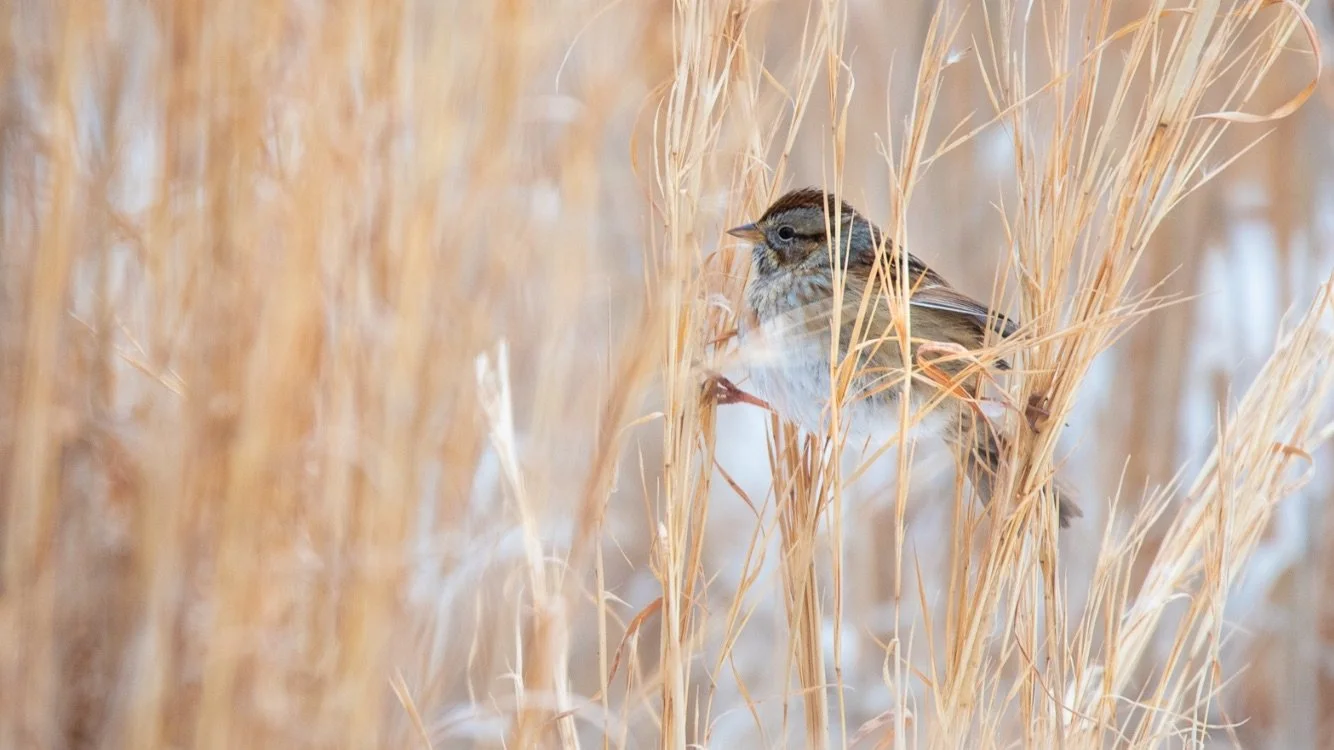
A Swamp Sparrow Eating Grass Seeds in Winter

Eli Haislip

Once we get into colder weather, when insects become more scarce, expect to see a sharp uptick in feeder activity. Nothing brings birds back to our feeders quite like a cold, frosty morning! In the meantime, now is the perfect time to take your feeders down and give them a good cleaning. In our experience, dawn and good hot soapy water with a thorough rinse works well. Just make sure the parts of the feeder are well dried before you put seed back in to keep it from getting funky.