
BIRD NEWS BLOG
Addressing Frequently Asked Questions
Where Are My Hummingbirds?
Wondering why you aren’t seeing as many hummingbirds as you might like? We promise, this time of year, this seeming lack of interest in your feeder is normal. As we say every year, hummingbirds are not traveling thousands of miles just for sugar water! Instead, they are coming here to breed and raise young. After this has concluded, usually by mid to late July, THEN they will turn their attention to fattening up for the migration south again.
Another contributing factor to low hummingbird numbers could be your nectar. Keeping nectar fresh is crucial to hummingbird feeding success. This time of year, nectar must be changed every two to three days at the most. Waiting a week can cause the nectar to grow bacteria, becoming cloudy and making it unsafe for hummingbirds to consume. As always, we recommend making your own nectar at home. All this takes is 4 parts water to 1 part plain white table sugar, heat and stir until the sugar is fully dissolved. Once cooled, transfer to a water bottle and store in the refrigerator!
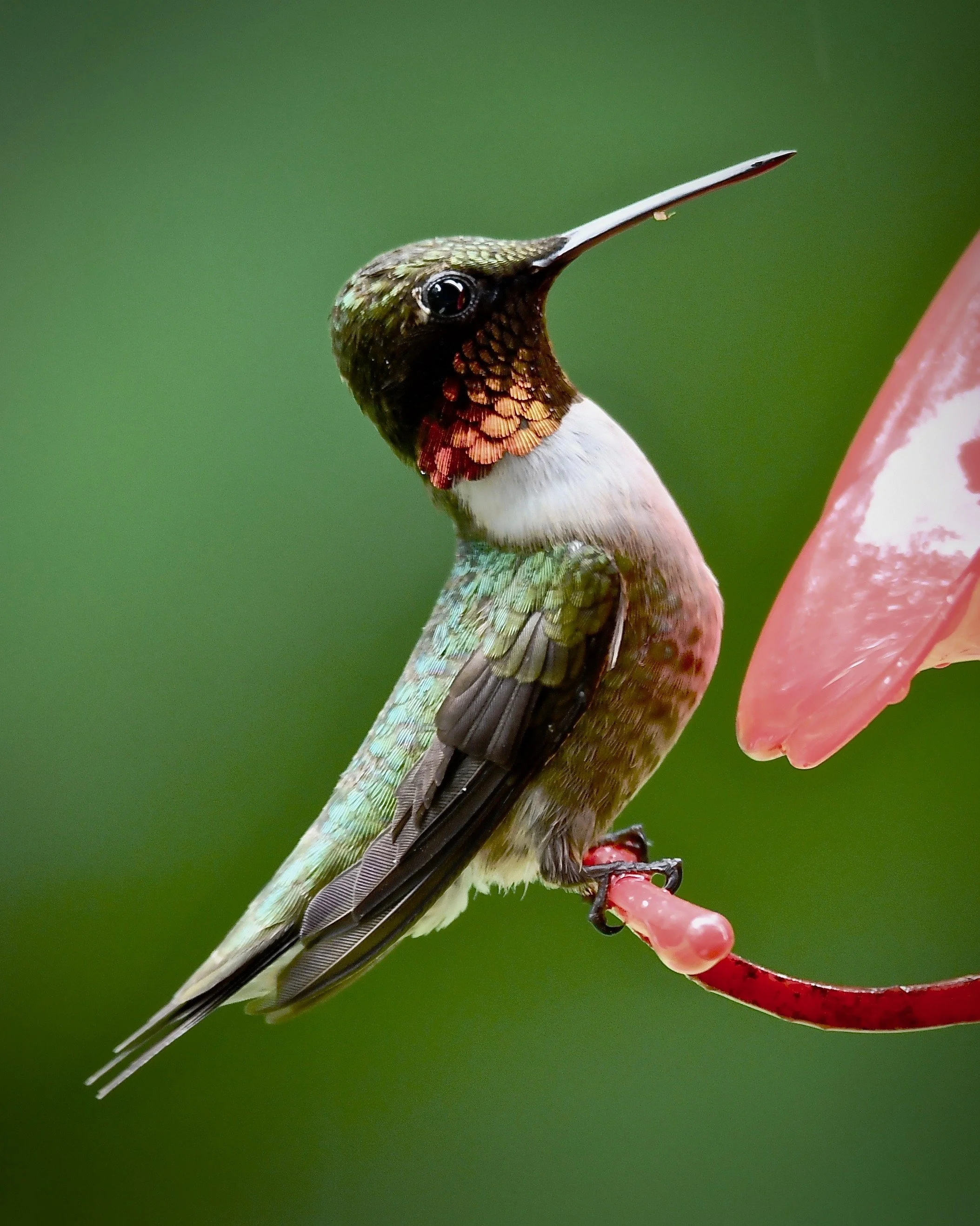
Male Ruby-throated Hummingbird
Photo by Eli Haislip
What Do I Do with My Old Bluebird Nest?
By this point in the season, many folks have likely had success with attracting Eastern Bluebirds to their nest boxes. This is great! However, do you find yourself wondering what needs to be done after the young have fledged?
We always recommend cleaning out the old nest material between nestings. There are several reasons for this. First and foremost, as old nesting material breaks down over time, it can draw insects that can prove harmful to the young birds. Also, there is no need for keeping it in there! Nest construction is part of the courtship of Bluebirds, therefore they have no use for the old nest. Lastly, the young will not return to the nest after fledging, so there is no reason to keep the old nest in there!
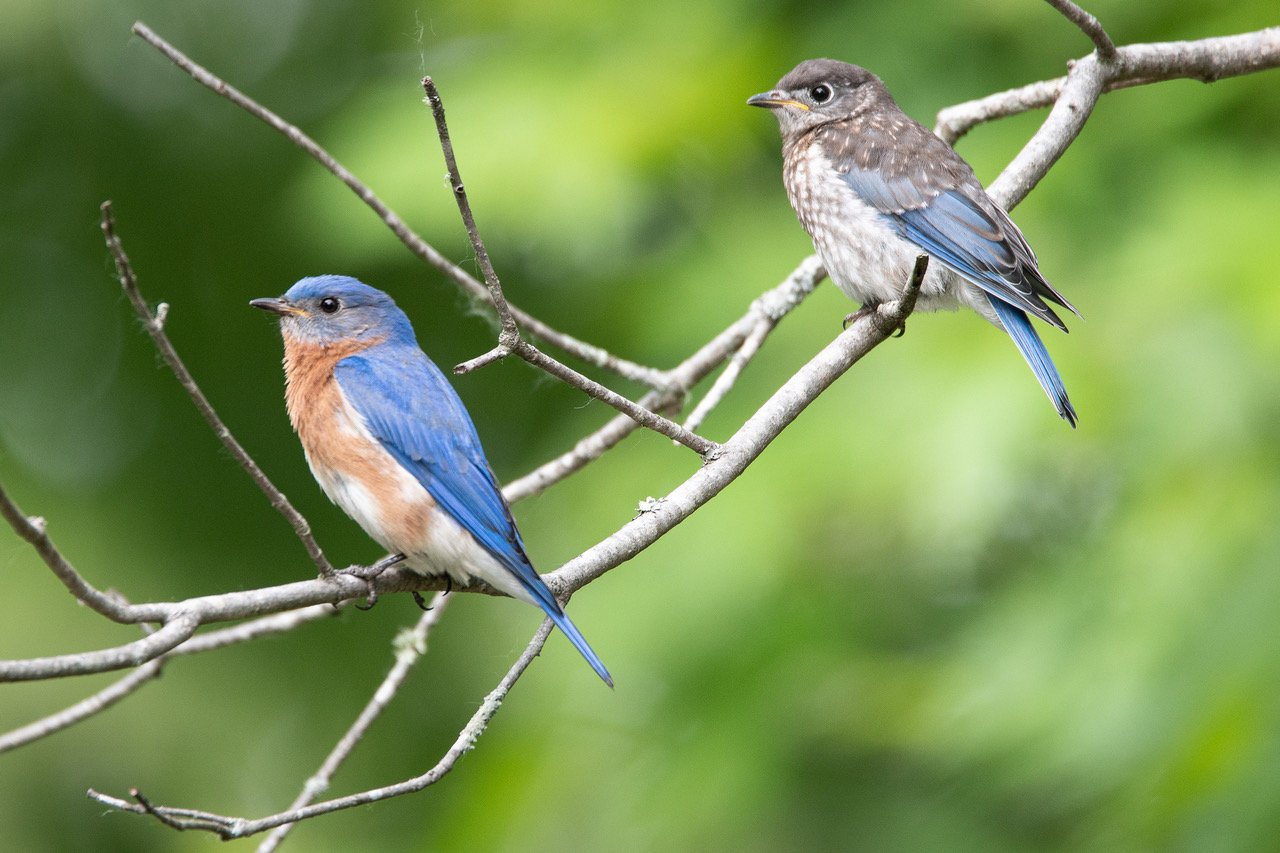
Male and Juvenile Eastern Bluebird
Photo by Eli Haislip
How Can I Attract More Goldfinches?
Are you seeing Goldfinches at your feeder, but want to see more? There are a few things you can try!
For all our Goldfinch customers out there, remember to make sure your finch food is staying fresh, dry, and not getting clumped together! Also, while you’re out there, if your finch feeder is getting low, be sure to top it off! While this might sound like we are just trying to get you in for more seed, there is actually a very functional reason for this advice. Because Goldfinches prefer feeding as a group, a half empty feeder where many of the perches won’t yield seed is unappealing to them. Seeing as they are birds, and lack our sense of manners and decorum, rather than wait patiently for a turn lower on the feeder, they will likely just leave your feeder behind and go to your neighbors yard! We know you want to avoid this, so take it from us. Keep your goldfinch feeders topped off!
Happy Memorial Day from The Wood Thrush Shop!
Memorial Day Hours
Happy Memorial Day from the Wood Thrush Shop! We will be closed Monday May 25th in observation of Memorial day, with normal hours resuming on Tuesday, May 26th. We hope you all enjoy the unofficial start of summer, and look forward to seeing you Tuesday morning at 10:00!
Blue Grosbeaks Are Being seen

Blue Grosbeak (Passerina caerulea)
Photo by Eli Haislip
After arriving home after work on Wednesday, a flutter of blue in the brushy field next to my apartment caught my attention. Even from a distance of roughly 50 yards, I could see that the bird wasn’t behaving like an Eastern Bluebird, and the blue didn’t seem like the right shade even from a distance. I had my binoculars handy, and thinking I possibly had my first of season Indigo Bunting, I took a closer look.
I immediately could tell this wasn’t an Indigo Bunting. In addition to being too large for an Indigo Bunting, the colors were wrong. It had very distinct warm brown wing bars, and an enormous silvery bill that looked large enough that it could crush any seed or nut with ease. This was no bunting, this was a Blue Grosbeak!


Interestingly, unlike Rose-breasted Grosbeaks, they are not feeder visitors despite eating insects and seeds. Also unlike Rose-breasted Grosbeaks, who are only brief visitors between mid April and mid May, the Blue Grosbeak will spend the spring and summer here in Tennessee to breed and raise their young before migrating south to Central America and the Caribbean in the fall. This means that you can spot these gorgeous songbirds throughout the coming months. They prefer fairly open habitats such as scrub or brushy fields. I have seen them most recently at Bell’s Bend, where I observed a pair along the roadside just before you turn into the nature center. In the past, I have also seen them out in Pegram at Gossett Tract. With some birds not even arriving until July, there is still plenty of time to see these beautiful summer visitors!
Feeder and Seed Special; the Return of the Rose-breasted Grosbeaks and Ruby-throated Hummingbirds!
Return of the Grosebeaks!
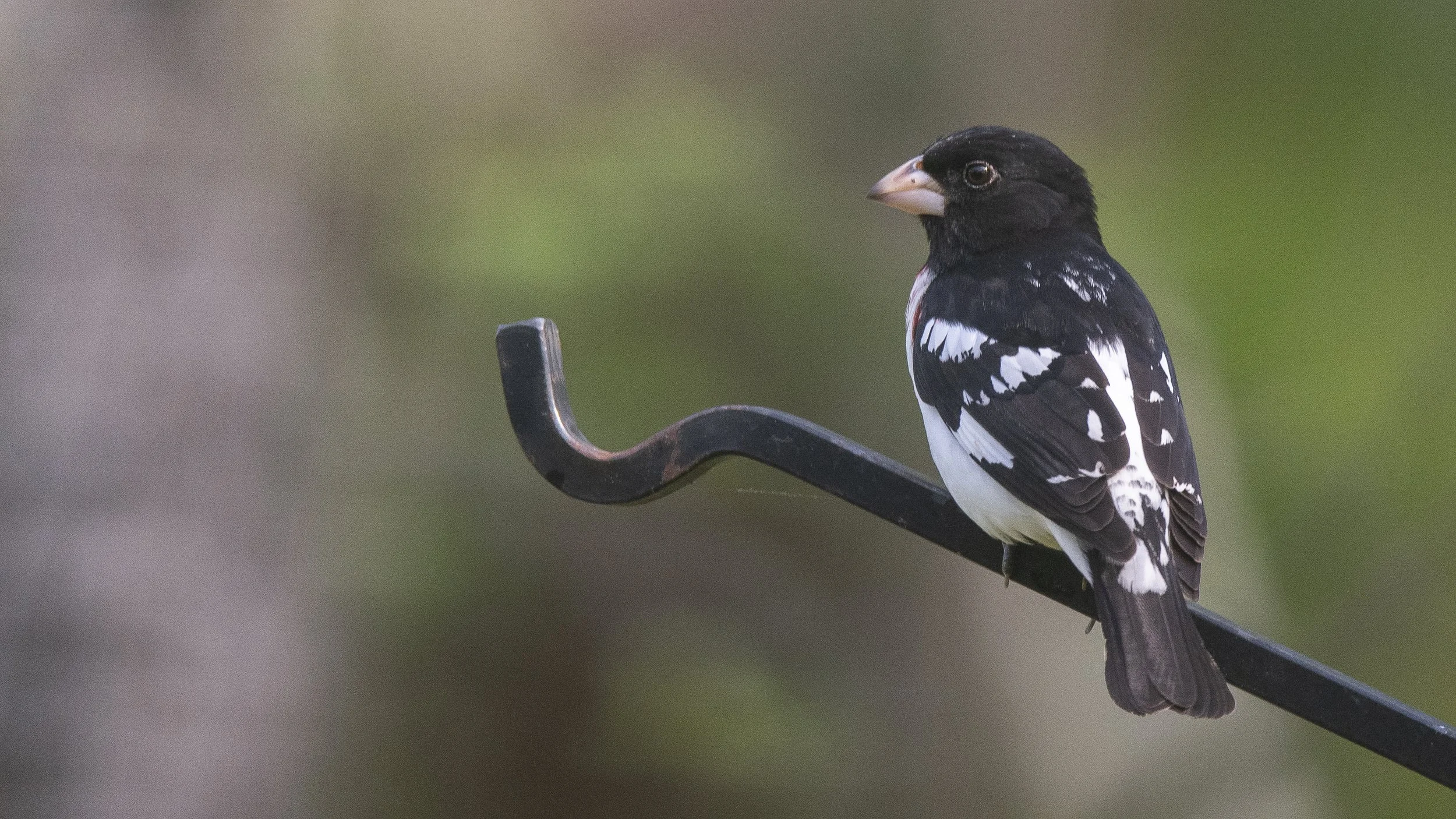
Male Rose-breasted Grosbeak
Photo by Eli Haislip
If you have been procrastinating filling your feeder, now is the time to get it cleaned and filled! The Rose-breasted Grosbeaks are being sighted again! John saw these males in his yard today!
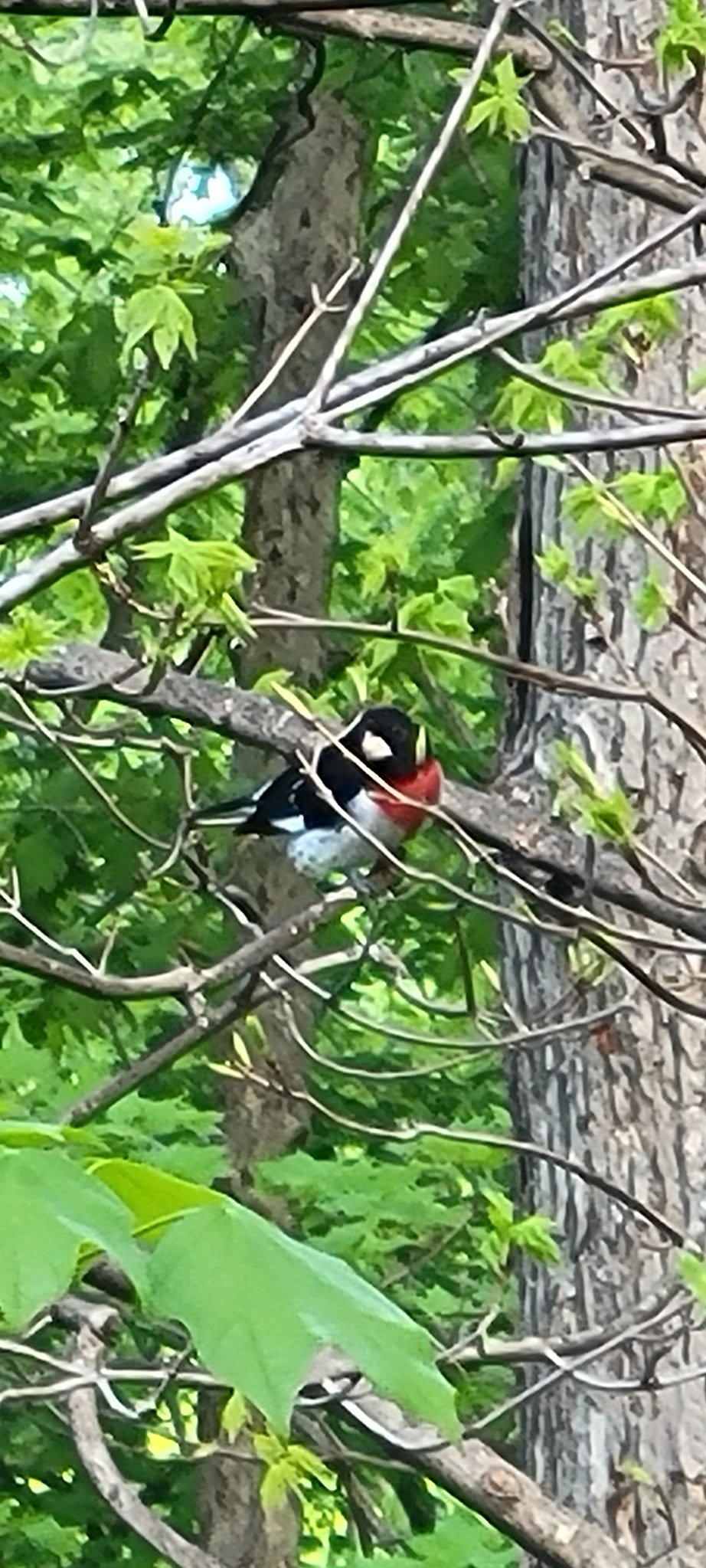
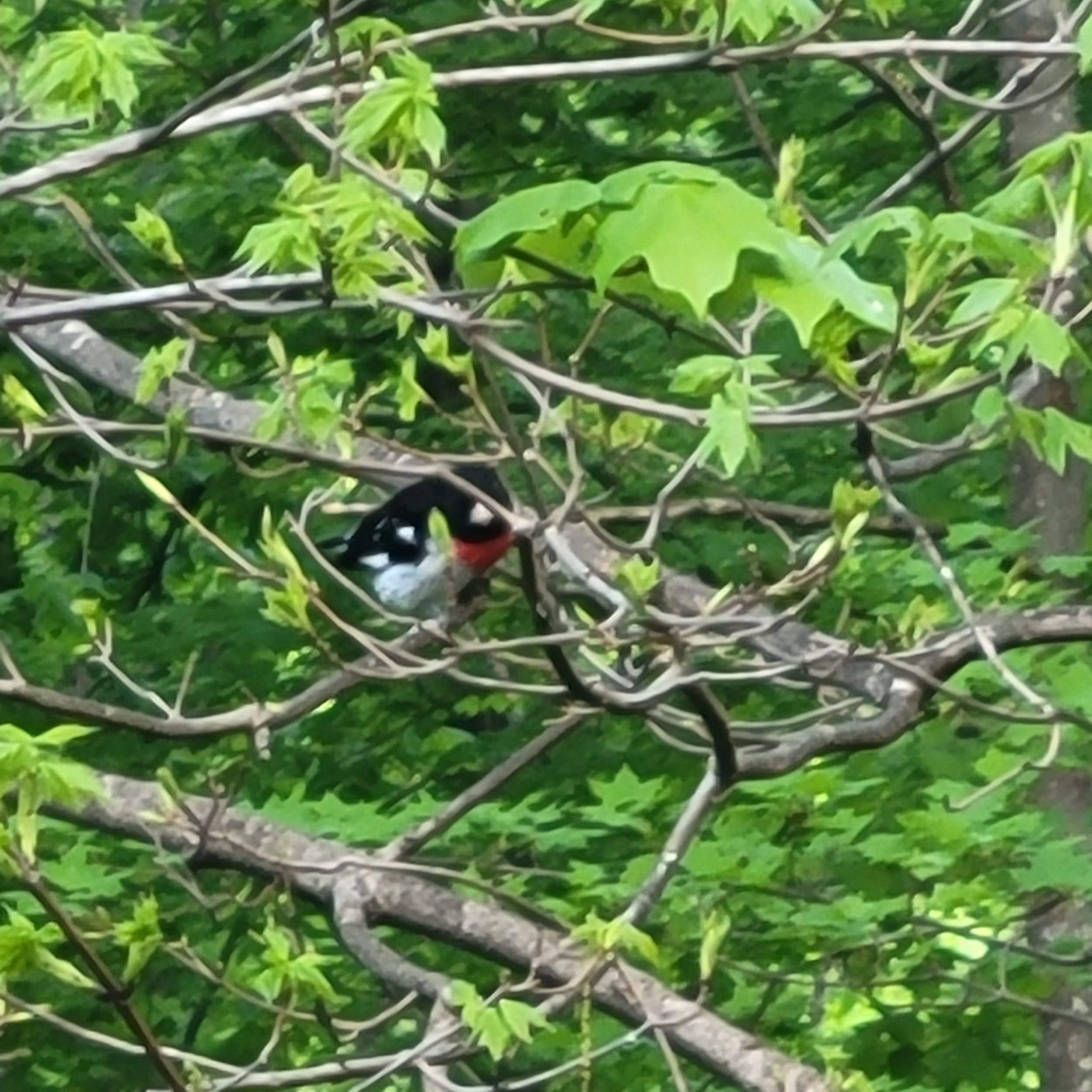
If you’re unfamiliar with what a Rose-breasted Grosbeak is, there’s a good chance you might have seen one at some point if you have ever had seed feeders out during the spring. These neo-tropical migrants pass through middle Tennessee on their journey from Central and South America on their way to their northern breeding grounds, giving us a roughly one month window from mid April to mid May to enjoy these beautiful birds at our feeders.
Males, as with many birds, are the stars of the show. With a black head, back, and wing, white breast, and then vibrant red below the throat, it is hard to miss these birds at a feeder. Females, on the other hand, are much more subdued than their male counterparts. My favorite description of the female Rose-breasted grosbeak is a female House Finch on steroids.
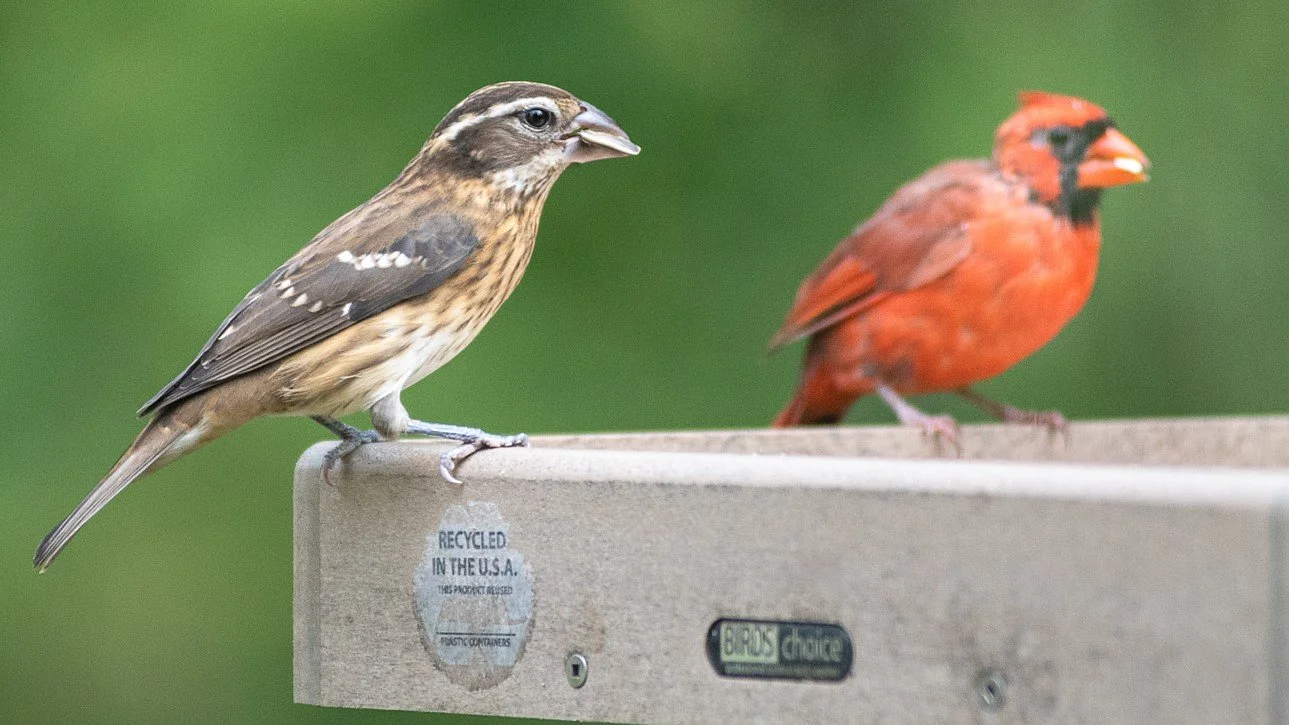
Female Rose-breasted Grosbeak
Photo by Eli Haislip
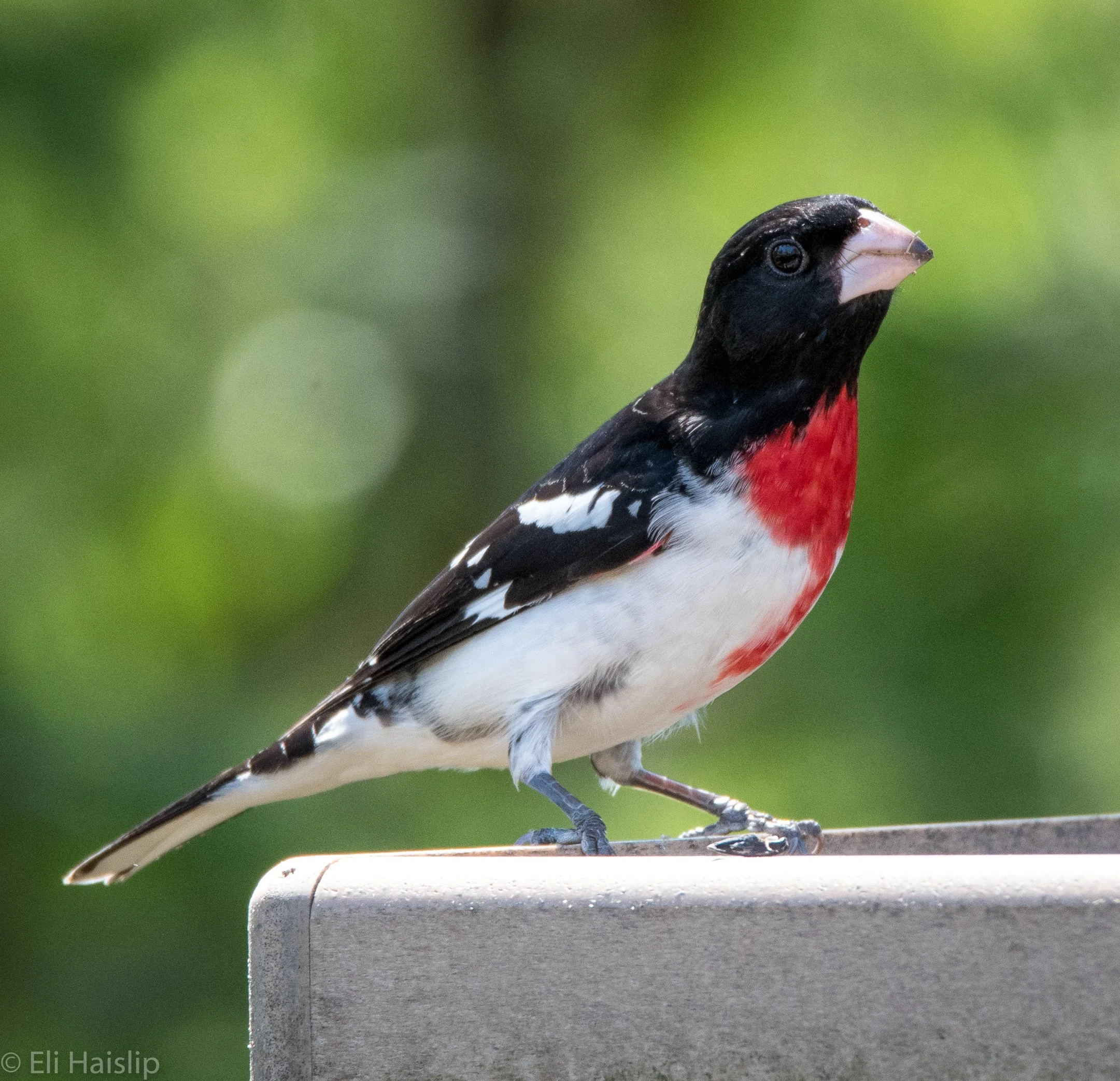
Male Rose-breasted Grosbeak
Photo by Eli Haislip
Fortunately for us, Grosbeaks are not picky and will happily feed on sunflower, safflower, or our various blends. If you haven’t seen any yet, there is still plenty of time as sightings will continue on through mid May!
Feeder and Seed Special
To celebrate the return of one of our favorite feeder visitors, Saturday the 18th through Wednesday, April 22nd, take 15% off any regular seed feeder and then receive 10% off any ONE bag of seed! (This special EXCLUDES Finch feeders) If you’ve been wanting a new seed feeder, or maybe just contemplating adding another one to your feeding station, now’s the time to do it!
Return of the Hummingbirds
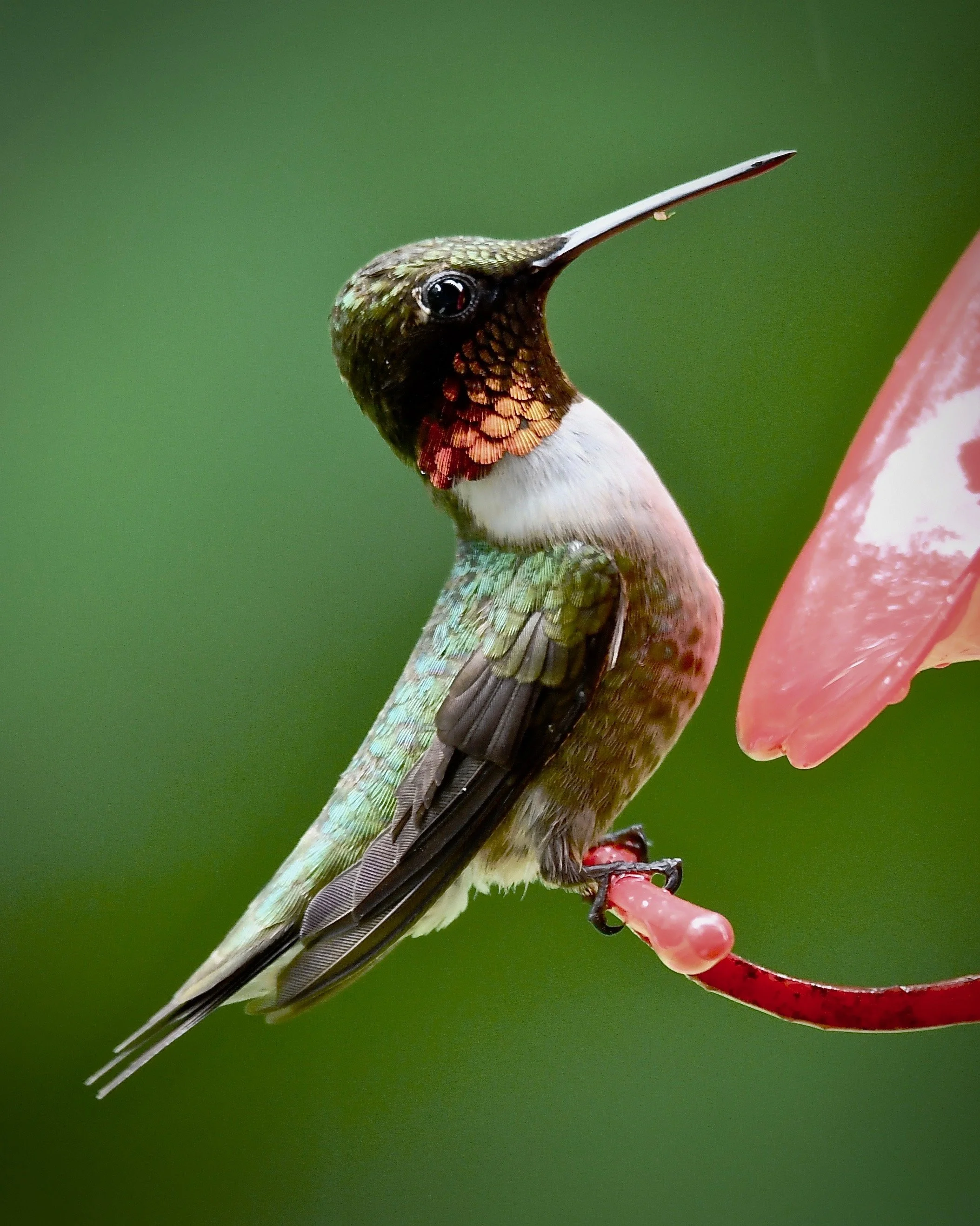
Male Ruby-throated Hummingbird
Photo by Eli Haislip
In addition to the return of the Grosbeaks, Ruby-throated Hummingbirds are also being reported! While hearing this might make you feel an urge to take out all your feeders and fill them to the brim, we would caution against this and counsel patience. We are still close to four months out from the START of peak feeder activity, and filling your feeders now will only lead to wasted nectar. If you want to put out a feeder in hopes of attracting an early season hummingbird, we would recommend keeping your offering to just one feeder, with minimal nectar.
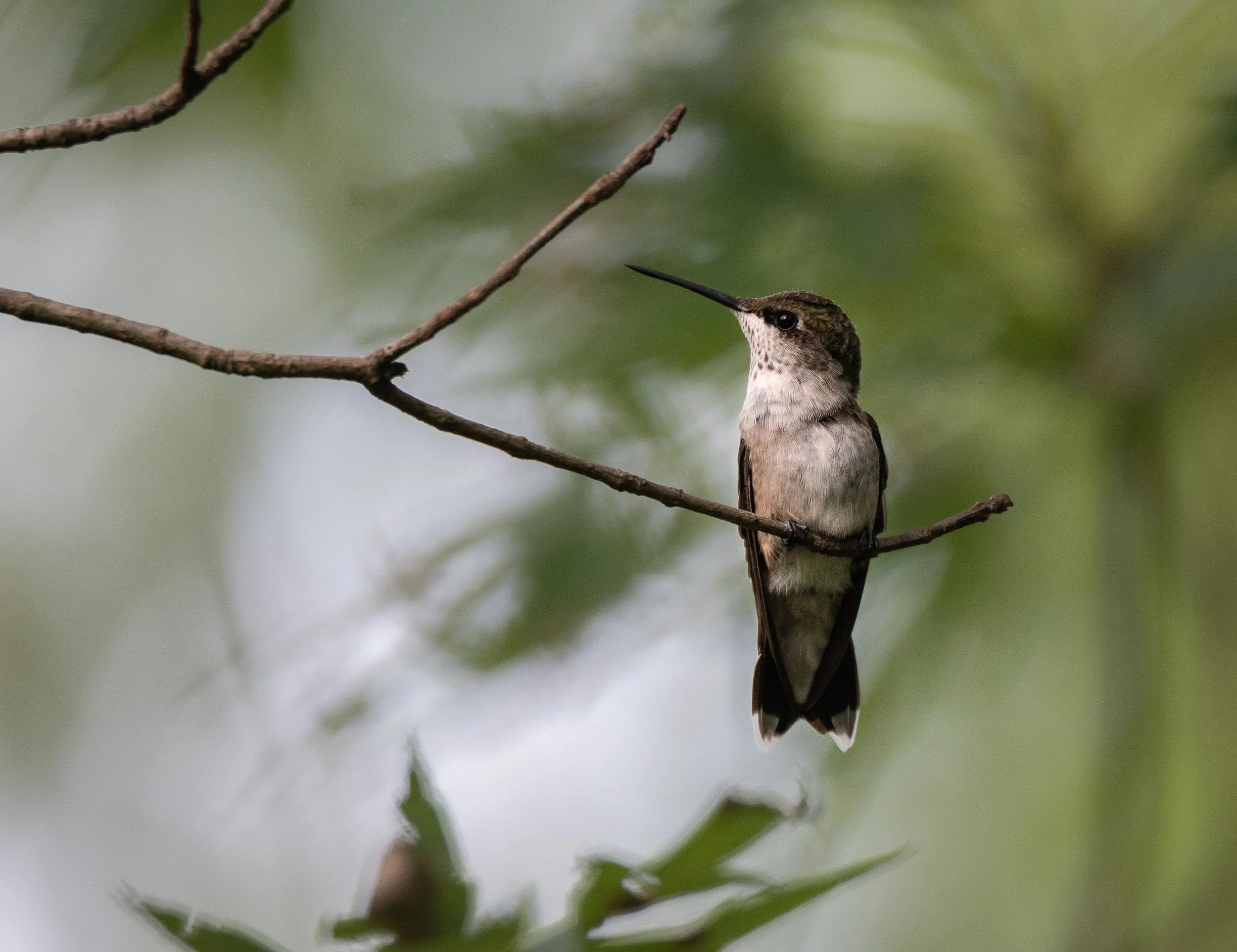
Female Ruby-throated Hummingbird
Photo by Eli Haislip
We always recommend making your own nectar at home, as it is as cost effective as it is easy to do. The recipe is 4 parts water to 1 part plain white table sugar. We cannot stress this point enough. 4:1 most closely replicates the nectar found in flowers. You are not benefitting the hummingbirds by making it sweeter. Also, it is extremely important to use ONLY plain white table sugar. Never use raw sugar, brown sugar, and especially never use honey under any circumstances. We will do a full length blog on hummingbirds in the near future, but for now know that plain white table sugar is always best.
The Campania Pre-order Sale Returns!
Wood Thrush Notes: Blog Update, Campania Pre-order Sale Returns, Birds Being Seen
Blog Update
For those of you who have been missing it, our blog returns this week!
If you have been wondering about why we haven’t been posting weekly as we have in the past, there are a couple reasons. First and foremost, readership is significantly down. Out of nearly 1500 subscribers, we often have fewer than 200 people who click through and read our blog. For those of you who do, we sincerely appreciate it! Each blog usually requires 2-3 hours of time spent researching topics and typing the blog, not including the time spent taking and editing the photographs each and every week. That is why moving forward, we plan to start doing the blog every other week. The format will be similar to our weekly blog of old, but with a greater level of focus and detail on the bird topics, and with more photos! For those of you who primarily get our sale updates through the blog, we will continue to put those in, or they can be found on our Facebook and Instagram pages.
Campania Pre-order Sale Returns!

The Popular Bjorn Fountain
If you have spent the winter admiring our collection of concrete birdbaths, fountains, and statuary, but perhaps we didn’t have quite the right item for your home in stock, you’re in luck! Our annual spring Campania Pre-order Sale is here again!
Today through April 1st, you can browse through Campania’s entire collection and special order whatever product you want at 20% off. The sale isn’t limited to fountains; any item in their vast catalogue of statuary, birdbaths and fountains qualifies for the sale. While you can special order anything you would like, to qualify for the sale price, there is a $150 minimum order. (This is for your whole order, not per item.)
In the days after April 1st, we will submit our order to Campania, thus ensuring that it will be delivered before Mother’s Day.
We are able to deliver items to your home with a delivery fee depending on what the item is and what is involved in the delivery.
To browse through their entire collection, click the link here.
Birds Being Seen
Spring Migration is here! While it’s still too early to see many of our favorite spring visitors, such as Ruby-throated Hummingbirds (the first reports in our area will occur in the last days of March and early April) or Rose-breasted Grosbeaks, (mid April-mid May) the first visitors that herald the arrival of migration are beginning to be seen. Northern Rough-winged and Tree Swallows are both beginning to be seen with greater frequency. In addition to these, Louisiana Waterthrush have been seen and heard at both the Little Harpeth River area at Edwin Warner Park, and also around the creek in Beaman Park. Have you been seeing anything new or unusual around your feeders, or during your walks? Let us know!
Savannah Sparrow
Savannah Sparrows are a native North American sparrow species that can be found in field and meadow habitats during Spring Migration. These unassuming little birds journey as far north as the Arctic Circle to breed!
Photo Courtesy of Eli Haislip
Happy Valentine's Day from the Wood Thrush Shop!
Great Backyard Bird Count
The Great Backyard Bird Count is here again! This weekend, February 13th- 16th, you can join millions of enthusiastic birdwatchers around the globe in a worldwide bird count! Sounds complicated? It might be easier than you think!
Photo by Eli Haislip
This bird is not actually missing a leg, it was simply drawing one of its legs up into its warm, well insulated down feathers for warmth!
The process is simple! Step one is simply picking where you’d like to watch birds. Don’t do like I do and overthink it for half the morning. Your bird feeder and favorite chair count as your bird watching location! Step two is to spend 15 minutes or more watching (and or listening) at LEAST once during the 13th-16th. You CAN use Merlin as your bird ID tool. Lastly, submit your findings on either eBird, or through the Merlin Bird ID app. I will link here to a video that goes into more detail about the process.
Do you like the idea of keeping track of the birds you are seeing, but want to leave smartphones and computers out of it? We completely understand, and have paper copies of the Field Checklist of Tennessee Birds, courtesy of the Tennessee Ornithological Society available at the counter just for you.
Photo by Eli Haislip
Despite the ice, this Goldfinch was still able to find seeds to feed on!
Sandhill Cranes Sightings
Over the last week, many people have reported to us that they have been observing large flocks of Sandhill Cranes flying overhead. They are often heard before they are seen, with their unmistakable bugling calls seeming to sound the start of the Spring Migration.
Photo by Eli Haislip
The V formation doesn’t just look cool, it is also an effective way for the birds to keep in visual contact with one another while flying AND conserve energy by flying in the draft of the bird in front.
Sandhill Cranes are large birds, roughly the size of a Great Blue Heron, although far bulkier. They are already beginning their long migration to their breeding grounds in the northern U.S. and Canada, with some going as far north as the Arctic Ocean. Let that sink in for a moment. The graceful V shaped formations we have been observing in the skies above Bellevue, Pegram, Dickson and Green Hills could be on their way to beyond the Arctic Circle!
Impressively, Sandhill Cranes are able to reach speeds of 50mph and often fly at altitudes between 5,000 and 15,000 feet!
More Sandhill Cranes
Sandhill Cranes are capable of reaching speeds over 50mph, and covering hundreds of miles a day.
Update:
In last week’s blog I discussed Jamie and I going out in search of the Red-throated Loon that was being seen at J. Percy Priest Lake. While we weren’t able to see it that day, I returned to the Cook Day Use Area the following Saturday, and with the help of a friendly birder armed with a spotting scope, I was able to find the Red-throated Loon! Thanks, Paige! Unfortunately, it was so far away that even with the 150-600mm lens on my camera, it was too far for a photo.
There have also been confirmed sightings in the same area of a Pacific Loon which we were unable see, so it looks like I will be going back out there when I next get a chance. Maybe, though, on a warmer morning!