Return of the Grosebeaks!
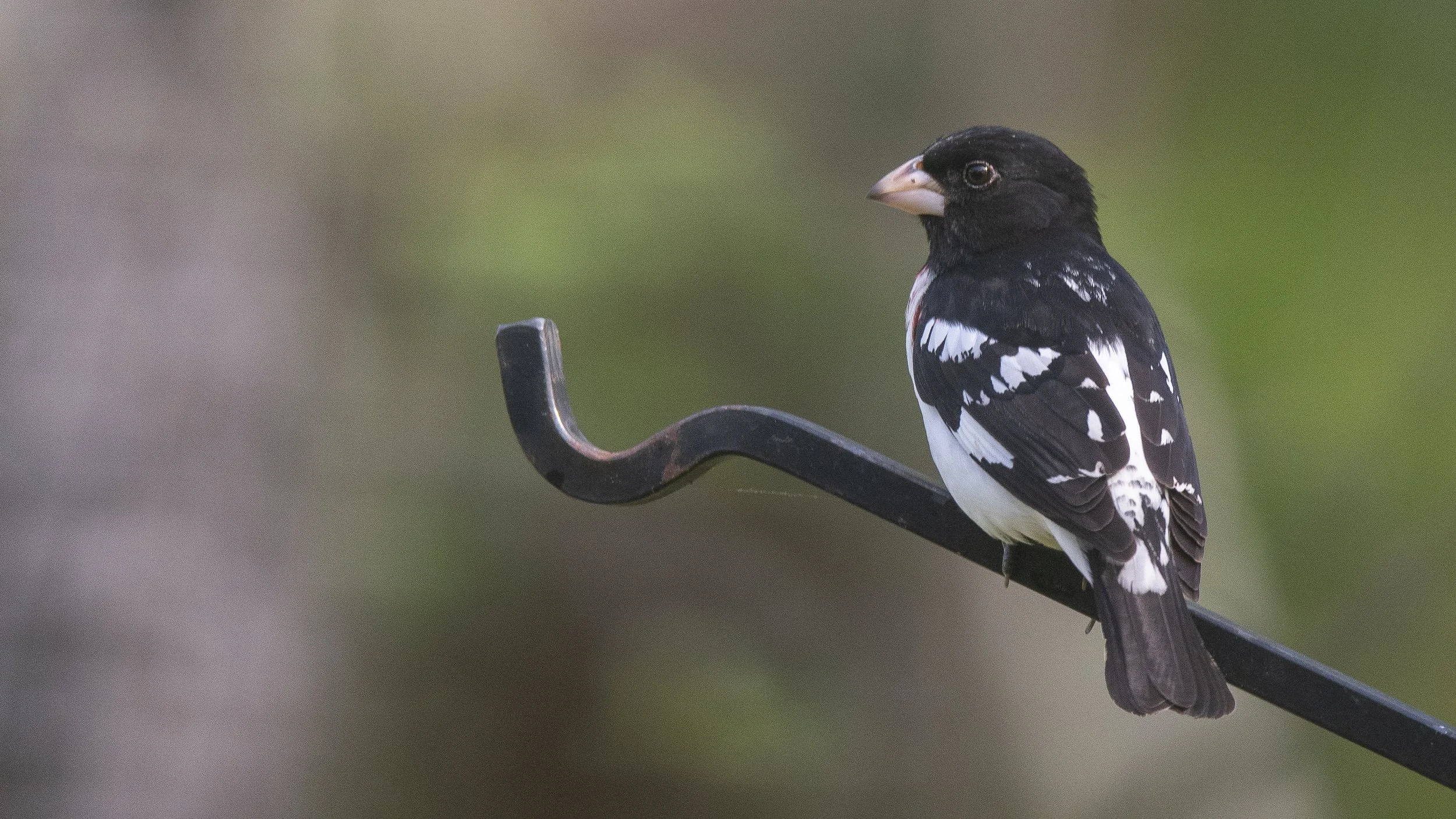
Male Rose-breasted Grosbeak
Photo by Eli Haislip
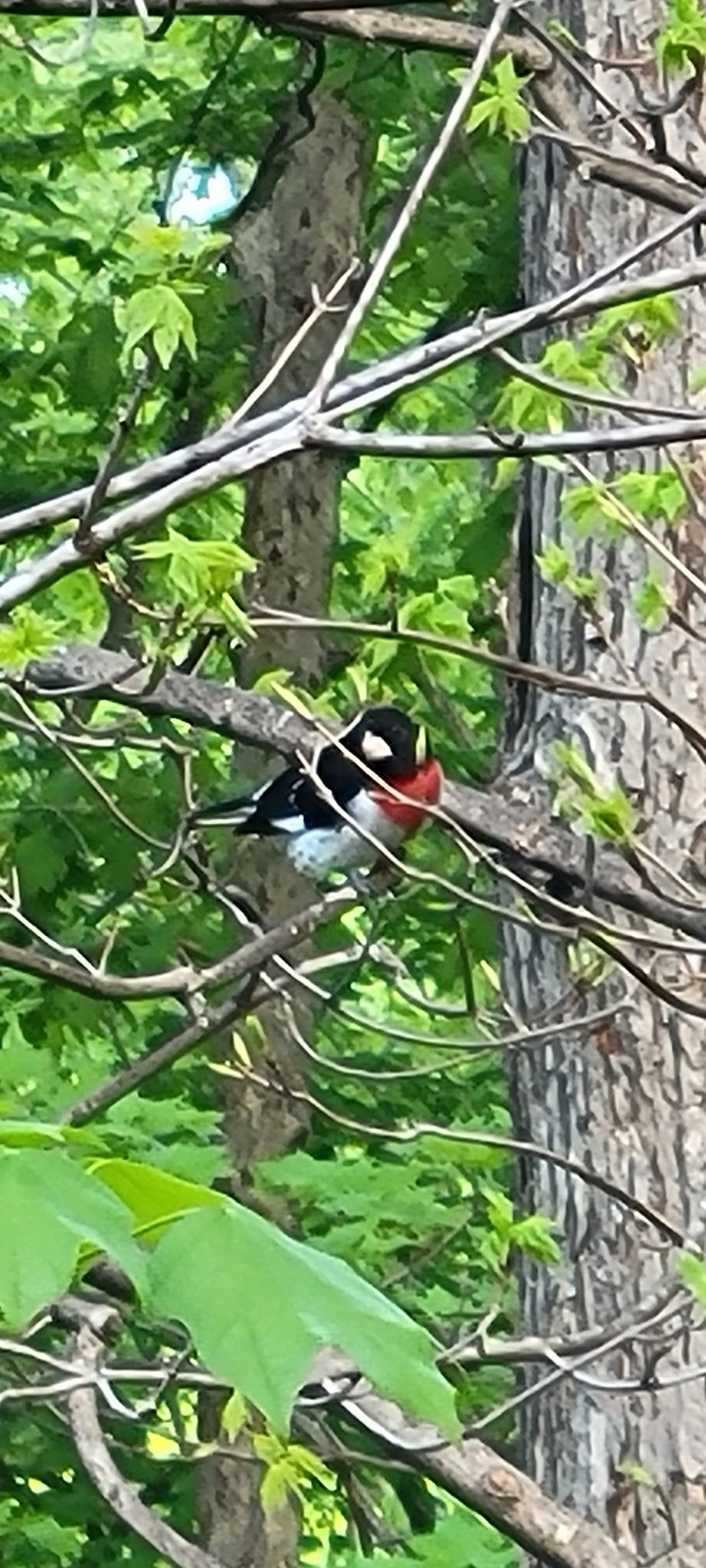
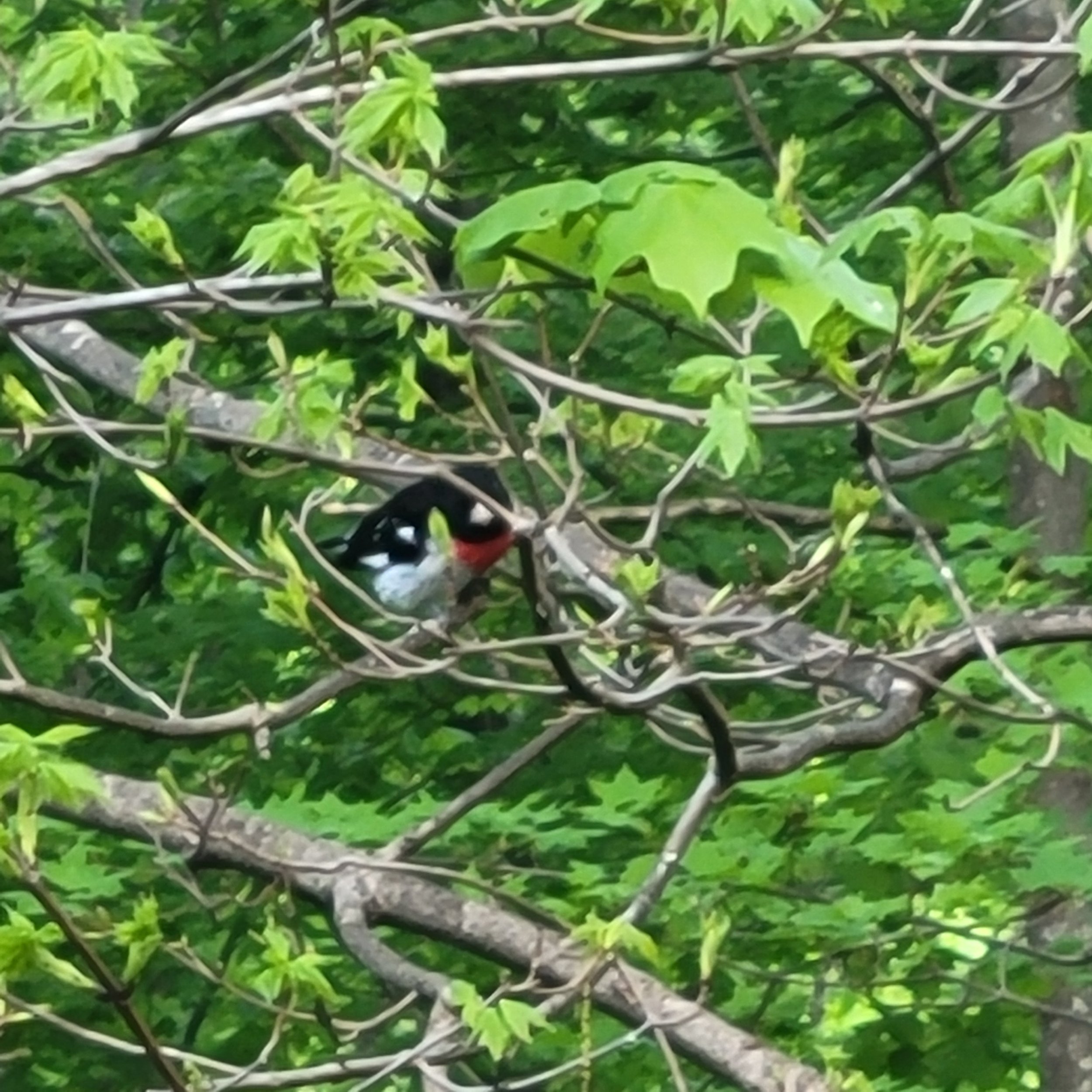
If you have been procrastinating filling your feeder, now is the time to get it cleaned and filled! The Rose-breasted Grosbeaks are being sighted again! John saw these males in his yard today!
If you’re unfamiliar with what a Rose-breasted Grosbeak is, there’s a good chance you might have seen one at some point if you have ever had seed feeders out during the spring. These neo-tropical migrants pass through middle Tennessee on their journey from Central and South America on their way to their northern breeding grounds, giving us a roughly one month window from mid April to mid May to enjoy these beautiful birds at our feeders.
Males, as with many birds, are the stars of the show. With a black head, back, and wing, white breast, and then vibrant red below the throat, it is hard to miss these birds at a feeder. Females, on the other hand, are much more subdued than their male counterparts. My favorite description of the female Rose-breasted grosbeak is a female House Finch on steroids.
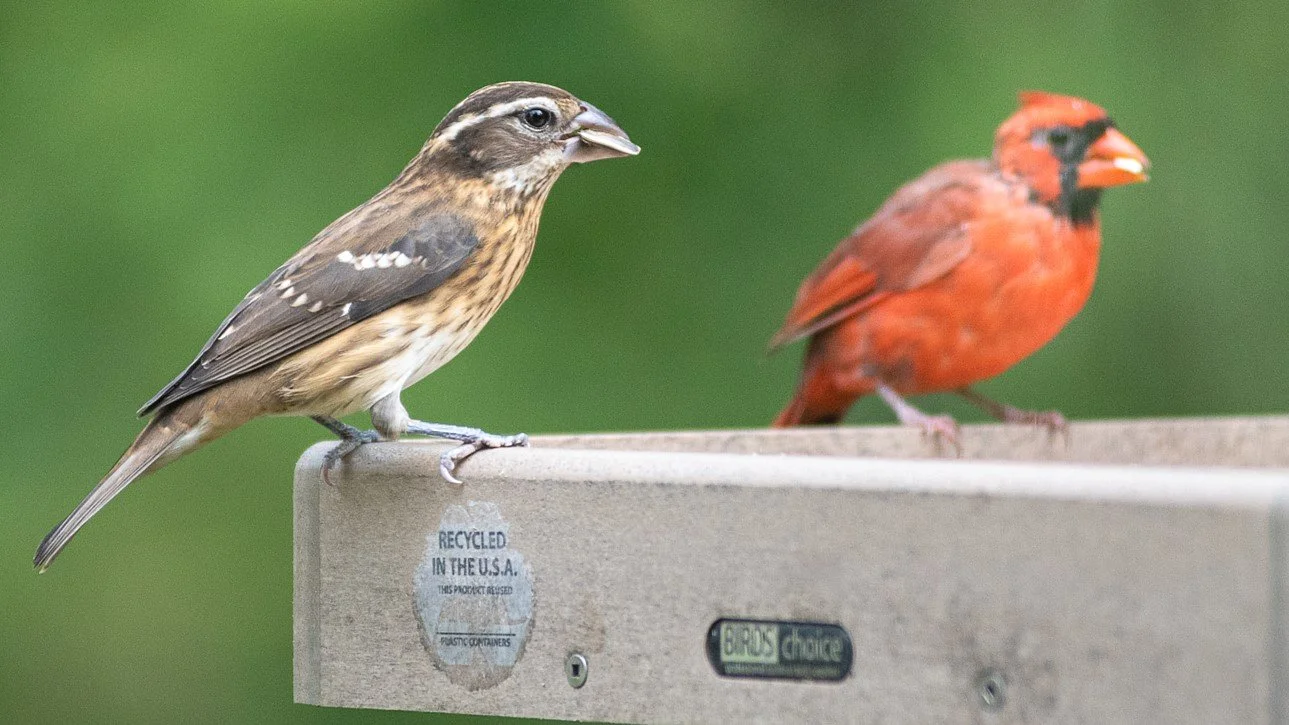
Female Rose-breasted Grosbeak
Photo by Eli Haislip
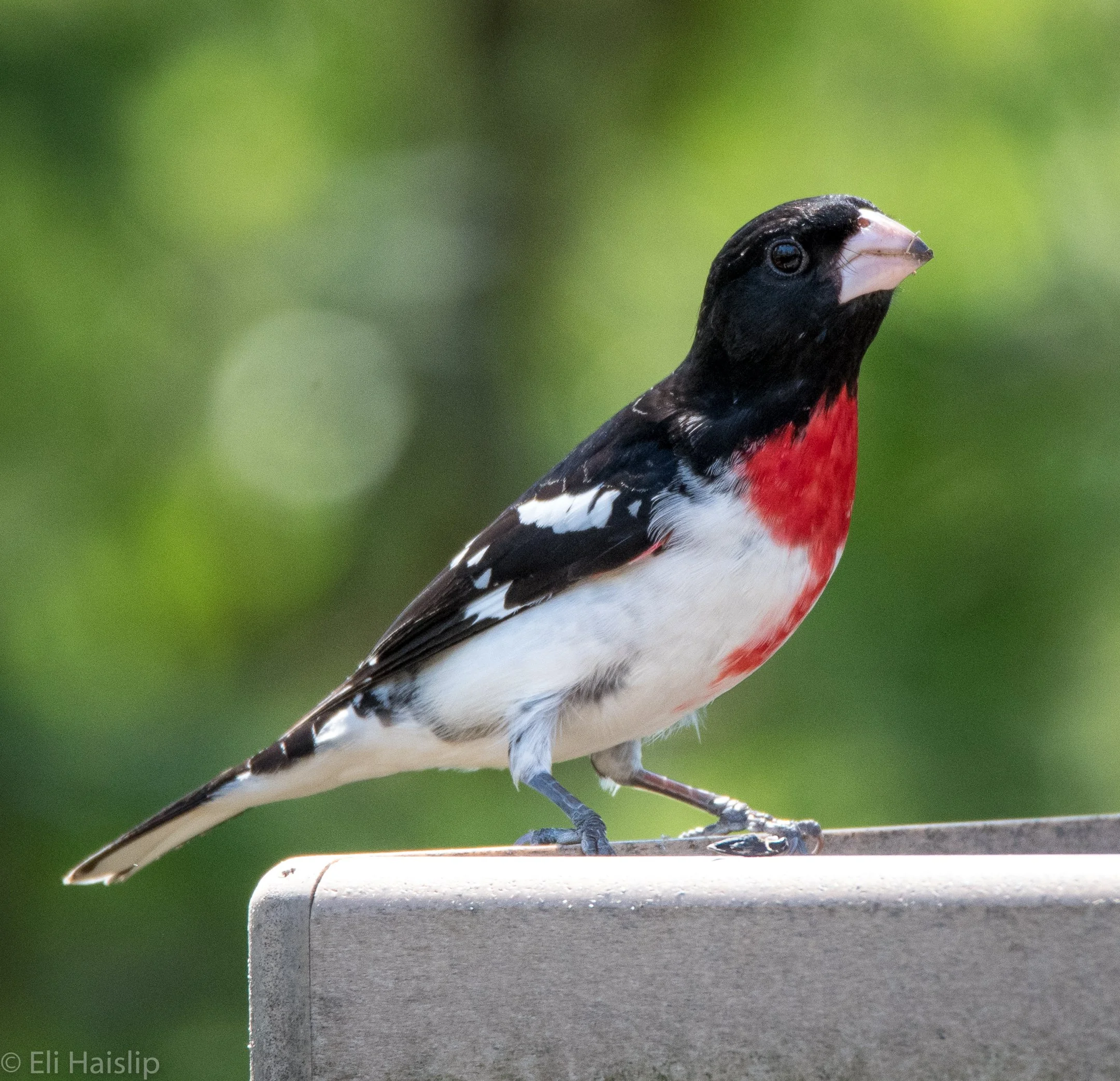
Male Rose-breasted Grosbeak
Photo by Eli Haislip
Fortunately for us, Grosbeaks are not picky and will happily feed on sunflower, safflower, or our various blends. If you haven’t seen any yet, there is still plenty of time as sightings will continue on through mid May!
Feeder and Seed Special
To celebrate the return of one of our favorite feeder visitors, Saturday the 18th through Wednesday, April 22nd, take 15% off any regular seed feeder and then receive 10% off any ONE bag of seed! (This special EXCLUDES Finch feeders) If you’ve been wanting a new seed feeder, or maybe just contemplating adding another one to your feeding station, now’s the time to do it!
Return of the Hummingbirds
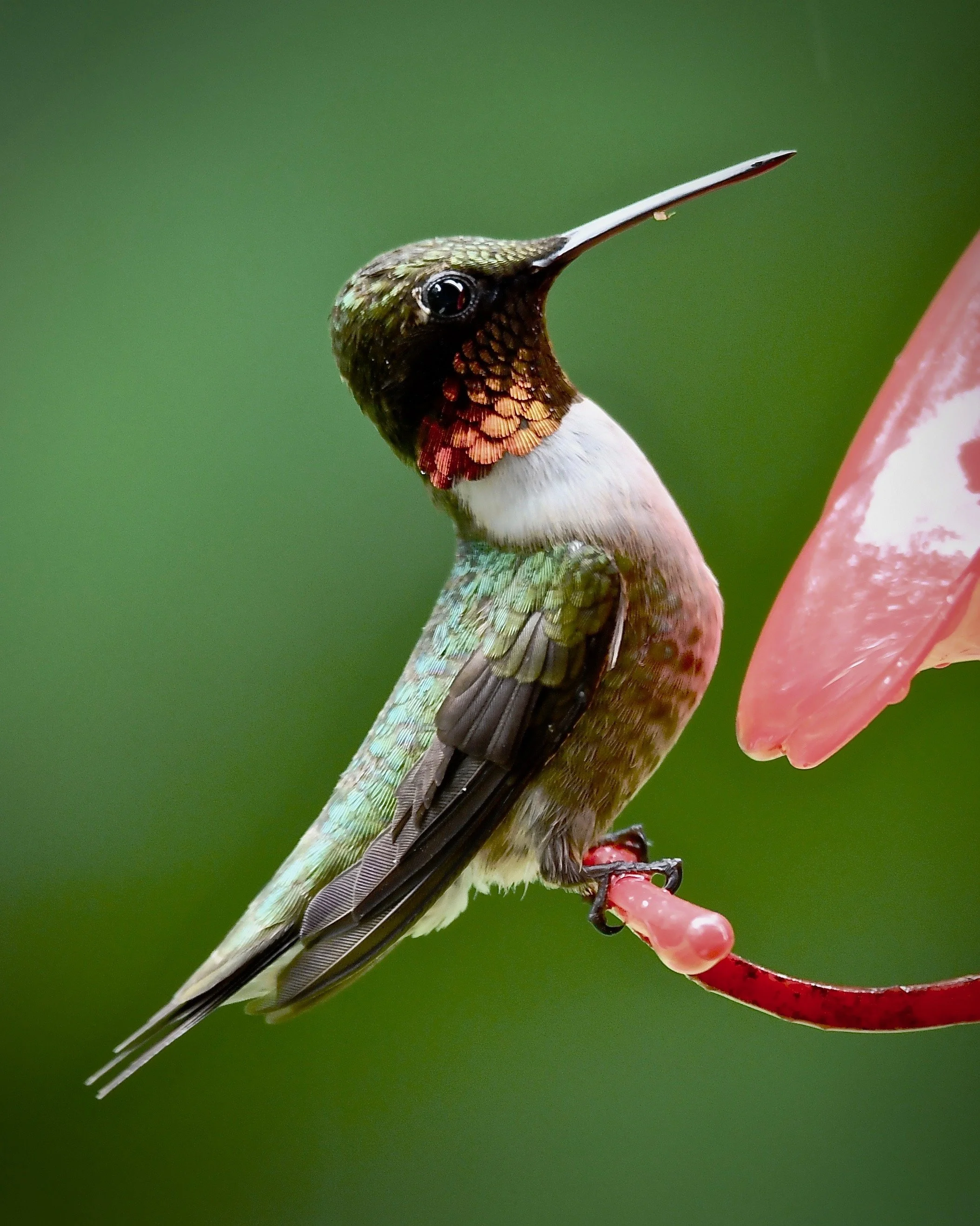
Male Ruby-throated Hummingbird
Photo by Eli Haislip
In addition to the return of the Grosbeaks, Ruby-throated Hummingbirds are also being reported! While hearing this might make you feel an urge to take out all your feeders and fill them to the brim, we would caution against this and counsel patience. We are still close to four months out from the START of peak feeder activity, and filling your feeders now will only lead to wasted nectar. If you want to put out a feeder in hopes of attracting an early season hummingbird, we would recommend keeping your offering to just one feeder, with minimal nectar.
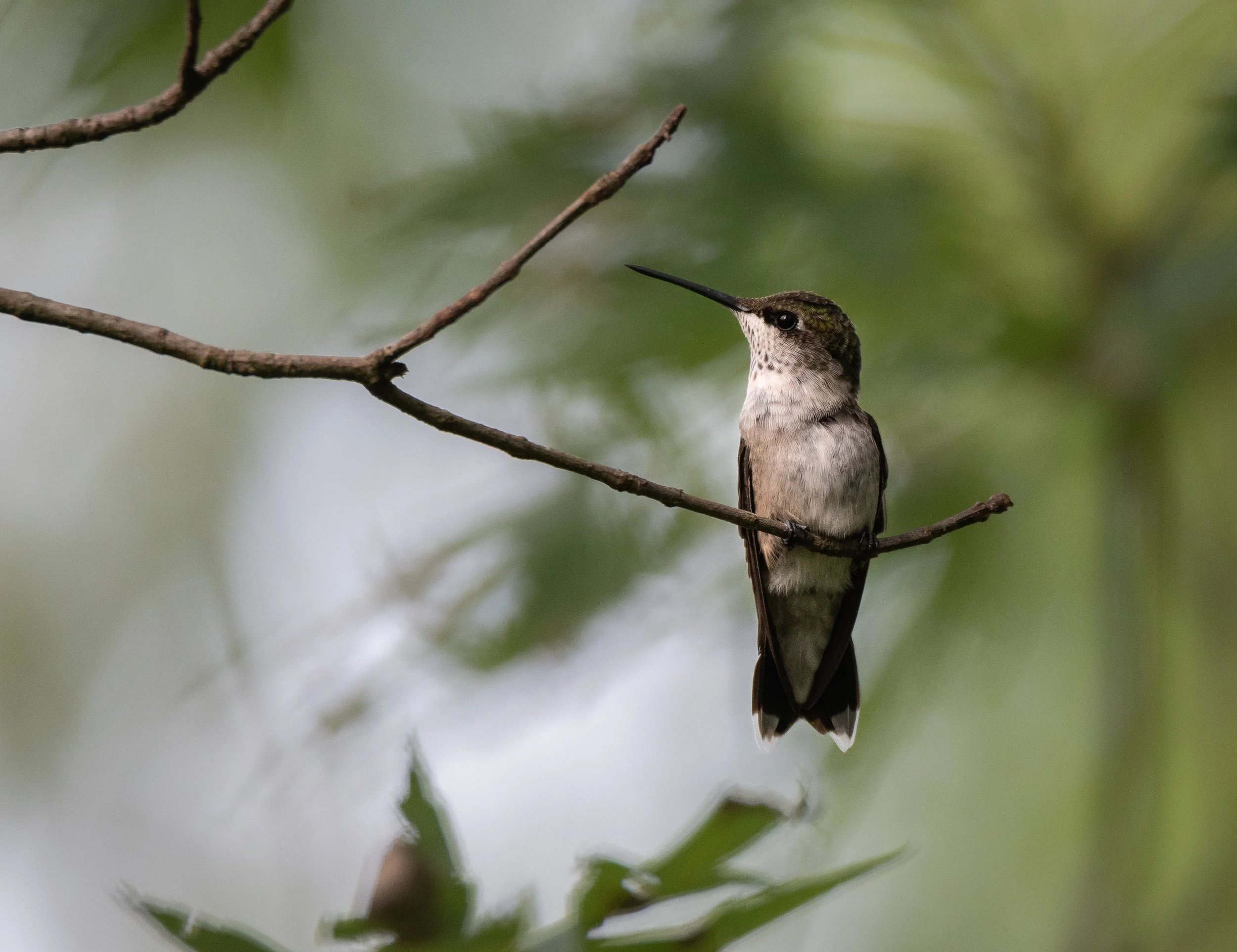
Female Ruby-throated Hummingbird
Photo by Eli Haislip
We always recommend making your own nectar at home, as it is as cost effective as it is easy to do. The recipe is 4 parts water to 1 part plain white table sugar. We cannot stress this point enough. 4:1 most closely replicates the nectar found in flowers. You are not benefitting the hummingbirds by making it sweeter. Also, it is extremely important to use ONLY plain white table sugar. Never use raw sugar, brown sugar, and especially never use honey under any circumstances. We will do a full length blog on hummingbirds in the near future, but for now know that plain white table sugar is always best.