The Hummingbird Edition!
The Hummingbird Edition
It’s that time of year again and folks are beginning to see an increase in hummingbird activity. If you were wondering if it is too late to put out a feeder, or if you missed out on hummingbirds entirely, the answer is no! Activity at feeders will continue to increase as we get into August and the first half of September.
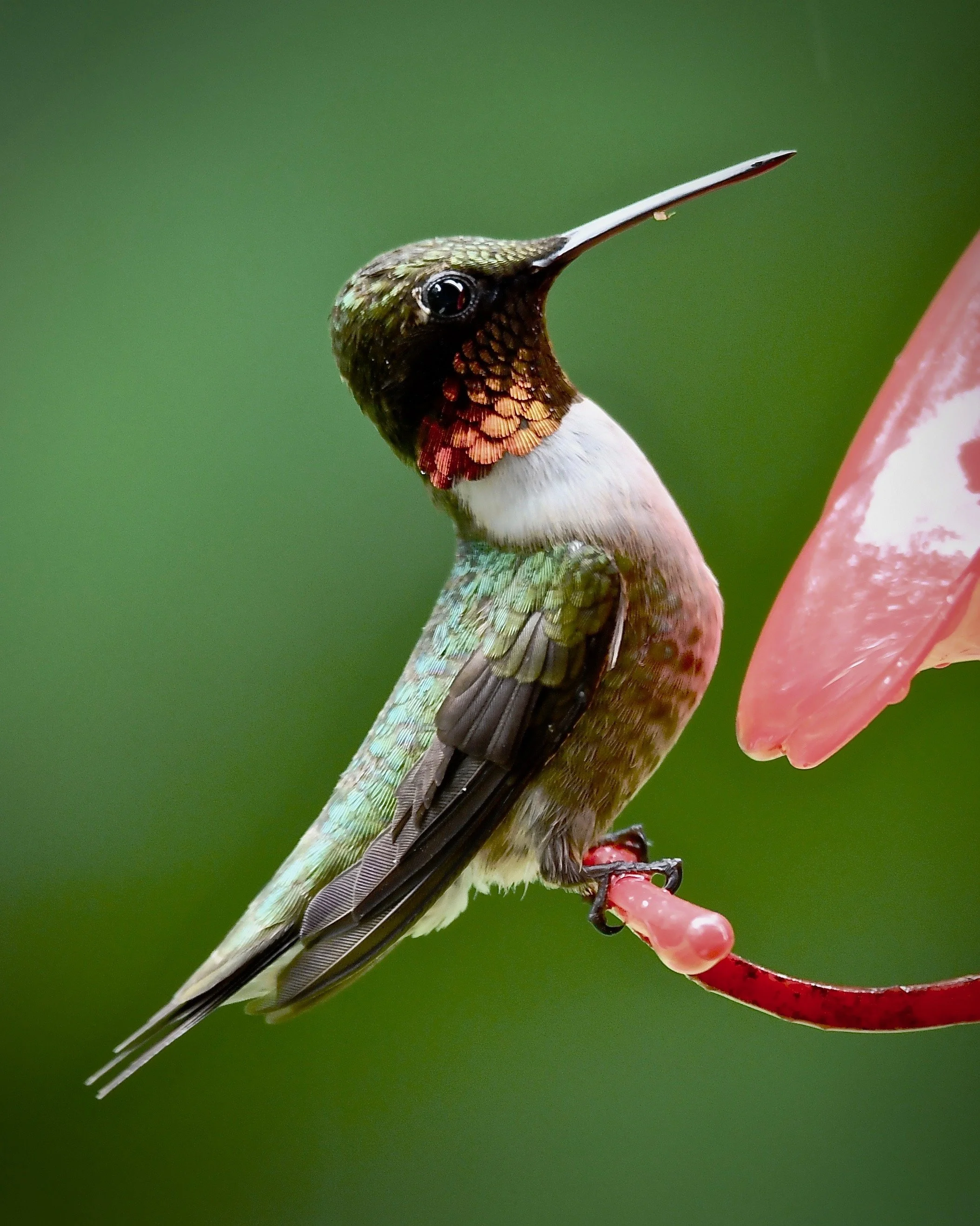
Hummingbird activity increases in the latter half of summer because with the breeding season concluded, hummers turn their attention to fattening up for their long migration back south to Mexico and Central America. Did you know that some birds will even migrate DIRECTLY across the Gulf on their journey south? This is part of the reason they so aggressively defend our feeders from other hummingbirds. Having enough body fat to ensure they survive the journey is literally a matter of life and death for hummingbirds.
When it comes to helping the hummingbirds fatten up (or in nicer terms, providing a feeder) there are some things to keep in mind. First and foremost, keeping nectar is critical. Nectar MUST be changed every 2-3 days max in the high heat. Think about it, would you want to drink a sugary drink that had been left outside in the heat we’ve been having for a week or two? Of course not! With hummingbird nectar, it’s no different. Nectar that sits around more than 2-3 days can ferment, creating alcohol that the high metabolism of hummingbirds cannot handle. It can also grow harmful bacteria that are dangerous for hummingbirds to consume. If this seems like too much of a hassle, then we would recommend not putting up a feeder for hummingbirds. It really is important to stay on top of keeping nectar fresh and feeders clean. Fear not though, we will touch up on an easy-on-the-eyes, low maintenance way to feed hummingbirds in a moment!
First though, let’s take a few moments to discuss nectar. While we sell a powder here at the shop where you just have to add water, (no need to boil!) We always recommend simply making your own. If that sounds difficult or time consuming, it is in fact so quick and easy that last night I made mine WHILE brushing my teeth before bed. The ratio is 4 parts water to 1 part plain white table sugar. I use my kettle, and pour a quarter cup of sugar into my mixing cup, and then add one cup (8 oz.) of hot water, stirring until fully dissolved. Then simply let it cool, and you are good to go! It’s that simple.
When you make your own nectar, you should always use plain white table sugar. Never use brown sugar, “raw” sugar, and especially never honey. Honey is not a “healthier” alternative to refined sugar, as it can quickly grow dangerous bacteria and fungi. Brown sugar and “raw” sugar should not be used as they contain molasses, which is what gives them their coloration. This is a byproduct of the refining process and would not be part of a hummingbird’s diet. In regard to food dye, it is completely unnecessary and can be harmful. Many dyes are alcohol based, which as we previously mentioned is harmful to hummers. Ruby-throated Hummingbirds also encounter feeders from as far south as Panama to as far north as Canada, and have learned to recognize feeders for what they are: a convenient food source. Having a feeder out will do the work of attracting them, so keep your nectar clear!
Plain white table sugar, also known as refined sugar, when used in a four to one ratio most closely replicates the nectar found in plants and for the hummingbirds sake we should stick to it!