
The Reddest Bird in North America: Bird Bio of the Summer Tanager
Bird Bio: Summer Tanager
It seems that the Northern Cardinal is almost universally liked. Whether they are nesting in a shrub outside your door, visiting your feeder or bird bath, or you just happen to catch a glimpse of one while out on a walk, people love Cardinals. What if we told you, though, that during the spring, summer, and fall, we have another species of bird that is ALL red and can even put the vibrancy of the Cardinal to shame?
Male Summer Tanager
Photo by Eli Haislip
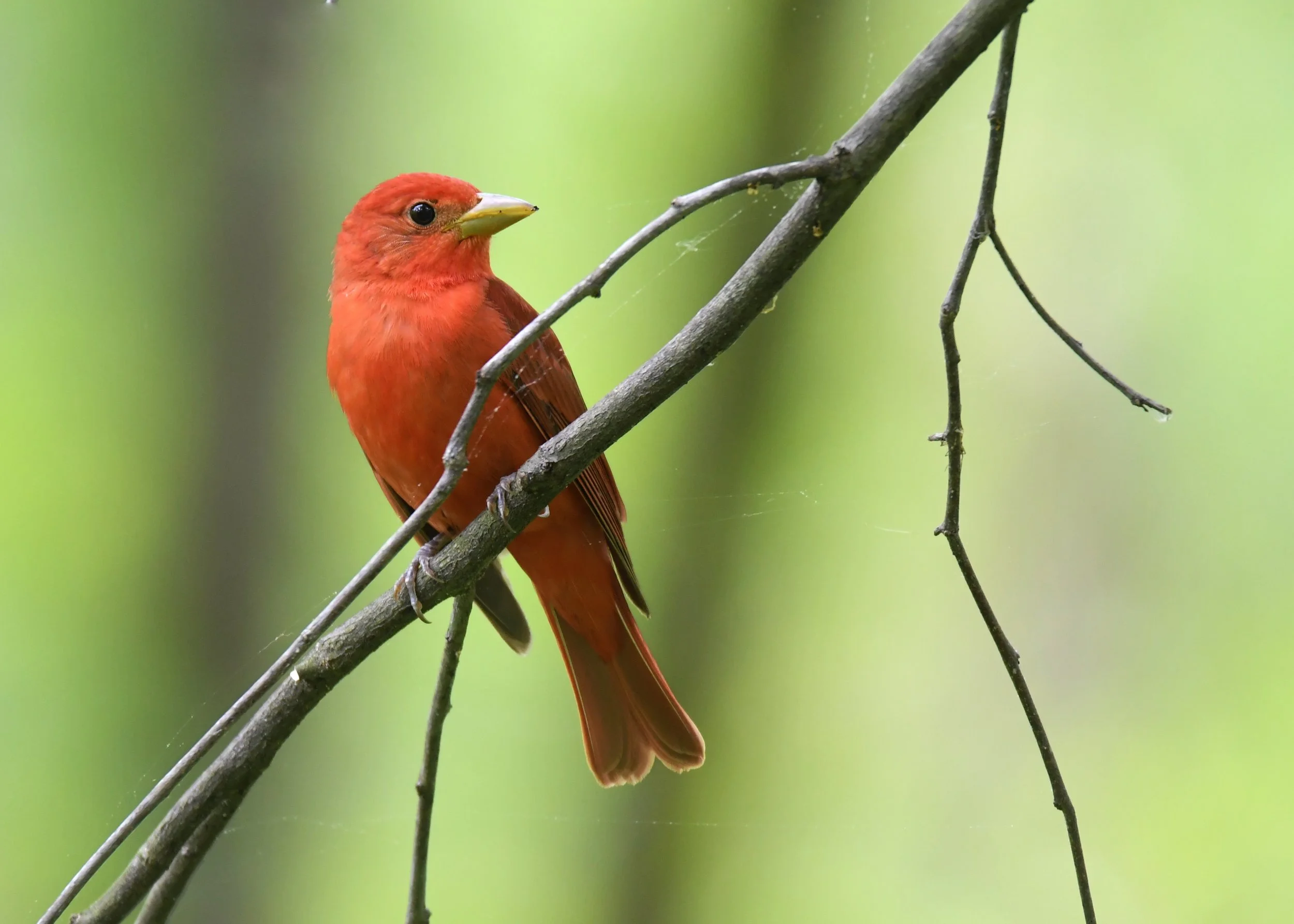
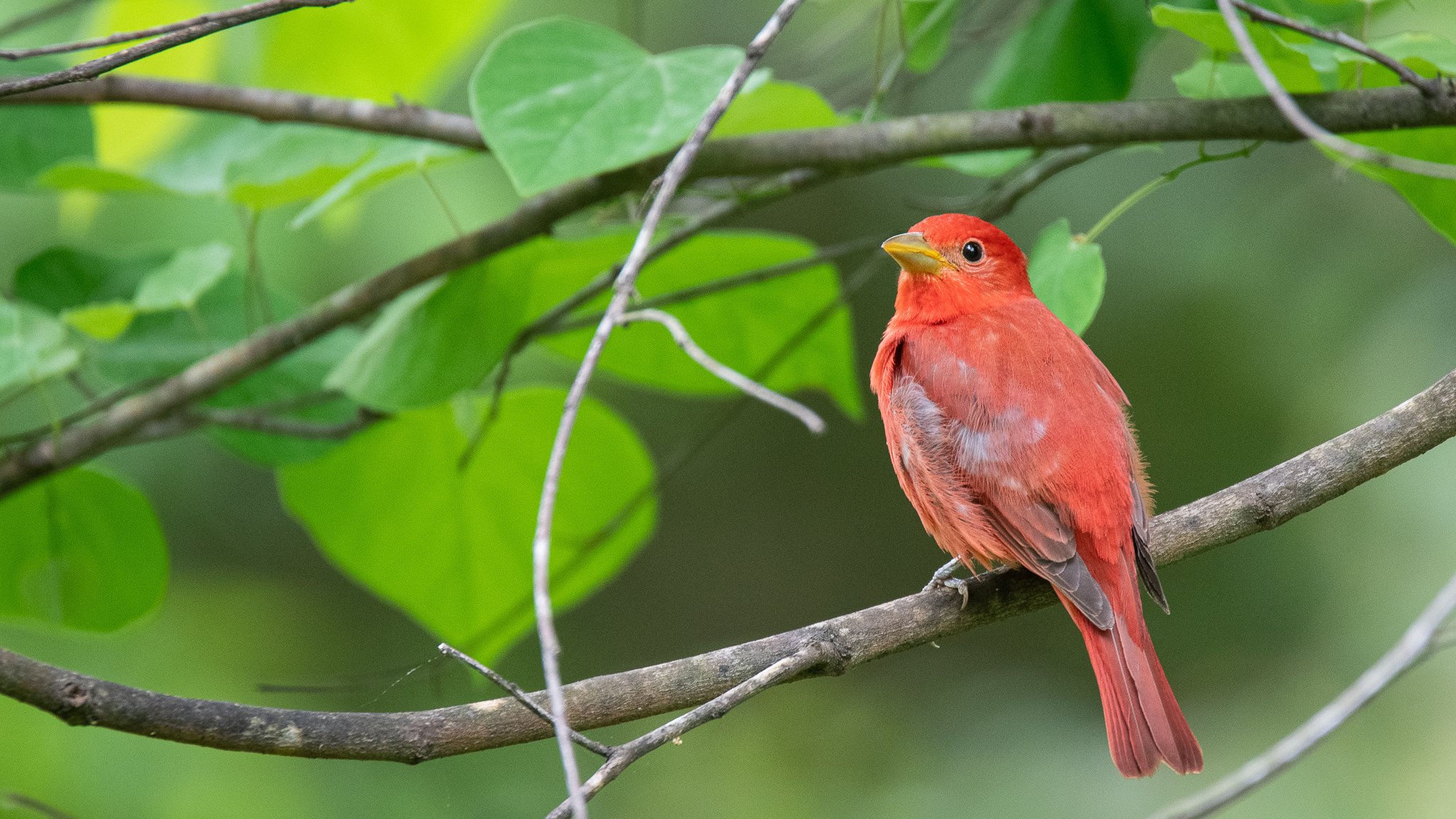
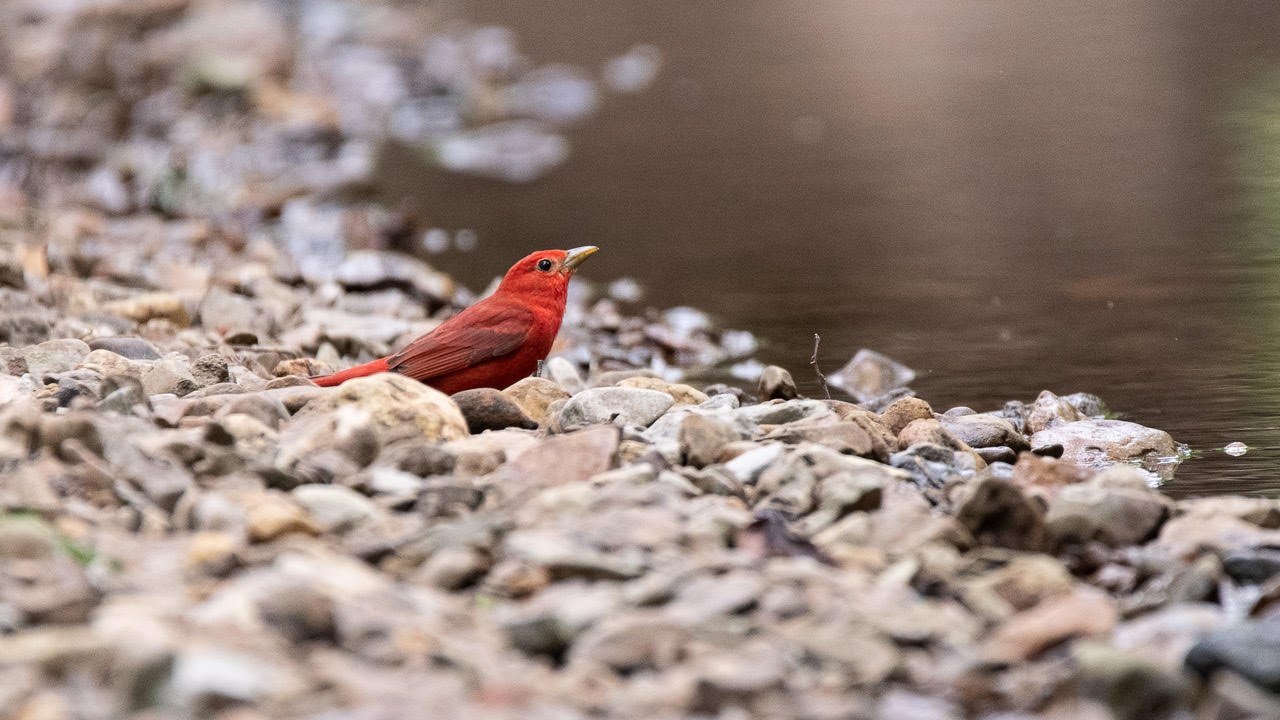
The Summer Tanager is a fairly common summertime resident here in the mid-state. While females are a dull yellowish green, mature males are actually the ONLY fully red bird in North America (Male Cardinals have the black feathers on their face) and are beautiful birds if you get a good look at them. Immature males are able to give adults a run for their money with their striking orange and red plumage.
Juvenile Male Summer Tanager
Photo by Eli Haislip
Summer Tanagers spend winters in Central and South America, flying as far south as Bolivia! They usually are beginning to be seen here by mid to late May, and they will then spend the breeding season here. Adult females will construct nests out of roughly woven grasses, typically in clusters of leaves or out on the forks of branches. After this, they will lay 3-4 pale blue or pale green eggs with brown markings. Incubation lasts 11-12 days, with an 8-12 day nestling period.
While they do occasionally visit suet feeders, they are primarily an insect and fruit eating species. Interestingly, they are bee/wasp eating specialists, frequently catching their stinger-equipped prey on the wing. They then fly back with it to a branch where they beat it into submission and scrape off the stinger. When they aren’t going after bees and wasps, they make quick work of other insects, as well as fruits and berries depending on availability. They are also known to occasionally visit suet feeders!
If all this has you wanting to see one for yourself, I highly recommend beginning your search with familiarizing yourself with their call. Once you learn to identify their distinctive “pi-ti-tuk” call, you’ll be surprised just how common these gorgeous birds are. Look for them in deciduous or pine woods, especially where the woodland meets field and meadow habitat. Edwin and Percy Warner Park are excellent spots to find them, as are Bowie Park, Bell’s Bend, and Beaman.
For reference, all of the photos below were taken along the Little Harpeth in Edwin Warner Park!
Hummingbird Activity
If you don’t already have a hummingbird feeder up, now is a great time! And, If you have yet to see your first hummer of the season, don’t get discouraged! As we get into late July, look for activity at feeders to increase as we get into the beginning of peak hummingbird feeder activity! August and the first half of September is generally the busiest time of the year at feeders, but you have a chance to see Ruby-throated Hummingbirds through October!
We always encourage making your own nectar at home. It is cheap, easy, and fast! If you are making small amounts, you do not even need to bring it to a boil, just make sure that the sugar is fully dissolved. The recipe is simple: 4 parts water to 1 part plain, white table sugar.