
Addressing Frequently Asked Questions
Where Are My Hummingbirds?
Wondering why you aren’t seeing as many hummingbirds as you might like? We promise, this time of year, this seeming lack of interest in your feeder is normal. As we say every year, hummingbirds are not traveling thousands of miles just for sugar water! Instead, they are coming here to breed and raise young. After this has concluded, usually by mid to late July, THEN they will turn their attention to fattening up for the migration south again.
Another contributing factor to low hummingbird numbers could be your nectar. Keeping nectar fresh is crucial to hummingbird feeding success. This time of year, nectar must be changed every two to three days at the most. Waiting a week can cause the nectar to grow bacteria, becoming cloudy and making it unsafe for hummingbirds to consume. As always, we recommend making your own nectar at home. All this takes is 4 parts water to 1 part plain white table sugar, heat and stir until the sugar is fully dissolved. Once cooled, transfer to a water bottle and store in the refrigerator!
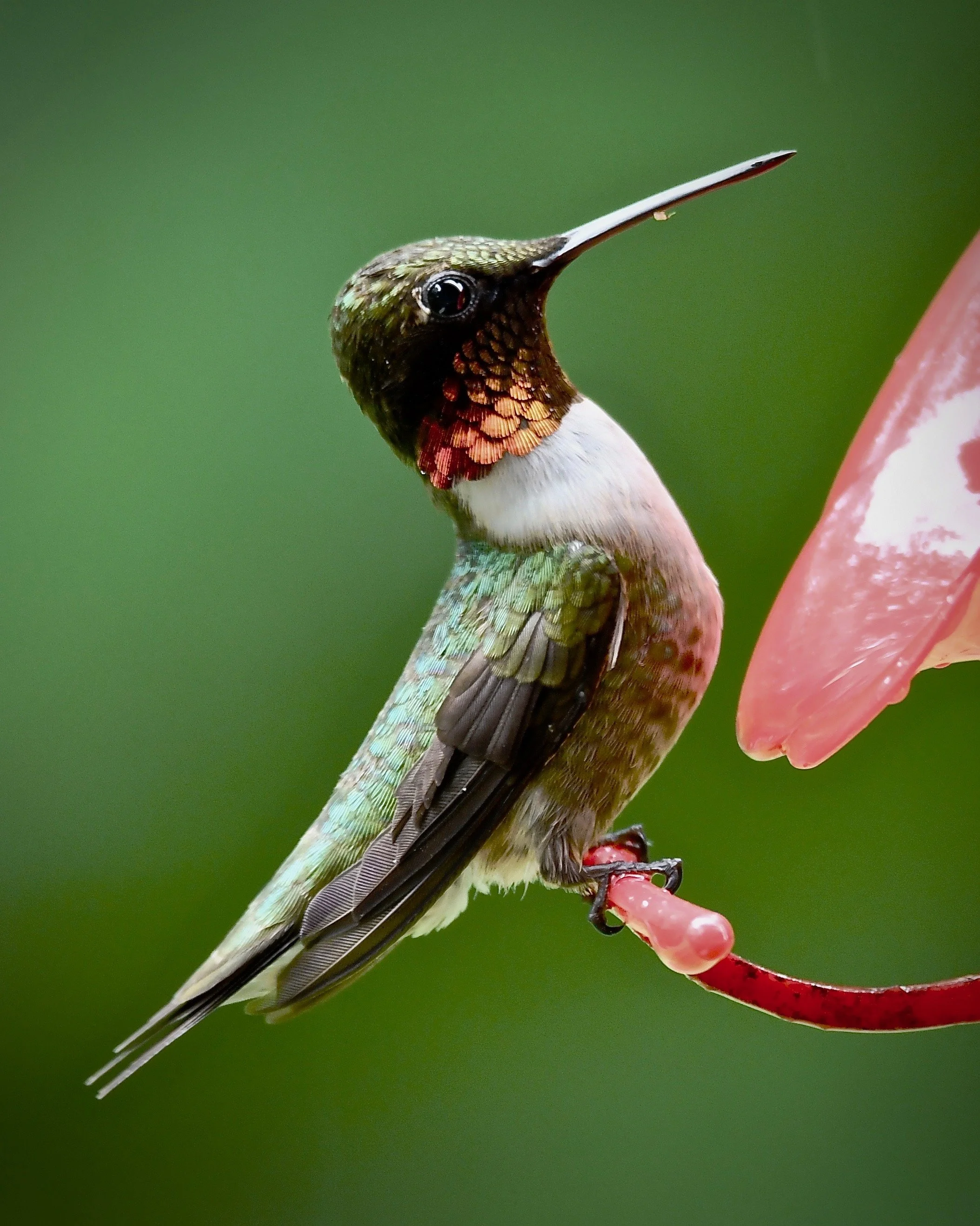
Male Ruby-throated Hummingbird
Photo by Eli Haislip
What Do I Do with My Old Bluebird Nest?
By this point in the season, many folks have likely had success with attracting Eastern Bluebirds to their nest boxes. This is great! However, do you find yourself wondering what needs to be done after the young have fledged?
We always recommend cleaning out the old nest material between nestings. There are several reasons for this. First and foremost, as old nesting material breaks down over time, it can draw insects that can prove harmful to the young birds. Also, there is no need for keeping it in there! Nest construction is part of the courtship of Bluebirds, therefore they have no use for the old nest. Lastly, the young will not return to the nest after fledging, so there is no reason to keep the old nest in there!
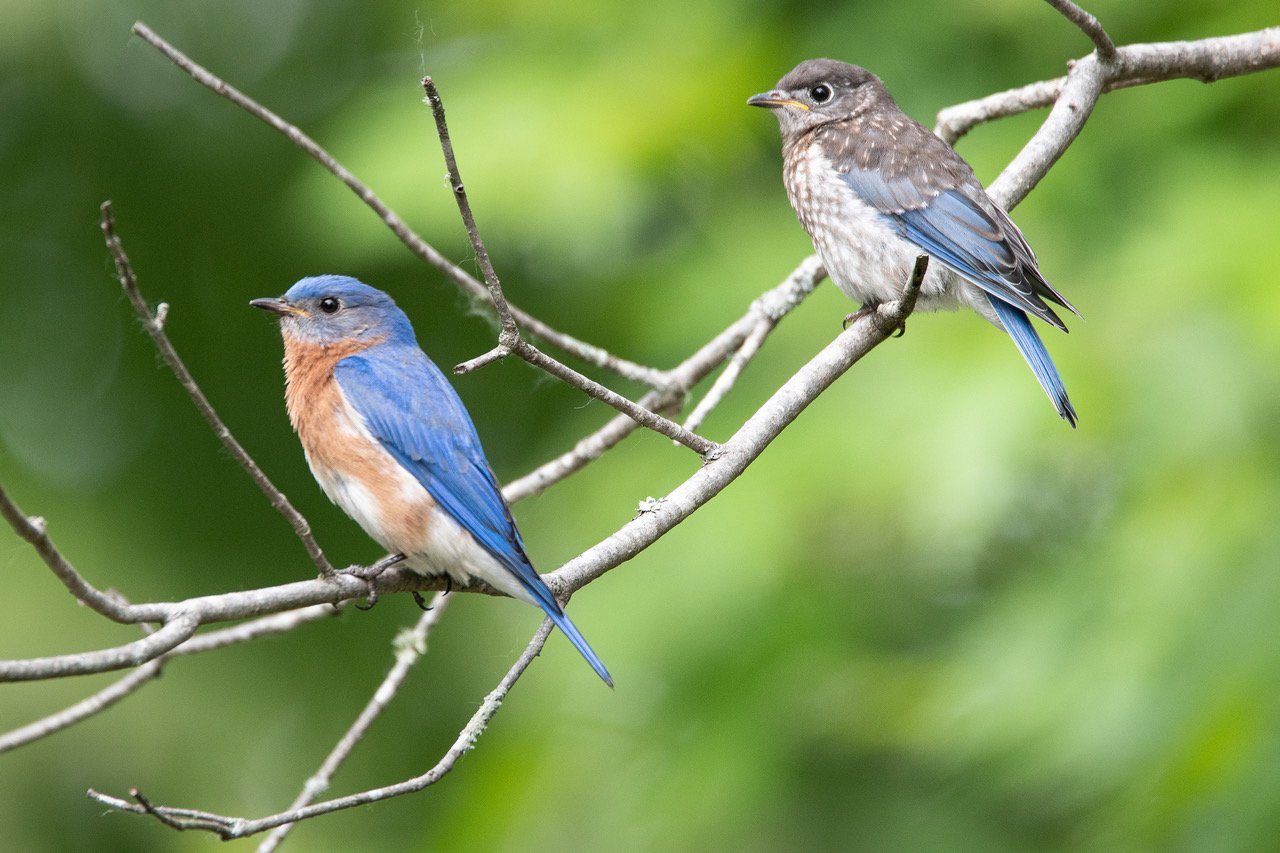
Male and Juvenile Eastern Bluebird
Photo by Eli Haislip
How Can I Attract More Goldfinches?
Are you seeing Goldfinches at your feeder, but want to see more? There are a few things you can try!
For all our Goldfinch customers out there, remember to make sure your finch food is staying fresh, dry, and not getting clumped together! Also, while you’re out there, if your finch feeder is getting low, be sure to top it off! While this might sound like we are just trying to get you in for more seed, there is actually a very functional reason for this advice. Because Goldfinches prefer feeding as a group, a half empty feeder where many of the perches won’t yield seed is unappealing to them. Seeing as they are birds, and lack our sense of manners and decorum, rather than wait patiently for a turn lower on the feeder, they will likely just leave your feeder behind and go to your neighbors yard! We know you want to avoid this, so take it from us. Keep your goldfinch feeders topped off!