Wood Thrush Notes

Update on Mysterious Bird Deaths

By now I’m sure many of you have heard the reports of birds inexplicably dying over the last several weeks in areas north of us including, Indiana, Kentucky, Ohio, Maryland, and Pennsylvania. Specimens of Blue Jays, Grackles, Starlings, and Robins (the most prevalently affected species) tested have turned up no clues as to what is killing them. Several illnesses have been ruled out including, Salmonella, several varieties of viruses, and Trichomonas parasites. Scientists are still scratching their heads trying to figure out the cause or causes. It has been recommended that people in the mentioned states take down feeders and birdbaths, or eliminate anything that contributes to birds congregating. There has been no known connection, however, to bird feeders and baths.

Because this issue has been widely reported on, sometimes irresponsibly, we wanted to offer some information to help make you aware and to be vigilant. If you encounter a sick or dead bird please contact us, or Ellington Agricultural Center. In the past week reports of dying birds have slowed and whatever has been affecting birds may be concluding. There have been no reports of dead birds with the specific symptoms of eyes crusted over and possible neurological issues in Tennessee. As always we recommend cleaning your feeders regularly. Make sure your backyard birds are being offered the best environment possible.

Here is a link to an article from Science Magazine that we found to be helpful on the subject.


Rare Bird Sighting

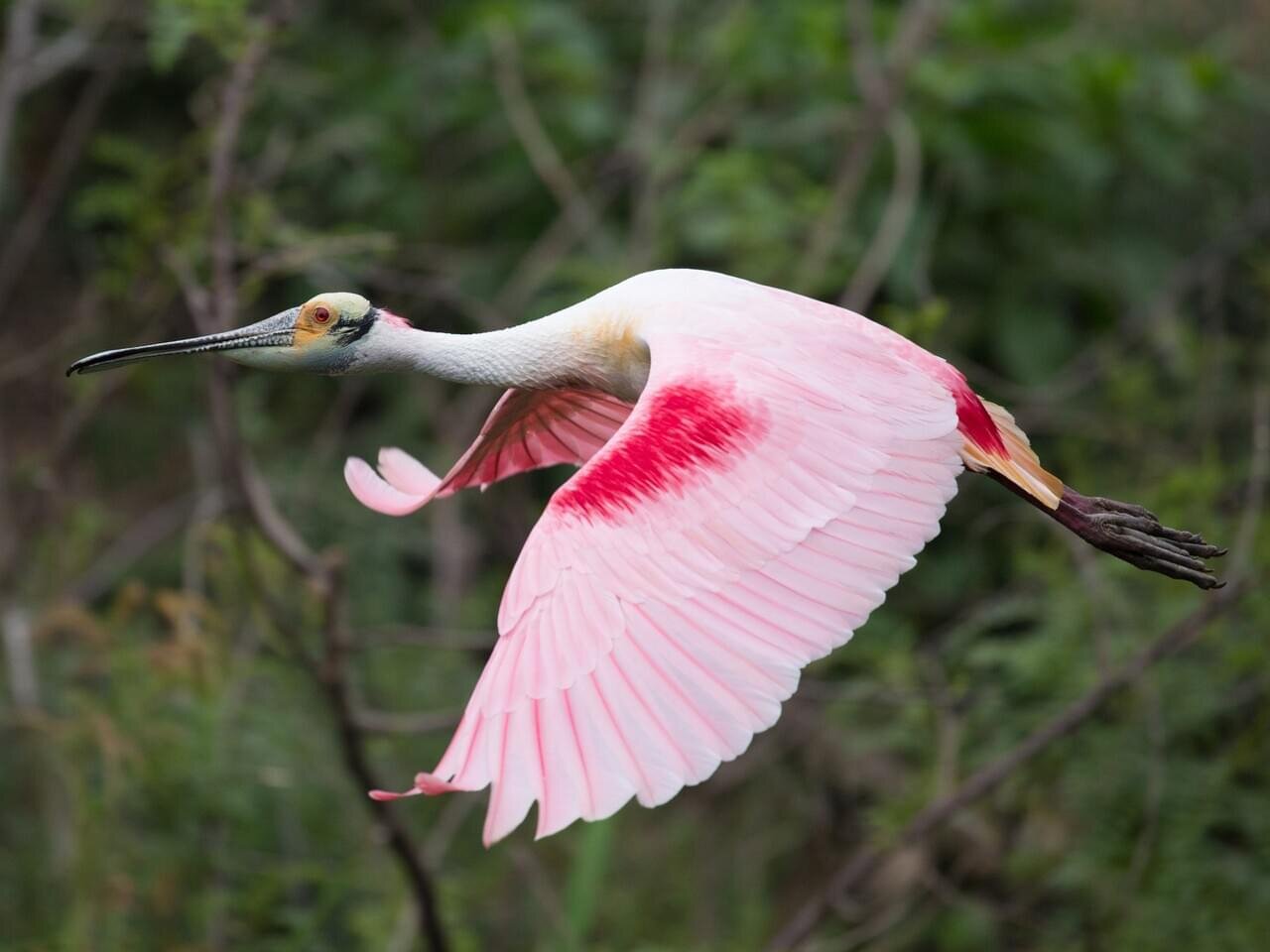
In Trousdale Co. this week a Roseate Spoonbill was reported and confirmed. The bird was seen in the company of Egrets. The Roseate Spoonbill is a pink bodied bird with red highlights, a long spatulate bill, and a grayish to green colored featherless head. Spoonbills feed in shallow water sweeping their bills from side to side. This bird is fairly common along the Gulf coast.

Wood Thrush Notes

Tree Swallows and Bluebirds

Over the past ten years more and more people are reporting Tree Swallows using a nest box intended for Bluebirds. Tree Swallows are considered “competition” for the Bluebirds but typically that would be because there is only one box available. Such is the case when only one box present. In mid-TN there may be as many as 7 different songbirds interested in a Bluebird box; Chickadee, White-breasted Nuthatch, Tufted Titmouse, Carolina, and House Wren, Prothonotary Warbler, and the Tree Swallow. This is why we recommend offering a number of nest-box choices. To not only alleviate competition, but to give several species of birds an opportunity that these days are getting harder to come by because of loss, or disruption, to habitat.

The Tree Swallow is smaller than a Bluebird measuring about 5-6 inches in length. Male and female are a steely blue-green to nearly black above and pure white below. Females tend to be a little duller in color overall. In the sunlight the blue-green plumage is very perceptible. Their forked tail is not as pronounced as a Barn Swallow’s.

Like other swallows they are expert flyers acrobatically catching insects on the wing. They appear to enjoy flying.

Their habitat preferences are pretty diverse ranging from wetlands and marshy areas to meadows and woodlands near water. This bird is only here between late February and approximately mid-March as it migrates back to its winter grounds in Honduras, Nicaragua, and Costa Rica.

I recall reading accounts of Tree Swallows and Bluebirds using nest-boxes placed back to back on the same pole. I’ve never had a chance to test this but recently heard from a naturalist friend of mine experiencing this very thing. So, these two species are compatible enough to tolerate nesting in close proximity. If you have experienced Tree Swallows seemingly taking over one of your Bluebird boxes perhaps this is a chance for you to test this theory.


Saturday Seed Availability Update

It’s been another trying week coordinating deliveries through freight. As a result of some errors we are out of stock of all sizes of Woodland Blend and Premium Blend until Monday the 28th. We are sorry for the inconvenience and are continually trying to keep your preferred products arriving in a timely way. Thanks for your business and your patience.

Hummingbirds, Box Turtles, and Hiring

As anticipated there has been a noticeable increase in hummingbird activity reported from quite a few customers this past week. Mid-June and mid-July are notable times when many hummingbirds will come off the nest which would translate to more hummingbirds being seen at feeders and around the yard visiting flowers. Lots of rainfall is contributing to wonderful results in our gardens producing an abundance of flowers. Often times these natural nectar sources are more attractive and more important than the sugar water in our feeders. We often tell people who are disappointed about not seeing hummers at their feeders that hummingbirds do not travel all the way from Central America for sugar water. They have all they need naturally and will come to the feeders with intensity when nesting concludes. Be patient. August and September are always the best hummer feeding months.

Most of us bird lovers appreciate many of the other creatures we encounter in our yards seasonally, from year to year. Most springs I encounter Box turtles methodically working their way through a flower bed, or some difficult terrain with obstacles. I wonder how they get anywhere as difficult as it seems for them to move. Many times I’ve discovered a female attempting to dig a hole with its hind legs with the intention of laying eggs. I’ve never encountered a baby Box turtle so it must be extremely rare to witness the emergence of the babies from the earth. Two days ago I encountered a beautifully marked female attempting to dig a nest hole with not much success before she moved along to a better spot. I rewarded her efforts with a couple of juicy earthworms. Enjoy the video. Females will lay between 3 and 8 eggs up to three times per year. This next bit of information is very interesting. Female Box turtles can store sperm from a single mating for up to 4 years and can produce a fertile clutch of eggs in each of those years without further mating.


The Wood Thrush Shop is Hiring for 1 Part-time Position

Requirements:

Lifting heavy items is a must. Moving multiple bags of birdseed from 20 to 50 lbs. occurs with frequency on a daily basis. Once or twice a week large loads of seed are delivered and must be unloaded by hand.

Good people skills. You will communicate with people a lot to help them make choices to improve their backyard birding experience. Being able to listen and ask the right questions to better understand the customer’s backyard birding needs is critical.

We are looking for someone with enthusiasm and energy, manners, patience, and a sense of humor.

One will need to develop an ability to understand all of the bird feeding products and how they are best used.

We want someone to have a good working knowledge of common backyard birds, their habits, and behaviors.

Duties:

Registering sales

Unpacking, pricing, and displaying product

Sales floor and stockroom general maintenance: floor cleaning, vacuuming, and dusting.

Sales and customer service.

Hours per week and starting pay:

We need approximately, 25 hrs. per week, minimum two Saturdays per month.

Starting pay $12 per hour

Please email John at woodthrushshopth@bellsouth.net for inquiries and/or to set up an appointment to meet and fill out an application.

Wood Thrush Notes

Another Rare Bird Sighting in Nashville

In the past year, TN has seen quite a few rare birds pop up all around the state.

By now some of you have heard about the Green-tailed Towhee recently discovered in East Nashville. It’s not the first time this species has been seen here, however, nearly 60 years have passed since the last sighting.

This bird is typically a summer-breeding resident of New Mexico north to Montana, and west to the Sierras of California. Its non-breeding, winter range is from mid Texas down into Central America. The other interesting thing about where this bird has been seen is its habitat preference tends to be in areas of dense brush on mountainsides and high plateaus. Not exactly East Nashville habitat.

Keep the binoculars handy because clearly any one of us may have a rare visitor at any time.

Spring and Early Summer Hummingbirds

All of our summer resident Ruby-throated hummingbirds are here now and beginning, or well into, their first nesting of the season. Like Bluebirds they all don’t start nesting at the same time. There could be as much as a month difference in the first nesting phase of the earliest arrivals in March and April and the later arrivals as late as mid-May.

There have been a lot of concerns voiced by customers regarding hummingbirds this spring, more so than usual. “I usually have them by tax day”, or “I’ve only seen one weeks ago and none since”. The nesting phase is one of the reasons people usually see far fewer hummingbirds now as opposed to July through September. Hummingbird feeders are not in high demand at this time and will serve only for quick visits and a brief drink.

I’ll admit sightings of hummingbirds have been fewer based on personal experience and customer feedback; however, there can be a number of factors that would contribute to either seeing more or less hummingbirds during spring. Seeing fewer hummingbirds now can be viewed as a potentially good thing. It has been a cool spring with good amounts of rain meaning nectar producing plants are doing very well and hummingbirds do not see the feeders as necessary. In years past when we experienced early hot and dry conditions there was more early activity at feeders. Let’s see what happens when temperatures get into the 90’s next week with little rainfall. That may inspire a little more action at the feeders.

Perhaps the heavy rains and high winds we experienced in May and June last year resulted in a fair amount of washed out nests meaning numbers of offspring were affected. The fact is we just don’t know at this point if there are fewer hummingbirds this year compared to last.

When nesting is near conclusion in mid to latter July hummers begin visiting feeders with frequency and intensity to fatten up for the long migration back to Central and South America.

With that in mind keep fresh nectar in the feeder but do not fill to capacity. Small amounts are recommended now to decrease waste and major cleaning of feeders. In warmer weather nectar is only good for about 3 days. The hotter the environment the shorter the life span of the nectar.

Spring Migration Notes

There is a lot going on right now in the bird world and in our backyards.  Rose-breasted Grosbeaks settled in this week at feeders as have Indigo Buntings.  Expect to see numerous RB Grosbeaks at feeders until around mid-May as they will eventually move along to their summer homes to breed, usually north of TN. East TN in higher elevations is also part of their breeding range.  RBG’s love most seeds offered at feeders and will compete with one another for a place at the table.  If you have a few more feeders stored away now is the time to put them out to accommodate as many as possible. They are really eager to feed during their long journey from Central and South America.   

RBG’s are monogamous and both male and female build the nest.Males usually make the choice of nest site, however.The male Rose-breasted Grosbeak shares incubation duties with the female and is known to sing while doing so. For more info on the Rose-breasted Grosbeaks visit Cornell labs website.

Ruby-throated hummingbirds continue to arrive or pass through but don’t expect a lot of action at the feeders just yet. They prefer blossoms for their nectar source early in the season. Bluebirds, Chickadees, and Carolina wrens are either finishing, or somewhere in the middle stages, of their first nesting, and neo-tropical migrants are pouring through TN during these peak migration weeks of late April and early May. Birdwatching is at its peak during this time. You may want to join TOS birdwatchers at Radnor Lake Wed. mornings to learn a little more about this rapidly growing and rewarding hobby. Bring binoculars and be prepared to watch, listen and learn. Visit Tennessee Ornithological Society’s website at www.tnbirds.org.

Next to Bluebirds and Hummingbirds the American Goldfinch is perhaps the most discussed bird at The Wood Thrush Shop. We’ve been getting a lot of Goldfinch questions lately. This finch is a year round species here in TN and known for its bright yellow and black plumage in spring and summer while in winter dull and almost completely lacking in yellow.

Mostly what we hear from customers are questions like, “where have the Goldfinches gone” or “why can I not attract Goldfinches”? There are no simple answers nor is there much we can suggest to increase your chances of attracting more Goldfinches. When it comes to attracting Goldfinches patience and an understanding of their habits and seasonal movements is important. So, why are Goldfinches so different from the other backyard birds?

Goldfinches are exclusively seed eating birds which means they have a natural food supply everywhere they go and in almost every season of the year. This also means your feeders should be in tip top condition with a dry source of seed to entice them to visit. Goldfinches won’t visit your feeders if they are not providing something as good as they find in nature. In late summer when Coneflower, Zinnias, and Rudbeckia are in bloom and the seeds become ready I see great numbers of Goldfinch feeding there rather than on the feeders nearby. Sometimes they just prefer what nature has to offer. And really, shouldn’t it be that way?

To further complicate matters, unlike other backyard birds, Goldfinches are on the move much of the time, never staying in one area for very long. During the non-breeding seasons, winter, spring and fall, there are great movements by these birds which explain their inconsistent presence at feeders. Many of us see more at feeders in winter when northern populations have come here to escape harsh conditions.

Goldfinches love a variety of seeds, not just Nyjer, including sunflower and safflower, at feeders. I believe sunflower is their preferred seed. I use fine sunflower hearts in my finch feeder and do quite well attracting Goldfinches. Nyjer for finch feeders is not a seed native to this country. It is grown primarily in Africa, particularly Ethiopia and Kenya, as well as in India, Nepal, and Myanmar. This explains why it’s a little pricier. It is heat treated before entering this country so it will not germinate.

American Goldfinch feeding on sunflower chips.

American Goldfinch feeding on sunflower chips.

Keeping your feeders topped off is always recommended as Goldfinches are social and prefer to feed as a group. Waiting for them to finish what’s in the feeder will backfire because if what’s remaining in the feeder accommodates only two birds they likely will move on. Many times customers will be fooled into thinking there’s’ something wrong with the remaining seed. Shake the feeder to see if the seed is dry and loose. If it is just top it off. Your results should be better.

Almost any kind of bird feeder may attract American Goldfinches, including hopper, platform, and hanging feeders, and these birds don’t mind feeders that sway in the wind

As mentioned, they like Zinnias, Coneflower, and Rudbeckia, so planting patches of them will likely bring Goldfinches.

Interesting Facts

• American Goldfinches breed later than most North American birds. They wait until June or July to nest when milkweed, thistle, and other plants have produced their fibrous seeds, which goldfinches incorporate into their nests and also feed their young.

• Goldfinches are among the strictest vegetarians in the bird world, selecting an entirely vegetable diet and only inadvertently swallowing an occasional insect.

• When Brown-headed Cowbirds lay eggs in an American Goldfinch nest, the cowbird egg may hatch but the nestling seldom survives longer than a few days. The cowbird chick simply can’t survive on the all-seed diet that goldfinches feed their young.

• Because of the nest material they use and how tightly it is woven a Goldfinch nest has been known to hold water which can obviously have dire consequences.

Managing your expectations when it comes to attracting Goldfinches is advisable. There are no guarantees when you consider their habits and preferences.

Keep the binoculars close and enjoy the birds.