
BIRD NEWS BLOG
Wood Thrush Notes
Yellow Cardinal in TN
A backyard feeding station in Harriman, TN, in Roane County has quite an unusual visitor. They have a yellow Cardinal visiting on a regular basis. Yellow Northern Cardinals have been seen in at least 4 different states the last ten years but remain a rarity. What causes a bird that is normally red to be yellow? Basically, the red, orange, and yellow colors in birds’ feathers are created with carotenoid pigments derived from the foods they eat. In the male Northern Cardinal, yellow pigments from the diet apparently are converted to red by a specific enzyme. In a very rare genetic mutation, probably affecting fewer than one in a million cardinals, that enzyme is lacking, so the conversion to red doesn’t occur and the feathers are bright yellow instead.
Get Ready Now for Nesting Season
Just two weeks from now we will say hello to February, perhaps our coldest and potentially snowiest month. But you can always count on a few days that warm to the 60’s and suddenly bird activity ramps up. Some birds will begin singing and some, like the Carolina wren, may actually begin nest building.
The Carolina wren, as you have probably seen, chooses some pretty odd locations to build a nest and often times in places humans find annoying, like in a gas grill, or canoe, for example. They often choose locations like covered porches, garages, and garden sheds. Every spring we receive several calls from people who suddenly find themselves with a bird nest full of babies in a troublesome location. If you have experienced this scenario get ahead of the game and block access to these locations as soon as possible.
And now is a very good time to review the nest box successes and failures you had last year and make adjustments if necessary. If a nest box has been in the same location a couple of years with no activity go ahead and try a new location. Move it soon.
Clean out old nests now if you haven’t already before birds begin new nest building. Of course, birds will build on top of old nests but that can be a problem as insects like ants will find the old decaying nest attractive. I have saved baby birds from certain death as the ants were beginning to eat them alive.
If you’ve never offered a Bluebird box consider putting one up in the month of February. Even though the majority of Bluebirds won’t begin nesting until April they will do a lot of surveying of potential places to nest Feb. thru March.
National Bird feeding Month and the GBBC
February is National Bird Feeding Month and the Great Backyard Bird Count. Many of you look forward to the count and sharing your data to help bird experts better understand the distribution and relative numbers of the different species of feeder birds. More info on the GBBC next week
Visit www.birdcount.org for more info on the GBBC.
Wood Thrush Notes
Sandhill Crane Festival
The 32nd annual Tennessee Sandhill Crane Festival will take place January 14-15 from 8 am to 4 pm daily, featuring over 20,000 Sandhill Cranes that stop over during their winter migration at the Hiwassee Refuge. The calls of these magnificent birds can be heard from over a mile away. You will see the mating dances of these 4-foot tall birds and their 6 to 7-foot wingspan on display. As always there will be entertainment, vendors, and activities for children. For information on the schedule of events visit www.tn.gov/twra

Bald Eagle Festival
The 19th annual Bald eagle Festival at Reelfoot Lake will take place Feb. 3-5.
More than 40 nesting pairs of Bald eagles now reside at this unusual lake that was created by an earthquake in the winter of 1811-1812 causing the Mississippi River to flow backwards for as long as 24 hrs. Tours, educational programs, and activities are available. Tours and accommodations fill up pretty quickly so if you want to attend you may want to start planning now. Lots of different birds can be seen around the lake including White Pelicans.
CONTACT– 731-253-2007 or visit www.reelfoottourism.com for more information.

Christmas and New Years Shop Hours
The Wood Thrush Shop will maintain regular business hours this coming week, 10 am until 5:30 pm Monday thru Friday, and will be open on Saturday Dec. 24th from 10 am until 2 pm.
We will be closed Monday Dec. 26th and Monday Jan. 2nd
Hummingbird sighted last week
Just last week, on Thanksgiving Day, a hummingbird was spotted at a feeder in western Davidson Co. on the Cheatam Co border. The homeowner was outside taking a break from cooking when the bird was seen going to a feeder she keeps out all winter. The homeowner, a long time Warner Parks employee who has a hummingbird banding license immediately prepared one of her traps to put the feeder in. It didn’t take long for the tiny visitor to enter the trap for the nectar. The bird was captured, measured and weighed, banded, then released. With the data compiled there was reason to believe this bird is an Allen’s hummingbird. It was in fact determined to be a young female but because an Allen’s can be so similar to another species, the Rufous hummingbird, the jury is still out.


Other bird banders are discussing the details and data to make the ID official. Regardless, it is very interesting to know we have small numbers of hummingbirds that spend, at least temporarily, the fall and winter with us. It doesn’t mean you should put your humming feeder out but certainly you can and there is a chance you may see one of these western U.S. hummingbirds. I’ve been trying for many years with no success. If you do please contact us at The Wood Thrush Shop, and for more information about wintering hummingbirds visit southeasternavianresearch.org
Wood Thrush Notes
Winter Backyard Birds to Look For
A few weeks ago we mentioned Brown Creepers as one of the winter visitors to look for near feeding stations. Other more common visitors include White-throated Sparrow, White-crowned Sparrow, Fox Sparrow, Dark-eyed Junco, Red-breasted Nuthatch, Yellow-rumped Warbler, Ruby-crowned Kinglet, and Bluebirds get a mention because they are more likely to visit traditional feeding stations containing seed and suet during winter months.


This is the time of year I begin ground feeding to attract the sparrows mentioned above. This is a simple strategy of broadcasting some feed on the ground or in a low platform feeder to attract sparrows and Juncos. This group of birds prefers feeding on the ground and enjoys millet and shelled sunflower. Some of you might think “why do I want to attract sparrows”? There isn’t just one type of sparrow and because of the introduced House sparrow, which are so problematic for Bluebirds; I think “sparrows” get a bad rap. These sparrows are beautiful and one should really look at them through binoculars to see the evidence. By the way, you will find Cardinals and even Goldfinches love to feed on the ground, too. I often incorporate a brush pile for cover and protection near the spot I present the feed. If you’ve never tried creating a brush pile for birds you should try it. They are a bird magnet.
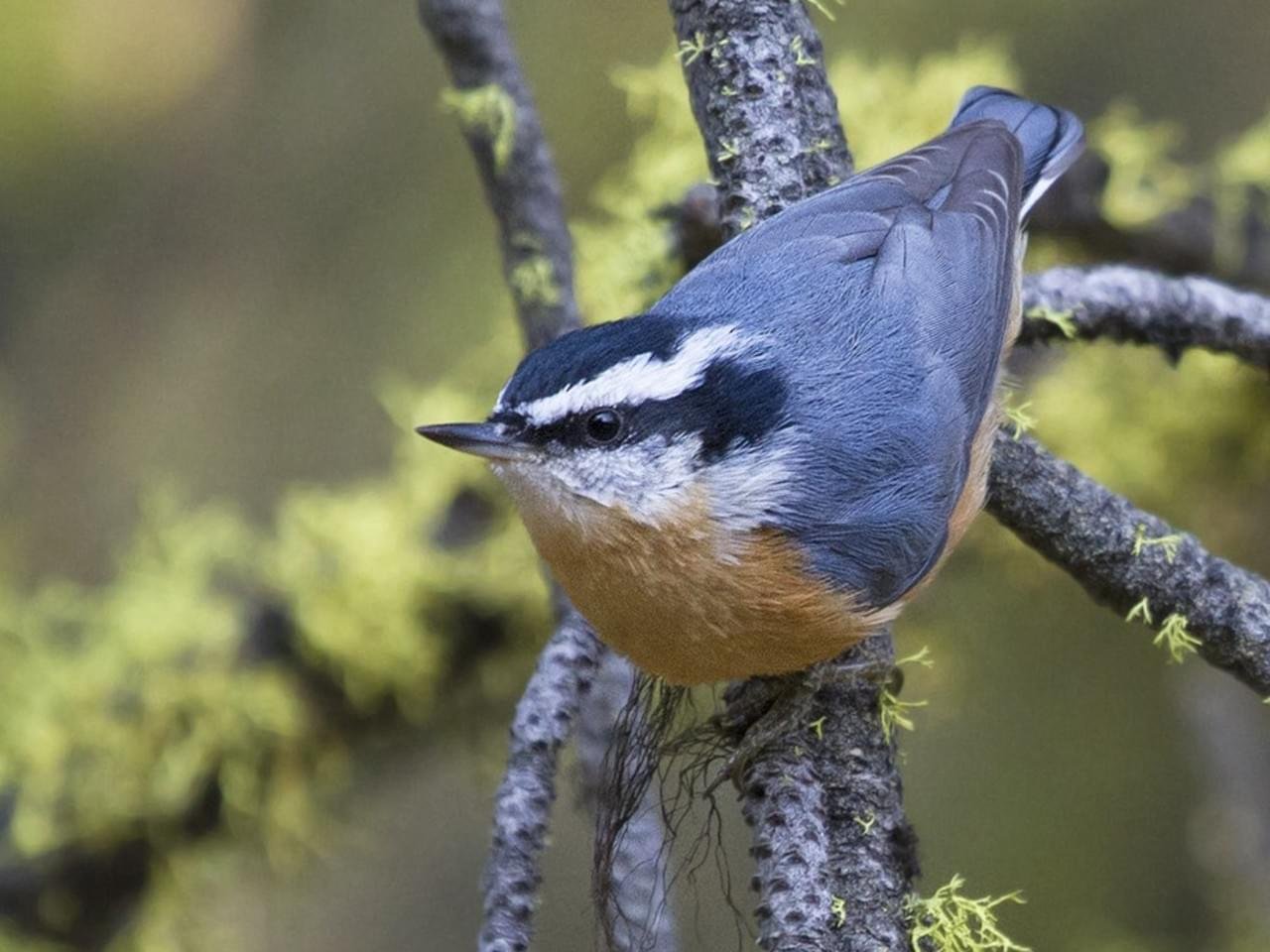
The Red-breasted nuthatch is a regular winter visitor although their numbers can vary greatly from one year to the next. Smaller than the White-breasted nuthatch they’re often seen visiting sunflower seed, shelled peanut, and suet feeders.
Yellow-rumped warblers are one of just a few warblers that can be seen in TN year round and at feeders. Look for them at suet feeders on very cold days.

The Ruby-crowned Kinglet is also seen at suet feeders on very cold days. You better have your binoculars handy, though, because they are very small and their winter plumage is a dull olive which can make them difficult to see. Oh yeah, they are constantly on the move, too, further challenging your birdwatching skills. Look for the black and white wing bars to help identify one. The “ruby” crown is often not visible but from the right vantage point you may catch a glimpse.

Of course, Bluebirds are here year round but they are more likely to feed at suet feeders and even consume seed but only if it is out of the shell. Bluebirds do not possess the ability to crack open shells of a seed. Especially during snow falls that cover the ground Bluebirds will be inclined to eat seed for survival.
Wood Thrush Notes
Brown Creepers and other Winter Migrants
This morning I had the pleasure of spotting one of my favorite birds of winter, the Brown Creeper. It is not a rare bird but is considered an uncommon winter resident statewide from October to April. It is an elusive bird for the backyard birder due to its camouflage plumage and habit of traveling on the trunks of trees. Every fall and winter I catch a few glimpses of a Brown Creeper heading up the trunk of a tree as it searches for insects in the bark. This is the only species we have that only goes up a tree and never down. It has a unique way of foraging for food by creeping up a tree and then fluttering down to the base of another tree climbing up in a spiral or zig zag path. It’s very interesting to watch. Brown Creepers are quite small, about 5” in length, and quite well camouflaged. They are brown above and whitish below, with a slender de-curved (downward curve) bill. Like a Carolina Wren they have a prominent white eye stripe.


Brown Creepers are primarily insect eaters but suet is its preferred food at feeders. As always we suggest watching your suet feeder a little more closely this time of year as many more unusual birds are seen at suet feeders. Birds seen at local suet feeders the last few winters include; Orange-crowned, Pine, and Yellow-rumped Warbler, Baltimore Oriole, and Western Tanager