Bird Bio: Yellow-bellied Sapsucker, Gifts for Aspiring Birders, and Christmas Hours

Bird Bio: Yellow-bellied Sapsucker

It seems like it has been a long time since we did a good old fashioned bird bio, so why don’t we take a few minutes to unwind, forget the chaos of the holidays, and learn about a new bird together!

Yellow-bellied Sapsucker Visiting Pine Tree

Photo credit: Eli Haislip

Perhaps while on a walk, or maybe even in your own yard, you have noticed a tree with neat little rows of small holes circling the trunk. These are known as “sapwells,” and the bird responsible is the Yellow-Bellied Sapsucker. You could easily be excused if you’re thinking to yourself, “I’ve never seen one of these.” This member of the woodpecker family is the only species of woodpecker in the East that is completely migratory, and therefore, we only see them during the fall and winter months. Unusual for our eastern species of woodpeckers, Sapsuckers are quite the accomplished travelers. During the Spring Migration, they will make their way as far north as eastern Alaska, and in the Fall Migration, Yellow-bellied Sapsuckers have been documented as far south as Panama. Interestingly, there is evidence that the females generally migrate further south than males.

As their name implies, sap makes up a large percentage of their diet. They are very protective of their sapwells, defending them from other birds, including hummingbirds. Did you know that in parts of their northern range, Ruby-throated Hummingbirds depend on sapwells to such an extent that they time their arrival with that of the sapsuckers? Sapsuckers and hummingbirds both will feed on insects that get caught in the sticky tree sap. In addition, porcupines and even bats have been documented visiting the sapwells, making these an important food source in the northern United States and Canada.

Like other species of woodpeckers, Yellow-bellied Sapsuckers make their nests in tree cavities they excavate in the spring. The male is responsible for the majority of excavation, usually taking two to three weeks to complete the cavity. The female then lays her clutch of four to six white eggs directly in the left over wood chips. The incubation period is 10-13 days, and then the nestling phase is around a month. Unlike other woodpecker species that construct a new cavity each year as part of their courtship, Sapsuckers have been observed using the same cavity for up to seven years!

Unlike many other species of birds, the overall population of the Yellow-bellied Sapsucker has actually INCREASED over the last 60 years, possibly because of more new growth forest habitat that they tend to favor. According to the Cornell Lab of Ornithology, they have enjoyed a bounce back in population to the extent where there may be more Yellow-bellied Sapsuckers around today than in pre-settlement times. Once considered pests, especially in fruit orchards where they would often simply be shot, that is fortunately no longer the case. Contrary to popular belief, healthy trees are able to survive the shallow wells dug by the Sapsucker. Remember, a healthy tree can survive having entire branches removed by an arborist, so small less than quarter inch deep depressions in the bark won’t kill it.

All the information used in this article can be found HERE for further reading!

Gifts for Aspiring Birders

Did you know we also have gifts for the young and aspiring birdwatcher in your life? For the young bird enthusiast, we currently have the Peterson and Stokes Beginner Guides. ($9.99 and $10.99, respectively) These are both in the vein of proper field guides, complete with detailed illustrations or photographs, respectively, as well as ID information and range maps in the case of the Stokes guide. Another great book for kids who are passionate about birds is Backyard Birding for Kids. ($12.95) While this book includes birds that can be commonly spotted at feeders, it also goes into more detail about ornithology and ecology as a whole with information ranging from migration, types of flight, irruption years, and much more. This would be an excellent gift for the young birder who’s passion extends beyond simply what’s at the feeder. One of our bestselling books the last several years would make a great gift for the novice or more experienced birder alike! The Backyard Birdsong Guide by Donald Kroodsma ($34.99) literally has it all. Beautiful illustrations, detailed information, range maps, and the best part? By keying in the number on the page with the speaker box on the side of the book, you can hear the calls and songs of each bird!

Another popular line of items year round are the Wild Republic stuffed birds. ($12.00) There’s more to these stuffed animals than meets the eye, however. A light squeeze and the bird will emit the actual call of that species of bird, with the calls supplied by Cornell Lab of Ornithology. These are a great way for kids (and their parents or grandparents) to learn the calls of individual birds that are likely to be found in the backyard!

Christmas Hours

Lastly, let’s address our Christmas hours this season. We will be open Christmas Eve from 10:00 AM till 2:00 PM and we will be closed Christmas Day. Normal business hours will resume Thursday, December 26th!


Midweek Specials! J.J. Potts Ceramic Mushrooms and ALL Owl Statuary!

This week we are excited to announce a few new gift specials that will be running today through Saturday, December 14th. J. J. Potts Ceramic Mushrooms as well as ALL Stone and Metal Owl Statuary are on sale!

J. J. Potts on Sale Now!

Some of our most popular gifts over the few years have been the Ceramic Mushrooms by J.J. Potts. Handmade in Salt Lake City, Utah, these funky shrooms can make the perfect addition to your fairy garden, flower pot, or window box! Available in small, medium, and large sizes, these are ordinarily $12, $23, and $32 respectively and are on sale through Saturday, December 14th for 20% off those prices.

Owl Statuary On Sale Now!

Do you know a person who has a thing for owls? We’ve got you covered! We currently have a broad assortment of owl statuary in stock; both in metal and cast stone. The large cast stone Great Horned owls by Campania are 25% off, while all other owl statues are 20% off. This includes the Regal Art metal Barred Owls, as well as the other cast stone Campania owls!


Bluebirds Visiting Feeders, a Flurry of Winter Hummingbirds, a Surprise Encounter

Bluebirds Visiting Feeders

With the sudden snap of cold weather, we have been hearing more reports from customers of bluebirds visiting feeders. When temperatures begin to drop below 45 degrees consistently, Eastern Bluebirds may be enticed by suet and shelled (out-of-the-shell) sunflower and peanuts. The reason is simple. Below 45 degrees, their normal diet of insects becomes scarcer, and they will turn to alternative food sources. This includes berries, and in the back yard what we offer at feeders. Our Woodland Blend contains out-of-the-shell sunflower and out-of-the-shell peanuts that bluebirds will eat during cold weather. Sunflower hearts and our Premium Blend are especially good, as are live and dried mealworms. As late fall progresses into winter, and berries become more difficult to find (many other birds eat berries when they are available, and there is only a finite supply each year) we receive many reports of Bluebirds feeding on suet.

Male Eastern Bluebird Eating Mr. Bird Bugs Nuts and Fruit Cake

A Flurry of Winter Hummingbirds

Rufous Hummingbird, December 15th, 2020 in Bellevue, TN

Photo credit: Eli Haislip

In the United States, there are 15 species of hummingbird, with 14 of these occurring in the Western U.S. However, during this past week, 4/15 species have been calling our state home. There have been confirmed sightings of Rufous (Trade, Johnson County) Black-chinned (Knoxville, Knox County) Calliope (Ooltewah, Hamilton County) and our common Ruby-throated Hummingbird. (Brentwood) While each year we have come to expect that somebody in the state will get a western winter hummingbird, to have three different species is exciting.

 The Rufous Hummingbird is the most commonly reported wintering western species of hummingbird in Tennessee and the eastern U.S. as a whole. Their range extends from southeastern Alaska to as far south as southern Mexico. Normally, they would follow the Pacific coast north to their breeding range, and then follow the Rocky Mountains south again. Why some individuals end up as far-east as Tennessee we are not sure, but as recently as 2021 one of our customers in Bellevue had a confirmed sighting of a Rufous Hummingbird.

The Black-chinned Hummingbird has a similar range in the West as the Rufous, although they do not breed as far north. Inhabiting a diverse range of habitats from deserts to mountains, it was certainly a surprise when one turned up in Rocky Top! This is not their first time visiting the Volunteer State, with isolated sightings throughout the 1990s and into the early 2000s.

The Calliope Hummingbird might be generating the most buzz. The smallest species of hummingbird found in the United States, this tiny interloper to Hamilton County would ordinarily be spending its winter in the pine-oak forests of southwestern Mexico. As surprising a visitor as it is however, it isn’t the first time a Calliope has turned up in Hamilton County with the last reported sighting being in January of 2001.

You may be wondering how a little hummingbird is able to survive the winter, and the reasons are quite fascinating. Many species of western Hummingbirds encounter areas where weather can be unpredictable, such as the elevations of the Rocky Mountains where temperatures can drop to near or below freezing nightly. One method they can use to survive this is something called Torpor. In this near hibernation state, they are able to drastically reduce their metabolism to a fraction of what it is during the day, and this helps conserve enough energy that they can survive the cold night. We could write an entire blog about torpor, but for those of you that want more information, we will link an interesting article published by Washington University. Also, contrary to popular belief, hummingbirds are not reliant on sugar water or plant nectar to survive. Most of their diet is made up of insects, and even on days that may feel cold to us, these are still readily available. Lastly, because of the areas that they inhabit, they are simply better adapted to cold temperatures than our eastern Ruby-throated Hummingbirds. Compared to the Rocky Mountains in early and mid-spring, December in the parts of east Tennessee where these birds are being seen is a breeze for these hardy hummers.

A Surprise Encounter

As John and his wife were walking through Pegram’s Gossett Tract, they were surprised by an explosion of brown that flew almost straight up in front of them before flying off a short distance and descending back into the shrubby field, out of sight. A crow-sized bird, it was too large to be a Northern Bobwhite, but too small to be a turkey or escaped pheasant. What it turned out to be was a Ruffed Grouse, a bird that is usually found in the mountains of East Tennessee when it is seen in the state at all. The sighting of one of these chicken-sized forest dwellers in Cheatham County is unexpected. While the historic range of the Ruffed Grouse does encompass Middle Tennessee, they are non-migratory, so it is surprising for one to appear so far from its normal range without help. In 1986, a small population of Ruffed Grouse from East Tennessee were trapped and released at Cuba Landing in Humphreys County on Kentucky Lake. While there was initially some success, it seems unlikely that this bird is a descendent from that program, given in almost forty years there have not been sightings of Ruffed Grouse in the general vicinity of Cheatham and western counties. It is also possible that the bird was released by hunters or escaped captivity somewhere in the surrounding area.


Midweek Specials! Hummingbird Window Feeder, ATZ Squirrel Feeders and More


Bird’s Choice Window Hummingbird Feeders- 25% Off

Each year, we receive a number of questions from customers asking if we carry window feeders, and the answer is yes! This week, we are running a special on our favorite small window-mounted hummingbird feeders. Take 25% off Birds Choice Hummingbird Window Feeders, today through Saturday, December 7th. These feeders are made in the USA from durable recycled plastic and will last for years. Our favorite aspect of these feeders? Their unique ability to be used for more than just hummingbird nectar. By removing the lid, the feeder transforms from a standard, easy to clean and fill hummingbird feeder to a year-round window feeder for peanuts, suet nuggets, seed, or mealworms! Get one today and enjoy it as a seed feeder until it’s time again for hummingbirds.

Regularly: $22 Sale Price: $16.50 with Discount (Before Tax)

ALL Wooden Squirrel Feeders- 25% Off

I know what you’re thinking… Why would I WANT to feed squirrels?! Several reasons come to mind. Number one; YOU don’t, but with options under $30 before the 25% off, these make great gag gifts for the squirrel hater in your life. Put the intelligence of the Eastern Gray Squirrel to the test with the Squirrel Munch Box. Handmade in Ohio, these feeders force squirrels to learn to open the lid in order to get to the seeds inside.

Regularly $34 Sale Price: $25.50 with Discount (Before Tax)

Perhaps this is a gift for someone who enjoys their squirrels. These feeders are sure to please them too! Perhaps you’d like to treat your squirrels to a lesson in etiquette? We have the feeder for you! The Squirrel Table & Chair design has been around for decades and for good reason. These simple, effective feeders are an excellent way to feed corn on the cob or pressed corn logs to your squirrels, chipmunk and even birds. Unfortunately, we cannot guarantee that squirrels will use the chair, as they are, you know… Animals.

Regularly $28 Sale Price: $21.00 with Discount (Before Tax)

Sure, testing the intelligence of squirrels or their table manners is fine… But what about their acrobatics and agility? Enter the Squirrel Pinwheel. This feeder is exactly what it sounds like, a four armed pinwheel where you place corn on the cob on each arm and watch the squirrels balance while they feed.

Regularly $30 Sale Price: $22.50 with Discount (Before Tax)

Have you ever watched a squirrel contentedly munching your bird seed and wondered what that squirrel would look like in a large glass jar? No? Is that just me? Well, ready or not, we have the answer for you in the Squirrel-In-A-Jar feeder from Songbird Essentials! If you’re reading this thinking we have gone nutty, there is actually a genuine benefit to this unique feeder. Because the seed is inside a large glass jar, it is completely protected from the elements. This makes this a good late fall/winter time feeder to keep your offering protected from rain and snow. It is also possible to attract certain birds into the jar, such as Carolina Wrens, Tufted Titmice, and White-breasted Nuthatch.

Regularly $65 Sale Price: $48.75 with Discount (Before Tax)


Handblown Red Glass Parasol Feeders are 25% Off

The sale of the Parasol red hand-blown glass orb hummingbird feeders continues! Through Saturday, take an additional 25% off the marked price on all red glass orb feeders by Parasol!

Happy Thanksgiving! Holiday Hours, Specials, Cedar Waxwings, and Our Favorite Blend

Holiday Hours

With the holidays now racing towards us at seemingly impossible speed, we would like to take a moment to discuss our hours for the coming weeks before we blink and it is January. Our holiday hours are as follows:

Thanksgiving Day: Closed

Christmas Eve: 10:00-2:00

Christmas Day: Closed

New Year’s Eve: 10:00-5:30

New Year’s Day: Closed

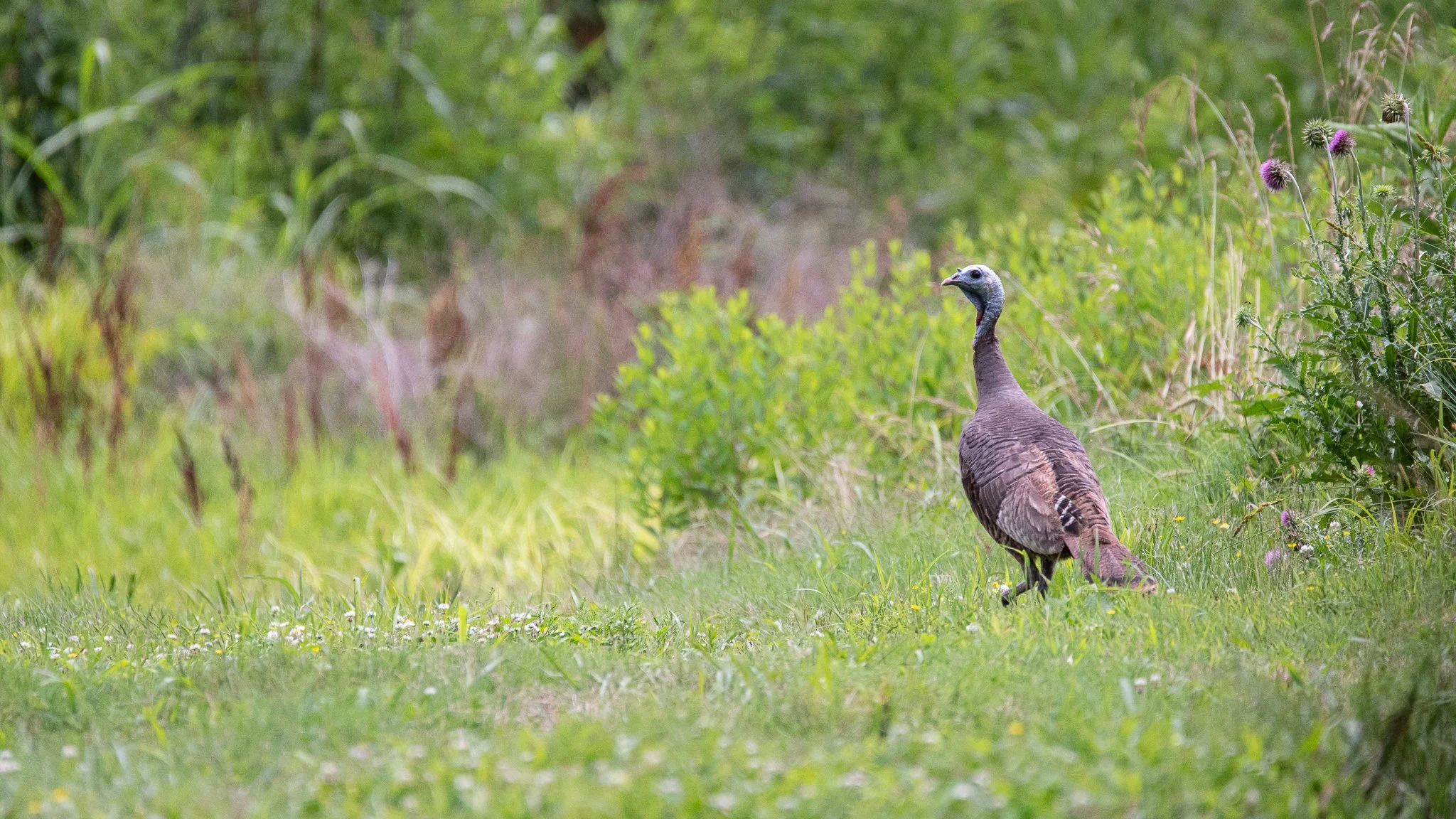
Wild Turkey

Photo credit: Eli Haislip

Cedar Waxings

One of the most striking birds that we encounter in Tennessee has got to be the Cedar Waxwing. If you have never done yourself the favor of an up close look through your binoculars, (remember, if you’re not using binoculars, you’re not truly birding!) then you are doing yourself a disservice. An up close look reveals a striking black mask, traced by a fine line of white that outlines the mask from behind the eye to the beak. A tan body fading to a gray tail tipped in yellow, tan fading to yellow on the belly, and tan wings fading to light gray, then to slate with bright red accents on the wings finish off this vibrant species.

While these beautiful birds are in fact a year round resident to Middle Tennessee, we do receive reports with greater frequency in the late fall and winter months. Why? Because as we like to remind folks, “We are south!” Some Cedar Waxwings will spend summer months as far north as Canada, so for these birds, we are far enough south to be in their winter range. Also, with every plant that produces fruits or berries having already produced its harvest for the year, there is ample food supply to keep these birds fed through the winter months. If you have Holly, Hackberry, Privet, or Honeysuckle anywhere in your yard, look for these birds in flocks of anywhere between five to over fifty in and around these plants eating the berries they produce.

Unfortunately for us, these are not seed eating birds and would not visit a seed or suet feeder. It is possible, however, to see them flocking in numbers to water on a chilly morning. If you have a de-icer, this increases your chances of attracting these and other birds to your water source all year long! Even if you don’t have any of these things in your yard, there is still a good chance of seeing them as they are quite common this time of year and with a little practice can be spotted with ease. Some things to look for are any type of berry producing plant. If you hear or see a flurry of activity in one of the aforementioned bushes or trees, have your binoculars ready to investigate as it is entirely possible that it is a hungry flock of Cedar Waxwings. Case in point; one of our longtime friends and shopping center neighbors often complained to us about never seeing Cedar Waxwings. We continually assured her that they were around, but still no luck. Finally one day while carrying out a customer’s seed, I heard the unmistakable high pitched “bzeee bzeee bzeee” whistle that so often gives them away. After offloading the seed, I rushed back inside to grab a pair of binoculars and hurried down to our friend’s shop. Together we made our way to the parking lot where we could get a clear view of the holly tree by the road, where we saw literally dozens of cedar waxwings consuming the berries. This story serves to show that you do not always need to be in the textbook location to find the interesting bird.

Cedar Waxwing Feeding on Privet Berries

Photo credit: Eli Haislip

Red Parasol Feeders 25%

With highs next week projected in the 40s, late November may seem like an odd time to have a special on hummingbird feeders. However, with Christmas fewer than 30 days away, now is the ideal time to get the hummingbird lover in your life one of these beautiful red hummingbird feeders! Take an additional 25% off of any red Parasol feeder while supplies last through Saturday, November 30th.

A Feast for Your Birds

Did you know that in addition to our straight seed options, we also sell blends custom mixed to our specifications? Of our six custom blends, our Woodland Blend is by far the best seller. Comprised of 80% black-oil sunflower, along with out-of-shell peanuts, white-stripe sunflower, and out-of-shell sunflower, it has something for everybody. During the winter months, the out-of-shell sunflower can sometimes attract birds not ordinarily seen on seed feeders such as Carolina Wrens, Pine Warblers or even Eastern Bluebirds! Year round though, this blend routinely attracts Northern Cardinals, Carolina Chickadees, Tufted Titmice, White-Breasted Nuthatch, House Finch, American Goldfinch, Blue Jays, Downey Woodpeckers, and Red-Bellied Woodpeckers, depending of course on your specific habitat. With bags available in 8 Lbs. ($15), 20 Lbs. ($32), and 40 Lbs. ($55), we have a size that will work for anybody!

Does this sound appealing, but you don’t want the mess associated with seeds in the shell? Ask us about our No-Mess options!