Winter Weather Thoughts

With the temperatures dropping and some proper winter temperatures just around the corner, we’d like to share a few winter weather thoughts!

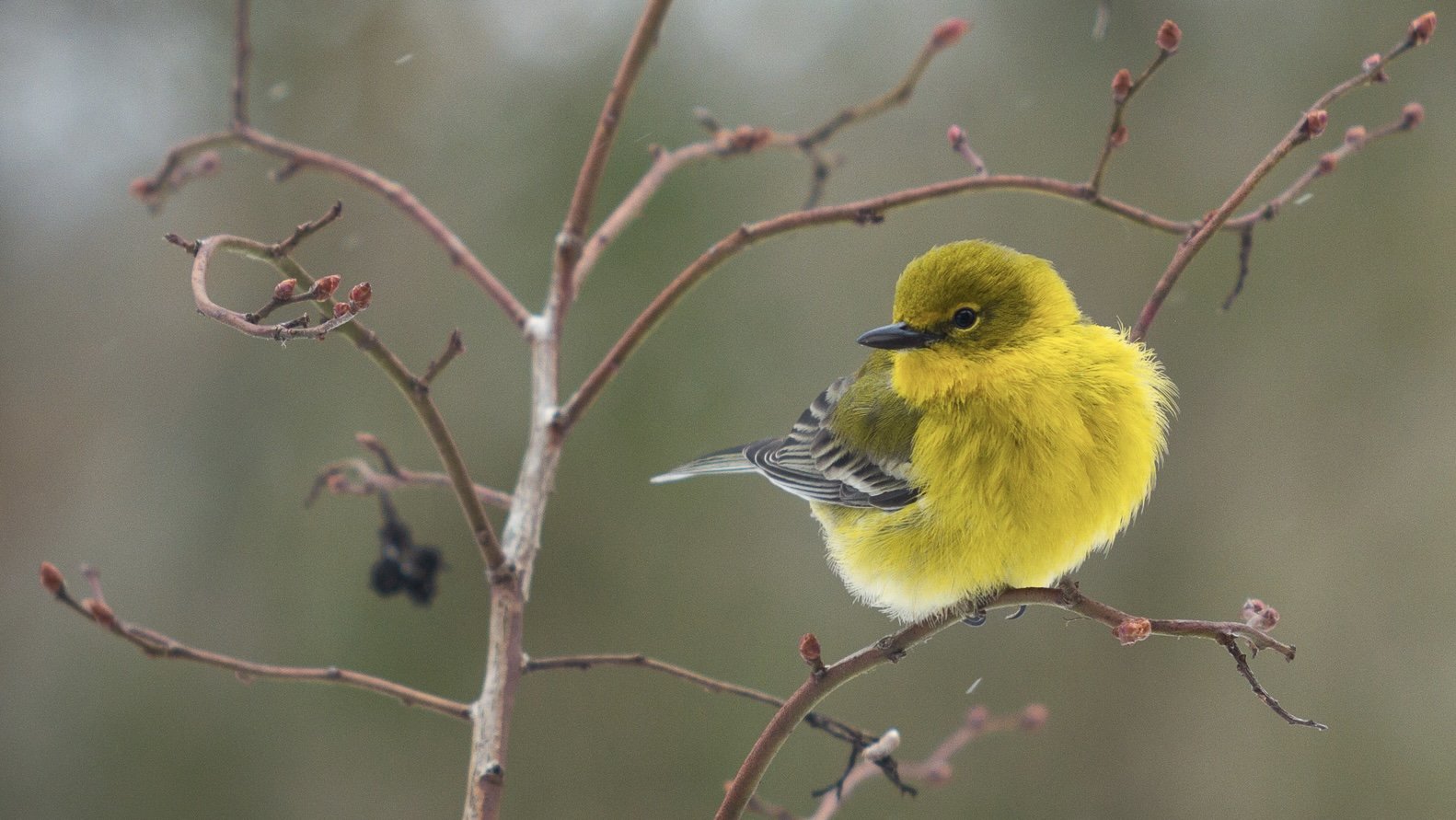
While we feed suet year round, many people associate it as a cold weather feeding option. There is no wrong answer here, and birds will certainly flock to suet regardless of temperature. It is however possible this time of year to attract certain birds to suet (or out of the shell sunflower seed) that you would not ordinarily see at your seed feeders. When the high temperatures are below 45 degrees, insects become difficult to find, and thus it is quite common to see Eastern Bluebirds visiting feeders. Ordinarily, these insect and berry eaters would be unlikely to visit traditional feeding stations, but with cold temperatures it becomes quite commonplace to see them in small groups feeding on suet, out of the shell sunflower, or drinking at sources of thawed water. The same can also be said for Carolina Wrens, as well as Pine Warblers. On many icy winter days, I have witnessed them picking through the Woodland Blend at my platform feeder in search of the out of the shell sunflower seeds it contains.

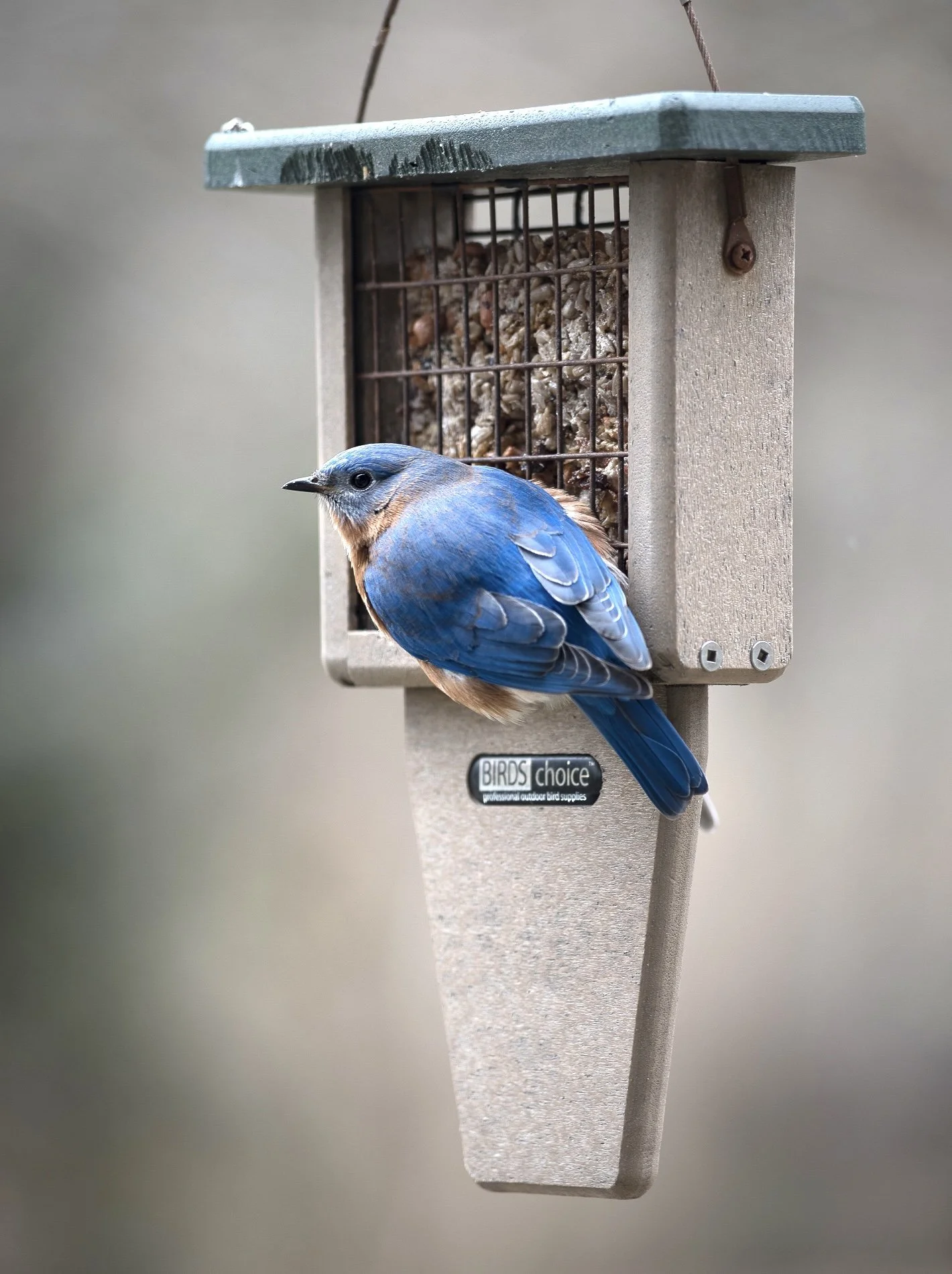
Birds will also flock to sources of water on cold mornings. You can provide them with this via a deicer. These sit submerged in your birdbath, and with the aid of a built in thermostat, they will keep the water in your birdbath above freezing. It is, however, important to make sure that these stay fully submerged to keep them from overheating and breaking. While on this subject, we would like to remind you that water freezing in your cast stone or ceramic bird CAN and WILL crack the material, even if it is a fountain with running water. We like to remind folks that even Yellowstone Falls can freeze in the winter, and so too can your fountain. If you do not want to invest in a deicer and use a ceramic or cast stone bird bath or fountain, then please, empty the water out of it before it can freeze and crack.

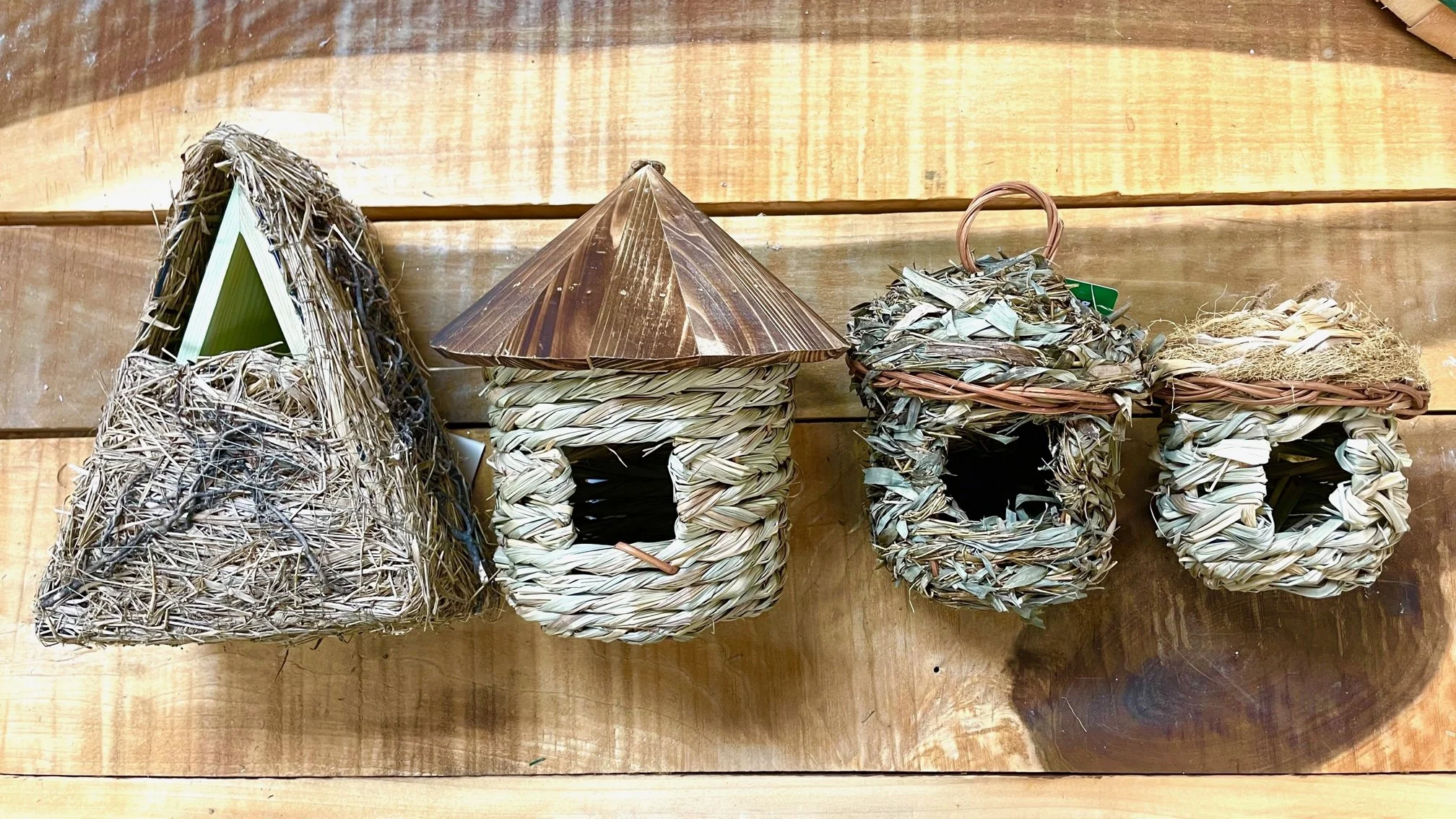
Prices from left to right: $34, $74, $70

This week, we received a number of winter roosts. These small, natural fiber woven shelters offer small birds such as Carolina Chickadees and Carolina Wrens a place to seek shelter from cold and inclement weather. I have personally witnessed Carolina Wrens bundling into these small shelters before dusk on cold nights and before big storms move in. They are most effective if you can position them somewhere sheltered and protected, such as on a porch, patio, or carport. Eastern Bluebirds too will take advantage of nesting boxes to survive cold nights. Shortly before dark, they will pile into the box in numbers as high as 8-12 individuals and then use their soft, insulating down feathers and one another’s body heat to survive frigid nights. This is yet another reason we tell people that today is the best time to put up a bluebird box.
Prices from left to right: $27, $15, $7, $7


Midweek Notes: Bird Buddy/Birdfy Hardware

Bird Feeders with Cameras

In the weeks leading up to Christmas, we fielded many questions each day in regard to whether or not we carry Bird Buddy/Birdfy camera bird feeders. While unfortunately we are still unable to carry these feeders, we DO carry the hardware needed to get these feeders up and running.

Erva 60” 1” Diameter Pole

This has been our most popular option thus far. These black, 5 foot metal poles are powder coated to prevent rust so they will last for years. They are also an ideal height. At 5 feet, they are tall enough that they can be squirrel-proofed via baffle, but short enough that the feeder can be easily reached in order to fill or clean it. The pole and feeder are supported by a ground stake that is hammered in to the ground, ensuring that it remains secure even in high winds or wet, muddy ground.

Pole Cost: $27

Erva Ground Stake

This is the ground stake we previously mentioned. These can easily be driven into the ground with the aid of a standard hammer, and with them going into the ground to a depth of 17.5 inches, they will keep your pole and feeder extremely stable. We like to tell folks, if there is a storm that blows this over, your bird feeder on the ground will be the least of your concerns. Once you have hammered it into the ground, simple slide your pole over the top and you are all set!

Ground Stake Cost: $13

Erva SB1D Squirrel Baffle

While all of the baffles we sell are 100% effective when used properly, this model is our favorite. The reason for this is the lower profile doesn’t gather as much mess from the feeder as the wraparound baffles can. To be effective, the included bracket needs to be mounted between 4-4.5 feet up from the ground. Then, the pole itself needs to be 8-10 feet away from anything solid that the squirrels can jump from. Now, with that being said, we understand that these feeders must be close enough to the house that they can pick up your WIFI signal. If that means that the previous measurements mentioned to ensure baffle success are unachievable, there is always safflower seed. While it is not as effective as a baffle, for most of the year safflower seed does help to deter squirrels, especially when fed on its own and not blended in with other seed.

Erva SB1D Baffle Cost: $39


Bird Bio: Loggerhead Shrike, the Sale Table Returns, a Word on Black-oil

Bird Bio: Loggerhead Shrike

Over the past weekend, I decided that it was past time I get out on the open road and do a little birding. I had the whole day off, the sun was shining, and the air was crisp and cool. I just had a gut feeling that I would get something interesting if I went out and made an effort.

I chose to focus my efforts on an area of relatively undeveloped farm land to the south of Franklin and Leiper’s Fork. The bird I hoped to find in this area was the Loggerhead Shrike. While these fascinating birds are in fact members of the songbird family, their feeding habits are more akin to raptors and birds of prey. They often scan for prey from elevated perches or whilst hovering, and once their target is spotted, things get interesting. For larger prey that cannot be eaten whole, they will actually impale their unlucky meal on sharp objects such as barbed wire fencing, honey locust and blackberry thorns, or any other sharp protrusions they can find. This may sound barbaric to us, but this is simply an effective method of food storage for when food is scarce (such as the depths of winter) or when energy demands are high. (While raising young.) During the warmer months of spring, summer, and fall, they will most commonly prey on invertebrates such as spiders, grasshoppers, and butterflies. During colder weather, when insects are scarce, their diet becomes more vertebrate based including mice and other songbirds. They have even been observed killing and feeding on frogs, lizards, snakes, turtles, voles, and ground squirrels.

Example of a Loggerhead Shrike Caching Food for Later

Photo Credit: Eli Haislip

Loggerhead Shrikes can be found from southern Mexico to southern Canada, typically frequenting open country, farmland, and scrub. On one interesting occasion however, while on a trip to Fort Walton Beach in Florida, I was making my way along the boardwalk through the dunes when I actually spotted a loggerhead shrike perched atop a tall plant not 25 feet away. I was happy to at least have my binoculars handy, but I was kicking myself for not bringing my camera and telephoto lens. In Middle Tennessee, the best bet for finding these birds is to search for them in relatively open farmland. Something to note however, and another reason to bring your binoculars, is this type of habitat is also frequented by our state’s bird, the Northern Mockingbird. I have been deceived on more than one occasion when I catch a flash of grey on a rural fence row only to realize on closer inspection that it is a mockingbird. The shrike is a relatively bulbous looking bird with a large head for its body size (hence the name, loggerhead) whereas the mockingbird is usually more slender in appearance. Be warned though, that a mockingbird with its feathers puffed out can look quite chunky and can lead to a false ID. This is why carrying binoculars is so important. Shrikes also have a distinctive black mask that gives them a slightly Machiavellian appearance.

Loggerhead Shrikes often nest relatively close to the ground, usually between 2 and 4 feet. Both male and female will gather nesting materials, but the female builds the nest. Clutch size is 2-6 eggs, and they will nest once or twice a year. Incubation ranges from 15-17 days and the nesting phase lasts 16-20 days. After this, the young fledglings will mimic adult behavior by impaling inanimate objects, practicing acrobatic chase maneuvers, and practice for when they begin hunting by carrying sticks or twigs in their beaks to simulate prey.

With all this in mind, you can now understand why I was hoping for a chance to observe one of these unique birds. I did not choose my area entirely on impulse. Several years ago, I had observed a shrike here and with them living at least 11 years, I just had a feeling I would see one. I made several slow passes up and down Gray Ln. in Williamson County, but with no shrikes. I did see two Northern Mockingbirds, and several American Kestrels, but my quarry continued to elude me. I was beginning to lose hope, and the thought of lunch was becoming too tempting to ignore. After one final pass, I decided I would get something to eat and pass back this way later in the afternoon. Turning right off of Gray Ln. and onto Bear Creek Rd., I hadn't driven a hundred yards when to my left, perched on the middle rung of a wood fence, was a Loggerhead Shrike! A quick check to make sure the coast was clear and I did a U-turn and pulled up alongside where I could observe the bird for a moment. A look through binoculars also reveals the sharp hook on the end of their beak that they will use to sever the spine of their prey. After allowing me time for several photos, the bird finally took off and flew to a tall tree further out in the field. I must admit, my lunch tasted just a little bit better after finally spotting the bird that I had set out that morning in search of.

Loggerhead Shrike on Bear Creek Rd. Williamson County

Photo Credit: Eli Haislip

The Sale Table is Back!

As we begin to catch our breath while the after Christmas dust settles, we have some items that are on sale while supplies last that we’d like to tell you about. ALL REMAINING Cobane glass ornaments and Mr. Bird seed ornaments are 50% off! We have more goodies on there as well, ranging from enameled bird pins to lavender sachets so check it out and get yours before it’s gone!

A Word on Black-oil Sunflower

As some of you may have noticed, the quality of some of our previous shipments of black-oil sunflower seed has not lived up to our usual standard. The reason for this is because our primary supplier of seed actually over ordered black-oil and they now find themselves with a surplus. While every year as we start to scrape the bottom of the proverbial barrel (or in this case, silo) we start to see a slight drop in quality, this year has been below the level that we are comfortable with selling. Because of this, we have switched to our secondary source of seed out of Kentucky and we are happy to announce that the seed is fresh and exceptionally clean. Instead of 25 pound bags, we currently only have 20 pound bags but the per pound price has been adjusted accordingly.


It's Christmastime at the Wood Thrush Shop!

A Scandinavian Tradition

Did you know that the idea of feeding birds isn’t a new one? In the countries of Norway, Sweden, and Denmark, people will put bird seed on their front doorstep on Christmas day to bring them good luck in the New Year. This practice originated with farmers hanging up sheaths of grain (called Julkarve in Sweden, or Julenek in Norway) from the autumn harvest to insure a successful harvest in the next season.

If you are feeling Scandinavian this season, or if you just want all the luck you can get, a couple handfuls of Black-oil sunflower seed or our Wood Thrush Mix (equal parts Black-oil sunflower and White millet) thrown on your doorstep (if you’re feeling traditional), driveway, sidewalk, or patio is a great way to entice several wintertime visitors and a few of our colorful year round residents alike. Northern Cardinals, Eastern Towhees, Mourning Doves, Dark-eyed Juncos, and White-throated Sparrows are all ground feeding birds by nature and would be likely to take you up on your offering. While we cannot guarantee that feeding birds on your doorstep this Christmas will provide you with good luck this New Year, an up close look at these beautiful birds is sure to brighten your morning, and the squirrels will certainly thank you, too.

White-throated Sparrow

Photo Credit: Eli Haislip

Saturday Flash Specials

The Saturday before Christmas is the single busiest day of the year at the shop. This year, we are going to have flash sales on a few selected items that we think would make great gifts for the lover of yard art. Do you know someone who would appreciate larger-than-life sized metal birds? Saturday only, take 40% off the marked price of our oversized GMex Flamingo and Rooster!

Owls are generally a popular animal, and we have a number of products that would make great gifts for the owl lover in your life. One of our favorites is our large cast stone Great-horned owls. They are made in Pennsylvania by Campania International, the same company that makes our fountains and many of our bird baths. They have an accurate likeness to the real thing, are a versatile size (slightly larger than life sized) and we really like the stain they use on the stone. This Saturday, take an additional 40% off the prices marked!

Holiday Hours

We have received numerous questions about what our hours are going to be for Christmas and if we will be open next week. Don’t worry! We won't let your birds go without. We will be open Saturday, December 21st, normal hours from 10:00-5:00, Monday, December 23rd, normal hours from 10:00-5:30, and then on Christmas Eve we will be open from 10:00-2:00. We will of course be closed Christmas Day, and then it is right back to business as usual with normal business hours resuming Thursday, December 26th!

A Final Note

We’d like to thank all of you for making this holiday season a huge success at the Shop. From our family to yours, we wish you all a very Merry Christmas and Happy Holidays!

Pine Warbler

Photo Credit: Eli Haislip


Midweek Specials! Kettle Morraine Recycled Plastic Feeders

20% Off Kettle Morraine Feeders

In the latter half of the year, we decided to branch out from our tried and true offerings of hopper style feeders. While we are still happy with our traditional Bird’s Choice feeders and will continue to stock them, we felt it was time to introduce a fresh line of feeders into the store. Today through Saturday, December the 21st, all Kettle Morraine feeders are 20% off!

Made in a state more commonly associated with cheese-making than bird-feeding, This Wisconsin based company’s feeders are made from long-lasting, high quality recycled plastic that won’t fade and won’t break down over time the way natural materials, such as wood, eventually will. To be specific, they are made from recycled milk jugs! We currently have five styles in stock; a suet/peanut butter feeder, a multiuse mealworm feeder, an out of the shell peanut feeder, and two traditional seed feeders.

We’ll begin with the peanut butter/suet feeder. As you can see, this feeder is different from a traditional suet cage feeder. The depressions on the surface are designed for suet or peanut butter. A good tip for using suet on this feeder is a quick blast in the microwave that will melt the suet just enough to make it malleable, but without making it runny. Times will vary by microwave but I would start with 8-10 seconds and go from there. It can then be easily spread into the depressions. You can also use peanut butter, though if you go this route we recommend finding a natural peanut butter that does not contain salt or sugar, and with no preservatives. If you use peanut butter, you can also sprinkle sunflower seeds onto it as well!

Suet/Peanut Butter Feeder, regularly $29, now $23.20 before tax.

Photo Credit: Eli Haislip

We also carry a mealworm/mixed use feeder as well. While this feeder is mainly designed for presenting live mealworms, it could also be used for suet nuggets, peanuts in or out of the shell, or even water. (Note: If you use water in it, the cup is glass and will crack if it freezes)

Mealworm/Mixed Use Feeder. regularly $52, now $41.60 before tax.

Photo Credit: Eli Haislip

They also offer a shelled (out-of-the-shell) peanut feeder that we like the design of. Unlike our Aspects shelled peanut feeders, this one offers a roof to help keep the rain off. While it won’t stop driving rain from getting in, it will help with drizzly, steady rain like we have been experiencing this week. This feeder is also quite easy to fill, it has a hinged roof where one side simply lifts up making filling this feeder a breeze. It’s design promotes use by smaller clinging birds, such as Chickadees, Tufted Titmice, White-breasted Nuthatch, Downey Woodpeckers, and more!

Shelled Peanut Feeder, regularly $49, now $39.20 before tax.

Photo Credit: Eli Haislip

Last but not least, we offer two of their varieties of small hopper style feeders. One is essentially a plexiglass version of the aforementioned shelled peanut feeder, and the other is a unique take on a standard feeder. Both options are very simple to clean and fill and would make a great first bird feeder. The birds will be happy with either option, so it is purely a matter of personal taste!